

By Ayomide Otitoju
President Bola Tinubu has called for a comprehensive overhaul of global governance, financial systems, and healthcare structures to promote equity and inclusion for low-income and emerging economies, especially in Africa.
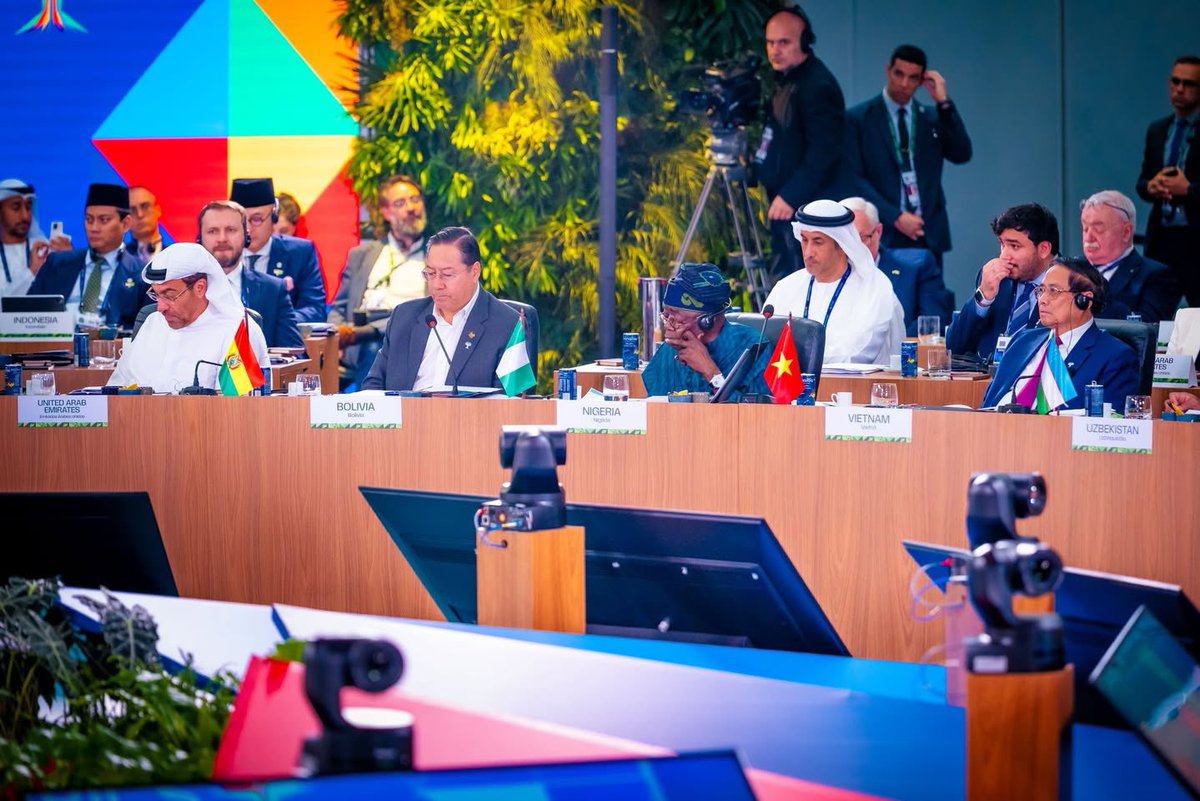
Speaking at the 17th BRICS Summit in Rio de Janeiro, Brazil, on Saturday, Tinubu underscored the urgent need to address environmental degradation, climate change, and global healthcare disparities — issues he described as critical impediments to sustainable development.
Tinubu, who was invited by Brazilian President Luiz Inácio Lula da Silva, reaffirmed Nigeria’s commitment to the BRICS mission for fair and collective global development. Nigeria became a BRICS partner country in January 2025, joining Belarus, Bolivia, Cuba, Kazakhstan, Malaysia, Thailand, Uganda, and Uzbekistan.
“We must reevaluate the global structure, particularly in areas of financial governance and healthcare,” the President stated, according to a release by his Special Adviser on Information and Strategy, Bayo Onanuga.
He highlighted that Africa is already taking action through initiatives such as the African Carbon Market Initiative and the Great Green Wall project. Tinubu said Nigeria looks forward to COP-30 as an opportunity to build on these efforts toward a healthier global environment.
“Nigeria strongly believes in South-South cooperation,” he added. “We cannot remain passive in decisions around financial restructuring, debt forgiveness, climate change, and public health.”
The President stressed the importance of inclusive strategies that prioritize youth development, noting that 70% of Nigeria’s population is under the age of 30. He emphasized Nigeria’s Vision 2050, its commitment to nationally determined contributions (NDCs), and ongoing efforts to accelerate renewable energy adoption and climate resilience.
On health, Tinubu called for global action to address non-communicable diseases and pressed for universal health coverage. “BRICS must serve not only as a platform for emerging economies but also as a source of emerging solutions — grounded in solidarity, sustainability, and a shared future,” he said.
He was accompanied at the summit by Minister of Foreign Affairs Yusuf Tuggar and Minister of Finance Wale Edun.
In January, Brazil, which currently holds the rotating presidency of BRICS, announced Nigeria’s admission as a formal partner, citing its influential position as Africa’s most populous country and one of its leading economies.
“As the world’s sixth most populous nation, Nigeria aligns with BRICS priorities on strengthening South-South cooperation and advocating reforms in global governance,” the summit communiqué noted.