








By Ayomide Otitoju
The World Bank has approved $50 million to support a solar agricultural expansion project in Nigeria and five other African countries, aiming to boost productivity, reduce post-harvest losses, and expand clean energy access.
Agriculture employs over a third of Nigeria’s workforce, yet inefficiencies continue to undermine farmers’ incomes and food supply. The project, implemented under the Productive Use Financing Facility (PUFF), seeks to address challenges such as inadequate storage, unreliable electricity, and limited access to modern processing tools.
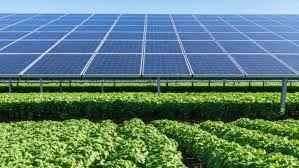
The funding will facilitate the deployment of solar-powered cold rooms, refrigerators, water pumps, and grain mills across Kenya, Nigeria, Ethiopia, Sierra Leone, Uganda, and the Democratic Republic of Congo. Implementation will be led by Clasp, a Washington DC-based nonprofit focused on energy efficiency and clean energy access.
According to Bloomberg, the initiative—supported by partners including the Rockefeller Foundation, which has committed $12 million—could expand further as country-level implementation progresses. Rajiv Shah, President of the Rockefeller Foundation, said on January 15 that the programme has “the ability to scale up” and supports innovations governments and development institutions can expand.
PUFF operates under Mission 300, a flagship programme backed by the World Bank and African Development Bank (AfDB) aiming to provide electricity access to 300 million Africans by 2030. Sub-Saharan Africa accounts for more than 80% of the global population without electricity, with an estimated 600 million people lacking reliable power—constraints that continue to limit economic growth and productivity for farmers and small businesses.
The programme bridges the affordability gap by offering grants, subsidies, and technical assistance to suppliers of solar-powered equipment, enabling them to reach rural and off-grid communities often excluded from conventional financing.
Following a two-year pilot phase between 2022 and 2024 that supported 24 businesses across the six countries, PUFF is now transitioning to full-scale deployment with fresh World Bank financing and philanthropic capital.


