

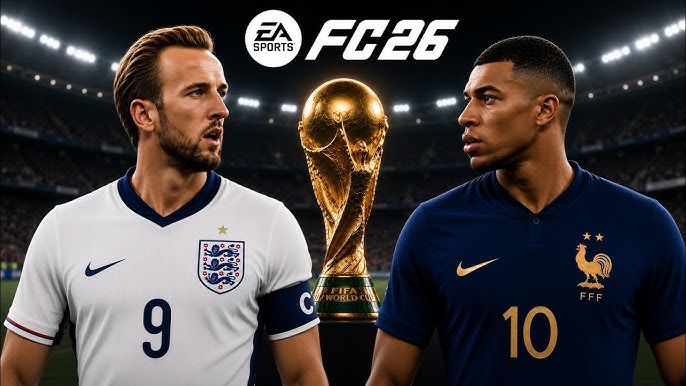
England and France will meet in the 2026 FIFA World Cup third-place playoff on Saturday, with both teams admitting they would rather be preparing for the final than competing for bronze.
England manager Thomas Tuchel acknowledged the disappointment of missing out on the World Cup final after his side’s semi-final exit.
“None of our players and none of the French players want to play this match,” Tuchel said. “They want to play the final. We gave everything to achieve that.”
France coach Didier Deschamps echoed the sentiment but stressed that the fixture remains an important international contest.
“England does not want to play this game, and neither do we. But here we are,” Deschamps said. “It is not a friendly. It is a third-place playoff.”
Despite the lack of enthusiasm from both camps, the third-place playoff remains one of the World Cup’s longest-standing traditions, dating back to the 1934 tournament in Italy.
The inaugural World Cup in Uruguay in 1930 did not include a playoff for third place after the United States and Yugoslavia lost their semi-finals. FIFA later introduced the fixture in 1934 to ensure the final podium position was decided on the pitch rather than through administrative judgment.
Germany defeated Austria 3-2 in the first official third-place match, with Ernst Lehner scoring after just 25 seconds—one of the fastest goals in World Cup history.
The playoff returned in 1938 and has featured in every World Cup since 1954, except the 1950 tournament, which concluded with a final round-robin group instead of knockout semi-finals.
While UEFA abolished the European Championship third-place playoff after 1980, FIFA has retained the fixture, even as the World Cup expanded to 48 teams and 104 matches in 2026.
Over the years, the match has produced several memorable moments. Between 1934 and 2022, the 20 third-place playoffs generated 76 goals—an average of 3.8 per game—with none ending goalless and none decided by penalties.
France’s 6-3 victory over West Germany in 1958 remains the highest-scoring third-place playoff, with Just Fontaine scoring four goals to finish the tournament with a record 13 goals, a feat that still stands as the highest tally by any player at a single World Cup.
Croatia’s Davor Suker secured the Golden Boot by scoring the winner against the Netherlands in 1998, while Turkey’s Hakan Sukur set the record for the fastest goal in World Cup history with an 11-second strike against South Korea in 2002.
Germany remain the most successful nation in third-place playoffs, winning four of their five appearances, while Poland and Croatia boast perfect records with two victories each.
England have yet to win a World Cup bronze medal, losing to Italy in 1990 and Belgium in 2018. France, meanwhile, have won two of their three third-place matches, defeating West Germany in 1958 and Belgium in 1986.
Although the fixture often feels like a consolation prize for traditional football powers, it has delivered historic achievements for emerging nations. Croatia celebrated third-place finishes in 1998 and 2022, while Turkey’s bronze medal in 2002 remains the country’s best-ever World Cup result.
As England and France prepare to meet in Miami, both teams will seek to end their campaigns on a positive note, with the World Cup’s often-overlooked third-place playoff once again offering the opportunity to make history despite the disappointment of falling short of the final.