


By Ayomide Otitoju
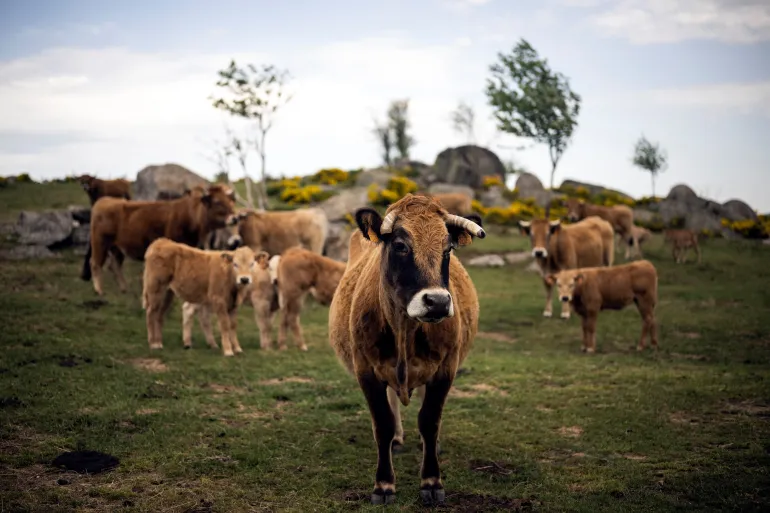
The Federal Government has introduced a Federal-State-Private Sector partnership model to transform Nigeria’s livestock sector through the establishment of species-specific Livestock Development Centres across the country.
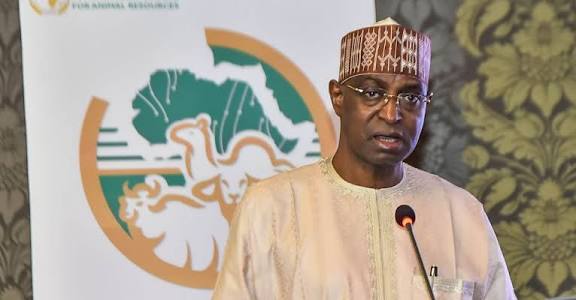
The Minister of Livestock Development, Idi Maiha, announced the initiative at a ministerial press briefing, describing the centres as a key component of the livestock transformation agenda of President Bola Ahmed Tinubu’s administration.
Maiha said the proposed centres would not be government-owned farms but commercially driven clusters designed to attract private investment across different livestock value chains.
Under the model, participating states would select livestock species or value chains based on their agro-ecological conditions, availability of feed and water, market demand, social acceptance and investment potential.
“The proposed Centres are not to be treated as government farms or isolated construction projects. They are to be commercially oriented livestock productive-alliance platforms that combine public goods with investable businesses,” the minister said.
He explained that the centres could support activities including breeding, feed and fodder production, animal health, livestock aggregation, cattle finishing, dairy production, poultry, sheep and goat farming, processing, cold-chain storage, logistics, biogas and organic fertiliser production.
According to Maiha, the initiative is designed to address major challenges in the sector, including inadequate infrastructure, limited access to quality feed and water, weak veterinary services, low private investment and insecurity.
He linked the initiative to the National Livestock Growth Acceleration Strategy (NL-GAS), approved by the National Economic Council, which targets an increase in the sector’s contribution to Nigeria’s Gross Domestic Product from $32 billion to at least $74 billion by 2035.
Maiha said the model would also reduce the risks associated with the long-distance transportation of livestock, particularly the movement of animals from northern production areas to markets in southern Nigeria.
He said transporting livestock over distances of more than 1,000 kilometres exposes producers and animals to significant risks, stressing the need for states to develop value chains based on their comparative advantages and local market demand.
Under the framework, the Federal Ministry of Livestock Development will oversee national policy, technical standards, food safety, animal health protocols, traceability, data systems, investor facilitation and regulatory coordination.
State governments will provide suitable and properly documented land, local infrastructure, community engagement, security coordination and support for investment facilitation.
Private investors and producer organisations will finance, construct and operate the commercial components of the centres while creating jobs and expanding market opportunities.
Maiha said the approach would ensure that livestock development was based on local conditions rather than a uniform model imposed across the country.
He noted that livestock production varies across Nigeria because of differences in climate, feed and water availability, disease risks, land use, production traditions and market demand.
The minister said the partnership was also expected to contribute to food and nutrition security, job creation, rural development and improved social harmony.
He added that the model would create opportunities for women and young people to participate in livestock enterprise ownership, value addition and service delivery.
Maiha said the ultimate goal was to build a modern, sustainable, profitable and globally competitive livestock sector capable of supporting food security, wealth creation, rural development and peace.
He said the Federal Government would work with state governments, livestock producers, private investors and other stakeholders to develop the centres according to the specific opportunities and needs of participating states.


