








By Ayomide Otitoju
The Director-General of the World Trade Organisation (WTO), Dr Ngozi Okonjo-Iweala, has urged the Nigerian government to deliberately target global investors and supply chain relocations as a strategy to reduce import dependence, deepen local manufacturing, and create jobs.
Okonjo-Iweala made the call on Wednesday at Nigeria House on the sidelines of the ongoing World Economic Forum in Davos.
Speaking during a panel discussion titled “From Scale to Capital: Financing Nigeria’s Role as Africa’s Digital Trade and Infrastructure Anchor,” the WTO chief said rising geopolitical tensions, particularly between the United States and China, have accelerated the diversification of global supply chains.
She noted that many firms are adopting “China+1” sourcing strategies to reduce risks associated with over-reliance on a single country, even as China remains deeply integrated into global value chains.
“Tariffs and trade restrictions have also encouraged companies to rethink dependence on dominant suppliers, leading to the relocation or diversification of production hubs,” she said.
According to her, these global shifts present a significant opportunity for Nigeria to position itself as a destination for supply chain investments, provided the country aggressively markets itself to prospective investors.
Okonjo-Iweala acknowledged ongoing economic reforms in Nigeria but stressed the need to move beyond macroeconomic stabilisation to job creation.
“I said to His Excellency that we need to move from stabilisation to job creation, because that is where we are lacking,” she said, adding that while progress would not be immediate, the country was heading in the right direction.
She called on the government to strategically identify priority sectors and actively pursue foreign direct investment.
“What I would like to see is a continued effort to attract investment into the country, because there is an opportunity now to attract these supply chains,” she said. “Everything we can do to showcase Nigeria as a country worthy of investment is what we should be doing.”
The WTO chief urged Nigeria to proactively engage investors in major economies, including China and the United States, noting that while much of the supply chain diversification from China remains within Asia, Nigeria could attract a significant share.
She identified renewable energy, textiles, and pharmaceuticals as key sectors with strong potential for local manufacturing.
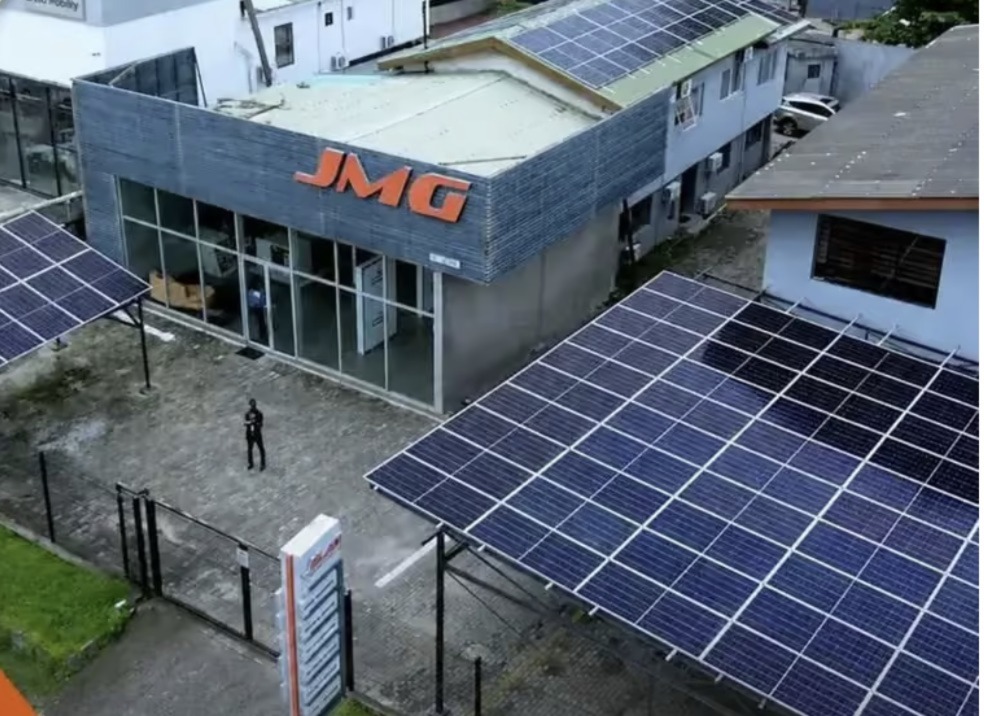
“Let’s build solar panels in Nigeria. We are importing, but we can also manufacture. We have the renewable capacity,” she said. “In fashion, let investors come and produce locally. Many of the textiles we wear today are imported, even though they could be made in Nigeria.”
She also highlighted opportunities in pharmaceutical manufacturing, describing the sector as another viable supply chain Nigeria should seek to attract.


