

By Ayomide Otitoju
The Catholic Bishops’ Conference of Nigeria (CBCN) has called for national renewal, responsible leadership and urgent reforms to address insecurity, economic sabotage and electoral malpractice in the country.
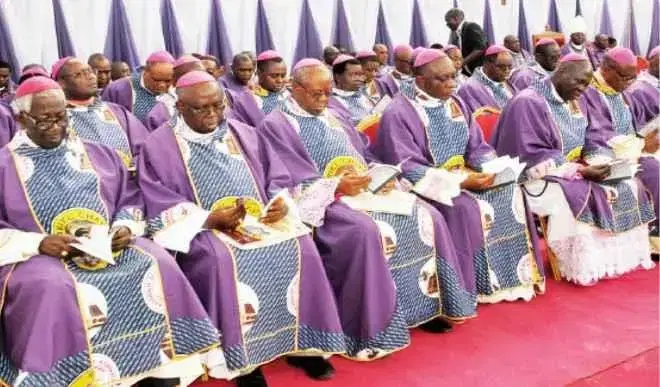
The bishops made the call in a communiqué issued at the end of their First Plenary Meeting for 2026, held from February 19 to 26 at the Catholic Secretariat of Nigeria, Durumi, Abuja.
The bishops noted that this year’s Lenten season coincides with the Muslim Ramadan fast, describing it as an opportunity for Christians and Muslims to deepen prayer, repentance and charity, while strengthening peaceful coexistence and mutual respect.
They emphasised the Church’s teaching on the Common Good, describing it as the totality of social conditions that enable individuals and communities to flourish. Citing Pacem in Terris and Gaudium et Spes, the bishops stressed that respect for human dignity, rights and duties is central to national development.
The Conference described responsible citizenship and participation in political life as moral obligations rooted in Christian faith. It urged Christians to engage actively in promoting the Common Good and called on leaders at all levels to prioritise national interest over selfish or sectional gains.
According to the bishops, effective leadership must guarantee access to basic necessities such as food, healthcare, education, security and employment, while avoiding repression or abuse of power.
The bishops expressed grave concern over persistent insecurity, despite the Federal Government’s declaration of a national security emergency. While acknowledging President Bola Ahmed Tinubu’s efforts to recruit more security personnel and intensify military operations, they lamented continued killings, kidnappings and displacement across the country.
They cited recent mass killings in parts of the North and Middle Belt, including reported attacks in Woro and Nuku villages in Kwara State, as evidence that terrorists and bandits continue to operate with impunity.
The Conference urged governments at all levels to invest in modern surveillance technology, strengthen intelligence gathering and ensure swift prosecution of insurgents, bandits and their sponsors. It warned that delays in prosecuting arrested terrorists or reintegrating repentant insurgents without transparency could fuel public distrust.
The bishops decried the large-scale loss of revenue through illegal mining and oil bunkering, noting that proceeds from illicit mineral exploitation are often used to finance terrorism. They criticised continued heavy borrowing by government amid vast untapped natural resources and alleged poor utilisation of tax revenues.
While acknowledging the deployment of “Mining Marshals,” the bishops called for the adoption of drone technology and artificial intelligence to monitor remote mining sites and curb economic sabotage.
They also urged the government to prioritise local agricultural production over food importation by improving security for farmers and providing adequate subsidies.
On democracy, the bishops condemned electoral malpractice, including vote buying, result falsification, intimidation and manipulation of state institutions such as the electoral body, security agencies and judiciary.
Referencing data from the Independent National Electoral Commission (INEC), they noted that only 23 per cent of registered voters participated in the 2023 general elections, while voter turnout in the recent FCT polls reportedly dropped to seven per cent.
The Conference called on the National Assembly to review its position on electoral reforms and mandate real-time electronic transmission of results from the Bimodal Voter Accreditation System (BVAS) to the INEC Result Viewing Portal (IReV) to enhance transparency and restore public confidence.
The bishops also encouraged the faithful to participate in the Special Jubilee Year of St. Francis of Assisi, proclaimed by Pope Leo XIV from January 10, 2026, to January 10, 2027, marking the 800th anniversary of the saint’s death.
They congratulated several dioceses on recent milestones, including the Enugu Diocese on its fourth synod, the Archdiocese of Owerri on its 75th anniversary, and dioceses in Onitsha, Umuahia and Nnewi on various celebrations and cathedral dedications.
During the plenary, the Conference conducted elections, with Archbishop Matthew Man-Oso Ndagoso of Kaduna elected President, Archbishop Alfred Adewale Martins of Lagos as Vice President, Bishop Peter Odetoyinbo of Abeokuta as Secretary, and Bishop Peter Chukwu of Abakaliki as Assistant Secretary.
The bishops concluded by affirming that a better Nigeria is possible, urging citizens to embrace integrity, selflessness and service to the Common Good as pathways to national transformation.