





Reports from multiple media outlets have alleged that Somalia and Sudan are increasingly connected through external military support involving Saudi Arabia, foreign fighters and cross-border training programmes, raising concerns over growing regional proxy dynamics.
According to an analysis by PM News, Saudi Arabia is alleged to be providing financial support, weapons and logistical assistance to military efforts in both Mogadishu and Khartoum. The report claims that training programmes, arms shipments and recruitment networks are central to what observers have described as a “Somalia–Sudan axis” of external backing.
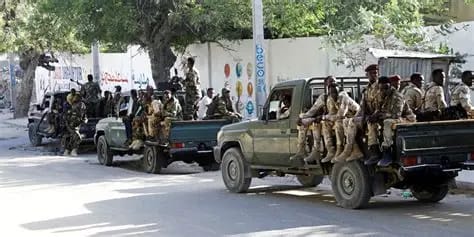
In Somalia, attention has centred on Galmudug State, where local sources claimed a Saudi military delegation visited two training camps in the Guri Jabal area of the Galguduud region in June to assess a Saudi-funded training programme. The camps are reportedly aimed at strengthening forces loyal to the Federal Government.
Separate reports from local media alleged that recruiters operating through unofficial channels brought in mercenaries from Romania, Ukraine, South Africa and Colombia to train forces aligned with President Hassan Sheikh Mohamud. The allegations come as the Somali government faces mounting domestic opposition over governance and security.
Officials cited in the reports said 5,107 Somali soldiers are currently undergoing training, including 2,000 recruits from Somalia’s Northeastern State, with the programme expected to last nine months. The reports further claimed that some foreign trainers in Somalia could later be deployed to Sudan to support the Sudanese Armed Forces and allied groups, potentially creating a direct personnel link between both conflicts.
Somalia’s security situation remains fragile following clashes in early June between federal forces and armed groups opposing an extension of President Mohamud’s tenure after his constitutional mandate expired in May. Militant groups, including Al-Shabaab, Al-Qaeda and ISIS, also continue to operate across several regions.
PM News also cited a February report by Africa Intelligence, which alleged that Sudanese military officers conducted a covert mission to train about 1,000 Somali recruits in Galmudug State under the supervision of intelligence structures linked to the Somali presidency. The report suggested that military cooperation may be occurring in both directions across the Red Sea.
Similar allegations have emerged from Sudan. Gulf Post, citing Intelligence Online, reported that intelligence gathered in Kyiv indicated Saudi Arabia supplied howitzers to Sudan between 2023 and 2024. The report further alleged that Ukrainian mercenaries trained artillery units of the Sudanese Armed Forces under General Abdel Fattah al-Burhan, as well as allied Islamist groups, in operating the weapons.
According to Intelligence Online, Saudi Arabia delivered three batteries of 155mm M777 artillery systems and significant quantities of ammunition to the Sudanese military during 2023 and 2024. The outlet claimed documents from 2023 showed Ukrainian personnel operating M777 artillery in locations believed to be inside Sudan based on terrain and architectural features.
Regional leaders have also commented on the reported involvement of foreign fighters. SudanLeaks quoted Ethiopian Prime Minister Abiy Ahmed as highlighting the presence of mercenaries from several African countries in the Sudan conflict, echoing concerns raised by international observers.
SudanLeaks further alleged that the Al-Baraa ibn Malik Battalion, a militia linked to the Islamic Movement and under U.S. sanctions, has expanded recruitment by bringing in fighters from Ethiopia and other African countries. The report also claimed the group has received support from Iranian and Ukrainian personnel.
Analysts say the allegations underscore the growing complexity of the conflicts in Somalia and Sudan, where political instability, armed insurgencies and weak state institutions continue to fuel violence. They warn that any continued flow of foreign funding, advanced weaponry and external fighters could further complicate peace efforts and prolong instability across the Horn of Africa.
The allegations contained in the reports have not been independently verified, and the governments and parties mentioned have not publicly responded to all of the claims.