



The United States and Iran exchanged fresh military strikes on Thursday, intensifying the renewed conflict in the Middle East despite renewed diplomatic efforts by Pakistan to revive stalled peace talks.
The latest escalation comes just one month after both sides signed a preliminary agreement aimed at ending hostilities that resumed following large-scale US-Israeli strikes on Iran in late February.
Iran warned it would target critical infrastructure across the Gulf if US President Donald Trump carries out threats to strike Iranian power plants and bridges.
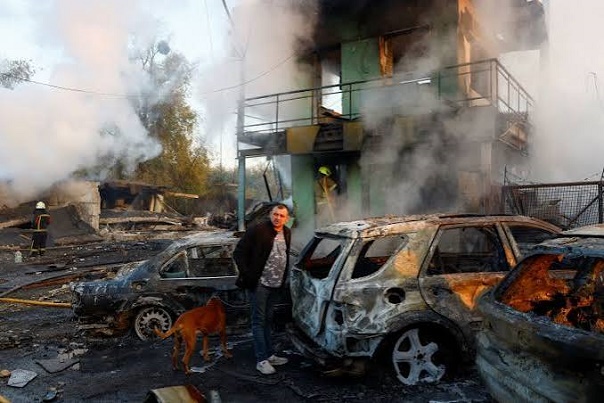
The warning followed another round of military exchanges, with Iran’s Islamic Revolutionary Guard Corps (IRGC) claiming responsibility for ballistic missile attacks on a US military base in Jordan. Tehran said the strikes were retaliation for what it described as a US attack near a children’s cancer hospital in Ahvaz, southwestern Iran.
Iranian state media reported that the hospital was evacuated following nearby US airstrikes, with patients transferred to other medical facilities. Foreign Ministry spokesman Esmaeil Baqaei condemned the attack as “barbaric.”
Residents in Ahvaz described the bombardment as intense, with multiple explosions shaking the city.
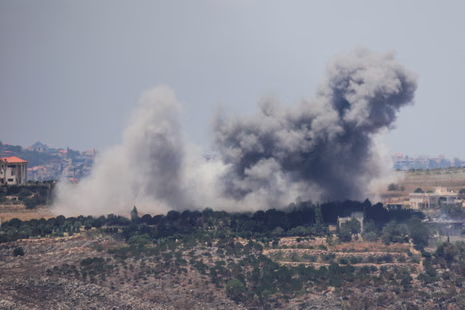
The US Central Command (CENTCOM) confirmed carrying out strikes on Iranian military targets in several locations, including Bandar Abbas, saying the operation was intended to weaken Iran’s ability to threaten international shipping through the Strait of Hormuz.
CENTCOM said additional strikes targeted coastal defence systems and cruise missile positions on Greater Tunb Island. Iranian authorities also reported explosions in Semnan, Lorestan, and parts of Tehran, where air defence systems were activated.
The conflict quickly spread across the Gulf region, with Kuwait announcing it had intercepted Iranian drones, while Bahrain activated air raid sirens amid reports of incoming threats.
The Strait of Hormuz remains at the centre of the conflict. Iran initially blockaded the strategic waterway after the war began on February 28, disrupting one of the world’s most important oil and gas shipping routes.
Although the strait briefly reopened following last month’s US-Iran agreement, Tehran announced last week that it would again remain closed until what it described as an end to US aggression. The United States has also reimposed a blockade on Iranian ports.
Pakistan, which helped broker last month’s memorandum of understanding, urged both countries to return to negotiations. Foreign Office spokesman Tahir Andrabi said Islamabad would continue encouraging all parties to end hostilities and resume technical-level talks.
However, Iran’s chief negotiator, Mohammad Bagher Ghalibaf, questioned the future of the agreement, saying it held no value if its provisions were not being implemented.
President Trump reiterated his warning that the United States could strike Iran’s power plants and bridges unless Tehran returned to the negotiating table.
In response, Iran’s military warned that any such attack would trigger retaliatory strikes against infrastructure across the region.
Iran’s Revolutionary Guards also claimed US forces used bases in Jordan to launch attacks on Iranian territory before responding with two waves of missile strikes. Separately, Iran’s military said it launched drone attacks against US facilities in Jordan.
The US military also reported intercepting and disabling an unmanned oil tanker allegedly attempting to breach the naval blockade around Iranian ports.
In neighbouring Iraq, Kurdish security forces said the US-led coalition shot down eight explosive drones over Erbil, where explosions were heard near the US consulate.
Meanwhile, President Trump announced that an American citizen, identified as Dena Karari, had been released by Iran after being detained since December 2024, describing the move as a gesture of goodwill.
Iranian authorities said renewed US strikes since last week have killed at least 30 people, while the country’s military confirmed additional personnel were killed in attacks in southeastern Iran on Wednesday.
The latest hostilities have raised fresh concerns over regional stability and global energy supplies as tensions continue to mount around the Strait of Hormuz.


