




By Ayomide Otitoju
The World Trade Organization (WTO) has warned that the global trading system is facing its most serious and sustained disruption in decades, with growing trade fragmentation threatening economic growth and living standards.
In its annual report released Tuesday, the WTO said a return to unilateral trade policies could cut global gross domestic product (GDP) by about five per cent and reduce exports by 18.6 per cent by 2050.
“Global trade policy and the WTO are experiencing the most serious and sustained disruptions since the multilateral trading system was created 80 years ago,” the report said.
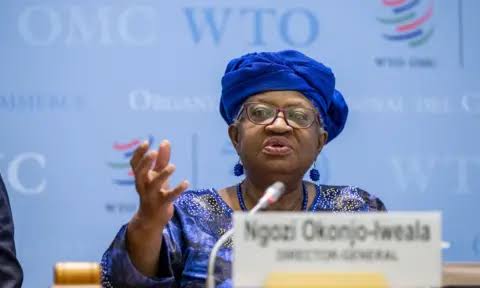
WTO Director-General Ngozi Okonjo-Iweala said trade rules were being challenged on a scale not seen since international institutions were established after the Great Depression and Second World War to support open and predictable global trade.
She said international trade cooperation had helped narrow income gaps between developing and advanced economies and contributed to peace among member states.
However, she warned that the outlook had worsened following US President Donald Trump’s tariff policies since his return to the White House in January 2025, alongside rising geopolitical tensions, particularly in the Middle East.
The WTO attributed the weakening of trade cooperation to shifts in global economic power and increasing government intervention in markets.
Okonjo-Iweala said WTO economists estimated that geopolitical fragmentation could reduce global GDP by about five per cent.
She added that the losses could approach seven per cent if the WTO were replaced by a network of free trade agreements.
The impact would not be evenly distributed, with smaller and poorer economies expected to be particularly vulnerable to the erosion of multilateral trade.
By contrast, Okonjo-Iweala said strengthening multilateral trade cooperation and reforming the system could increase global GDP by roughly three per cent.
The WTO remains central to the rules-based trading system, with 72 per cent of global trade still operating under its rules, down from 80 per cent two years ago.
The organisation’s chief economist, Robert Staiger, described the decline as “disturbing”, noting that new tariffs and trade restrictions now cover 11 per cent of global imports, the highest level in more than 15 years.
Despite the pressures, Staiger said global trade remained relatively resilient, partly because of the rapid expansion of artificial intelligence.
He said AI-related goods, including servers, computers and data-centre equipment, were highly trade-intensive and the investment boom could be masking some of the weakness in broader global trade.
However, he warned that AI-related trade was concentrated among a relatively small number of countries, making it risky to assume that continued global trade growth meant the wider system was healthy.
The WTO is scheduled to release an update to its global trade forecasts on October 8.