






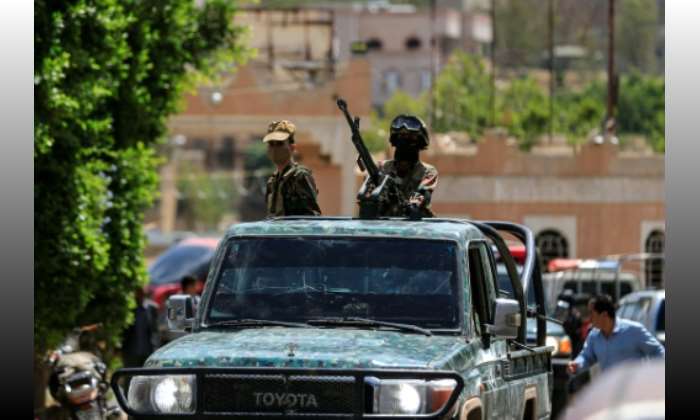
Saudi Arabia has vowed to respond “firmly” to attacks by Yemen’s Houthi rebels after missile and drone strikes wounded 13 people in the kingdom.
The Riyadh-led coalition said the attacks targeted Khamis Mushait, Abha and Taif, damaging seven houses and two vehicles. Saudi authorities also issued air-raid alerts across six regions early Tuesday before lifting them.
The Houthis claimed responsibility for what they described as a large-scale attack involving “dozens of ballistic missiles and drones” targeting King Khalid airbase in Khamis Mushait, southern Saudi Arabia.
A resident told AFP that he heard intense blasts that triggered fires which burned for a prolonged period.
The renewed attacks come amid escalating fighting between the Houthis and Saudi-backed government forces in Yemen. The conflict intensified in July after the Houthis declared a maritime blockade on Saudi Arabia and began targeting vessels in the Red Sea.
The Houthis have also taken control of parts of Yemen’s Red Sea coast and the Bab al-Mandab Strait, a strategically important maritime route, as the wider US-Iran conflict has disrupted shipping through the Strait of Hormuz.
The group has targeted Saudi oil infrastructure, raising concerns in the world’s leading crude-exporting country and contributing to a rise in global oil prices above $100 a barrel.
A Houthi attack in western Yemen on Monday also killed eight government soldiers, according to two military sources.
The Saudi-led coalition said it carried out more than 50 strikes in response to the attacks, while the Houthis reported similar Saudi bombardments the previous day.
The coalition vowed to take “all necessary operational measures” to deter what it described as a hostile and extremist campaign and protect Saudi Arabia’s sovereignty.
Despite dozens of Saudi airstrikes on Houthi-held areas, the group has continued its offensive.
Saudi Crown Prince Mohammed bin Salman was expected to meet Egyptian President Abdel Fattah al-Sisi on Tuesday amid the escalating conflict. US media had earlier reported that US President Donald Trump rejected a personal request from the Saudi leader to intervene in the war.
Houthi politburo member Hazem al-Assad said the group would continue and intensify its attacks as long as Saudi Arabia maintained what he called its aggression against Yemen.
The renewed fighting comes amid a broader regional conflict involving the United States and Iran. Trump said Monday that Washington remained open to talks with Tehran, while Iran’s top security chief, Mohsen Rezaei, ruled out negotiations until Iran’s demands were met.
Tehran has demanded, among other conditions, war reparations and the lifting of sanctions, while talks between Gulf states and Iran over the future of the Strait of Hormuz were postponed on Monday.
Iran has long supported the Houthis with weapons and technology but has denied involvement in the current conflict. Foreign ministry spokesman Esmaeil Baqaei said the group was an independent actor that made decisions based on its own interests.
The Houthis seized Yemen’s capital, Sanaa, in 2014, forcing the government to relocate to Aden. Saudi Arabia subsequently led a coalition that intervened on the government’s side in 2015.
The prolonged conflict has triggered one of the world’s worst humanitarian crises. The UN migration agency said Monday that renewed fighting had displaced 93,864 people.


