


By Ayomide Otitoju
The formation of the Forum of CEOs of Federal Parastatals (FORCEPA) to support President Bola Tinubu’s re-election bid in 2027 has introduced a new dimension to the political mobilisation ahead of the next general election.
Led by its chairman, Dr Kazeem Kolawole Raji, Director-General of the National Board for Technology Incubation, the forum is seeking to establish a coordinated platform through which heads of federal agencies can communicate the administration’s policies, programmes and achievements to Nigerians.
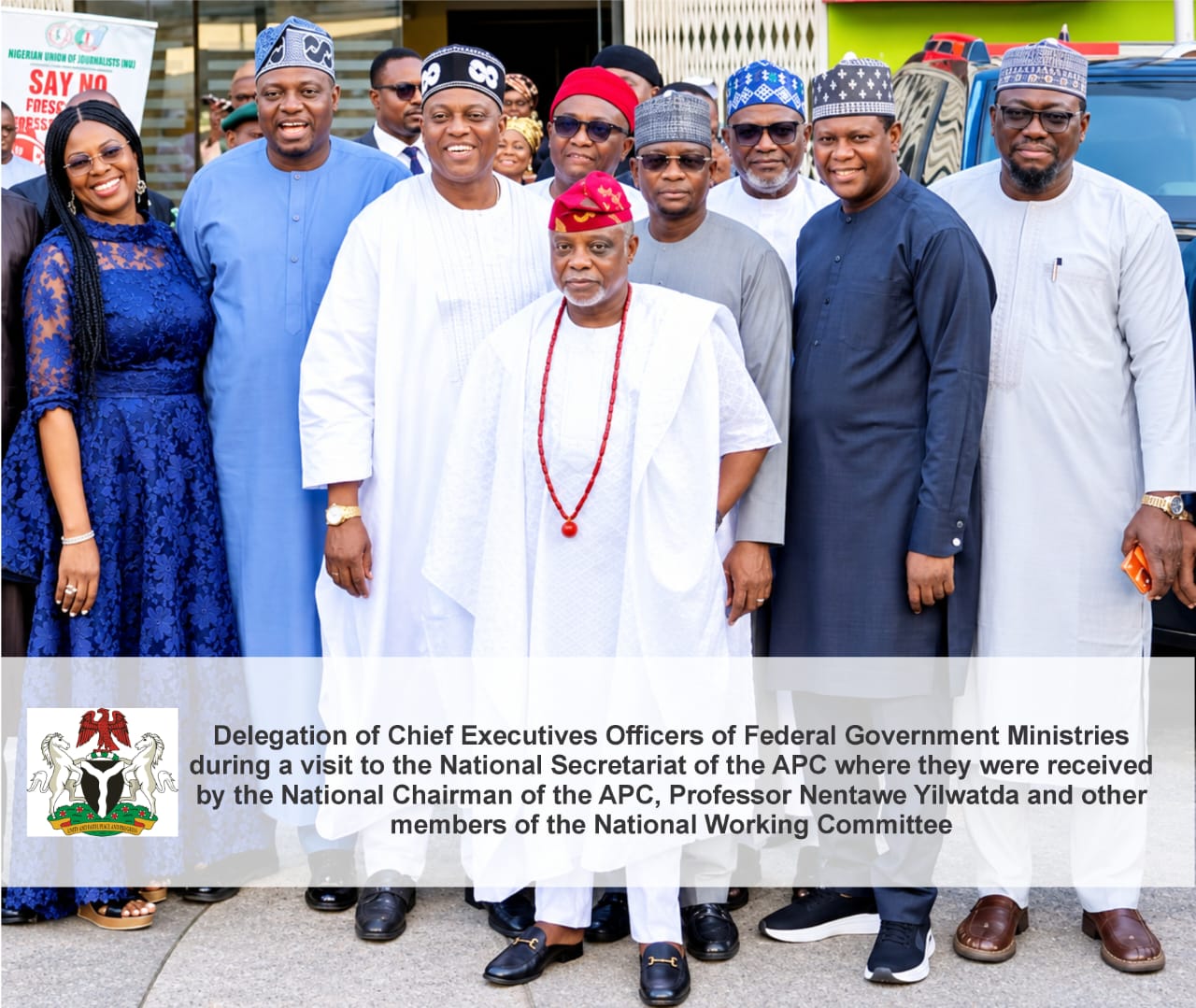
The initiative, which has involved engagements with the All Progressives Congress (APC) National Chairman, Prof. Nentawe Yilwatda, and members of the party’s National Working Committee, reflects an effort to bridge the gap between government performance and public perception.
The forum’s position is that the implementation of government policies should be accompanied by effective communication of their outcomes. Its members argue that agency heads, by virtue of their roles in executing public programmes, are positioned to explain the objectives, progress and challenges of government initiatives.
The development also points to a potential shift in the approach to the 2027 campaign, with greater emphasis on the administration’s record since taking office in 2023.
Unlike a campaign built primarily around promises, a performance-based approach would require verifiable data, clear policy outcomes and evidence of improvements in the lives of citizens. Federal agency leaders could contribute institutional knowledge and technical expertise to that effort, while their professional and community networks could help extend public engagement beyond the central campaign structure.
FORCEPA is expected to complement the APC’s existing political machinery by contributing expertise in policy monitoring, strategic communication and grassroots mobilisation. However, the effectiveness of the initiative will depend on its ability to communicate measurable results and address public concerns about the impact of government policies.
The administration’s economic reform programme is likely to feature prominently in any such campaign. International institutions, including the International Monetary Fund, World Bank and African Development Bank, as well as rating agencies Fitch and S&P Global Ratings, have assessed aspects of Nigeria’s economic reforms and macroeconomic performance under Tinubu.
Their assessments have addressed issues including economic stability, external balances, government revenue and investor confidence. While such indicators can provide context for evaluating reforms, translating macroeconomic improvements into tangible benefits for households and businesses remains a major test for the government.
For FORCEPA, this distinction will be critical. Nigerians will be interested not only in economic indicators but also in the effects of government policies on living costs, employment, purchasing power and living standards. Communicating progress credibly will require the forum to demonstrate how policy changes are producing practical results, while acknowledging areas where challenges persist.
Raji’s Leadership and Political Experience
Raji, an engineer from Oyo State, has more than 25 years of experience in telecommunications, leadership, project management and technological innovation.
He studied at the University of Ibadan, where he served as chairman of Nnamdi Azikiwe Hall, popularly known as Zik Hall. His academic background includes qualifications across multiple disciplines, culminating in a doctorate.
Raji also played a role in Tinubu’s 2023 presidential campaign, serving as Director of National Youth Mobilisation for the South-West under the Tinubu-Shettima Presidential Campaign Council.
His experience in technology, administration and political mobilisation is expected to inform his leadership of the forum as it develops its approach to communicating the administration’s record.
Ajiboye to Lead Media and Publicity
Another key figure in FORCEPA is Otunba Biodun Ajiboye, chairman of its Media and Publicity Committee and Executive Secretary of the National Institute for Cultural Orientation (NICO).
Ajiboye brings more than three decades of experience in media, advertising and strategic communication. His public-sector role also places him at the intersection of cultural policy and the federal government’s development agenda.
His involvement highlights the importance the forum places on messaging and public engagement in its proposed support for Tinubu’s second-term bid.
Ajiboye has argued that communication of the administration’s policies and achievements should not be left solely to the Presidential Campaign Council. He has advocated a complementary role for FORCEPA in monitoring public messaging, identifying communication gaps and strengthening the presentation of government programmes.
His position reflects the view that effective political communication requires more than campaign slogans. It also requires clear explanations of policies, evidence of implementation and sustained engagement with citizens.
Turning Government Performance into Public Understanding
The potential contribution of FORCEPA to the 2027 campaign will depend on how effectively it coordinates its members, communicates verified information and engages communities across the country.
By drawing on the experience of federal agency leaders, the forum could provide a technical support structure for explaining government policies and their outcomes. Its members could also help identify areas where implementation has fallen short and where public concerns require greater attention.
However, the participation of public-sector executives in partisan political mobilisation raises questions about the distinction between official responsibilities and campaign activities. Maintaining that distinction, alongside compliance with relevant laws and public-service rules, will be important to the credibility of the initiative.
Ultimately, FORCEPA’s emergence signals an attempt to bring policy implementers more directly into the political communication surrounding Tinubu’s 2027 re-election bid.
Whether the initiative becomes a significant factor in the election will depend on its ability to move beyond advocacy and present credible evidence of progress, while addressing the economic and social concerns that matter most to Nigerians.
For the forum, the central challenge is clear: connecting the administration’s policy record with the everyday experiences of citizens. Its ability to make that connection could shape how effectively the government’s achievements and shortcomings are understood in the run-up to the next general election.