







By Ayomide Otitoju
Concessional financing from the African Development Fund (ADF) is significantly transforming Zambia’s agriculture and education sectors, strengthening food security, enhancing learning infrastructure, and fostering peace and regional competitiveness.
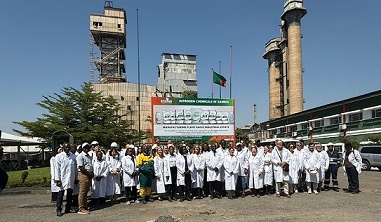
ADF deputies, currently meeting in Lusaka for the Fund’s 17th replenishment discussions, visited two flagship projects on Tuesday — the new Nitrogen Chemicals of Zambia (NCZ) fertilizer blending plant in Kafue and upgraded facilities at the University of Zambia. Government ministers joined the delegation, commending the Fund for its tangible development impact.
The ADF, the concessional arm of the African Development Bank Group, supports 37 low-income African countries, nearly half of which face fragility and conflict.
At the NCZ facility, Minister of Agriculture Reuben Mtolo Phiri described the Bank as a “critical ally,” noting that its investments had helped Zambia shift “from drought to surplus.” He said the new fertilizer plant represents an investment “in our farmers, our economy, and our future,” adding that it positions the country to enter regional export markets between 2025 and 2030.
African Development Bank Senior Vice President Marie-Laure Akin-Olugbade said Zambia’s 2024/25 food output exceeded 3.7 million metric tons—well above national needs—signaling a major leap toward self-sufficiency. She highlighted the Zambia Emergency Food Production initiative, which has supported nearly 5,900 farmers, over half of them women, with subsidized seeds and fertilizer.
The $1.3 million ADF contribution to the NCZ project is expected to reduce fertilizer costs by 40%, marking a major boost for smallholder farmers.
At the University of Zambia, Vice Chancellor Professor Mundia Muya lauded the ADF-funded Support to Science and Technology Education Project for modernizing lecture halls and laboratories, creating a more conducive environment for learning and research.
Minister of Technology and Science Felix Chipota Mutati said ADF interventions have expanded access to tertiary and technical education for 250,000 students, fostering peace and stability. “It’s not just about the investment,” he said. “It’s about anchoring peace and democracy through education and transformation.”
Akin-Olugbade noted that Zambia’s Emergency Food Production Facility is part of the wider Africa Emergency Food Production Facility, which supports 20 million farmers and targets 37 million tons of food production continent-wide.
“While launched in response to a crisis, this initiative is building long-term resilience and empowering farmers to drive Africa’s agricultural future,” she added.