


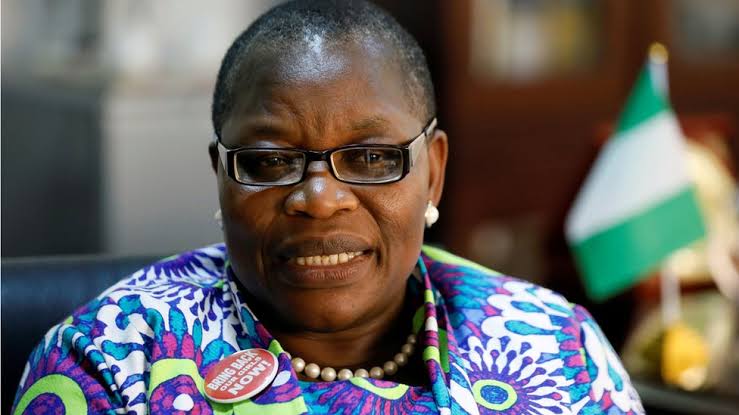






By Ayomide Otitoju
Former Minister of Education Obiageli Ezekwesili has called on African governments to enforce 18 years as the minimum age of marriage to protect girls from child marriage.
Ezekwesili, founder of Human Capital Africa, also urged traditional and religious leaders to support efforts to end the practice.
In a statement on Sunday to mark the International Day of the Girl Child, she said child marriage continued to undermine girls’ education and Nigeria’s human capital development.
“A girl who learns is a girl who is not a bride,” she said, calling for increased investment in girls’ rights and stronger efforts to end child marriage.
Ezekwesili cited a report by Columbia University on accelerating efforts to end child marriage, which includes analysis by the Center for Global Development. She said the report estimated that child marriage could cost the global economy up to $175 billion annually, or nearly $2.5 trillion by 2040, through lost productivity and increased health risks.
She said 23.6 million Nigerian women and girls had been married before the age of 18, describing the figure as the highest in West and Central Africa.
Ezekwesili also cited figures for Jigawa State, where she said 78 per cent of women aged 20 to 49 were first married before 18, while 63 per cent of women left school to marry.
According to her, an estimated 68 million child marriages have been averted globally over the past 25 years through girls’ education, legal reforms and social protection.
However, she warned that cuts in foreign aid, declining global commitment to women’s rights and rising conflicts could slow or reverse progress.
“Child marriage is not a side issue in development. It drains a nation’s human capital directly,” she said.
Ezekwesili urged governments to strengthen legal protections for girls and address educational barriers that make them vulnerable to early marriage.
“Enforce 18 as the minimum age of marriage in law and in practice, in every state and every community, with traditional and religious leaders as partners,” she said.
She also called for increased domestic funding, urging African governments and philanthropic organisations to compensate for declining foreign aid.
She further urged governments to track and publish data on girls’ learning outcomes, transition to secondary school and child marriage rates as part of national accountability systems.
Ezekwesili said the African Union’s Decade of Accelerated Action for the Transformation of Education and Skills Development in Africa, covering 2025 to 2034, provided an opportunity to prioritise girls’ education and retention.
She pledged to advocate for girls’ learning and school retention to be central to measuring the initiative’s success, adding that efforts to transform African education must also address child marriage.


