




By Ayomide Otitoju
The Federal Government has endorsed the Lagos International Financial Centre (LIFC) as a strategic national economic priority, with a soft launch targeted for the first quarter of 2027.
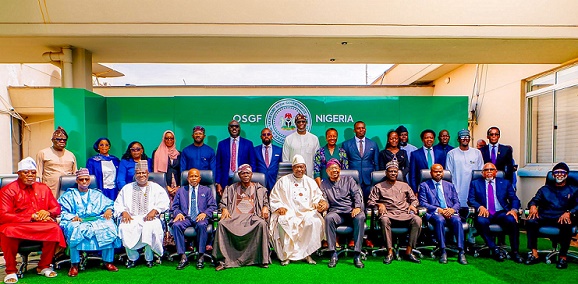
The commitment was made at the inaugural meeting of the LIFC National Steering Committee in Abuja on Wednesday, September 2, 2026, bringing together key Federal Government institutions, the Lagos State Government and the private sector, represented by EnterpriseNGR.
The development marks a major step in moving the LIFC from planning to implementation, with the Federal Government taking responsibility for addressing the legal, fiscal, regulatory, immigration, investment promotion and digital infrastructure requirements needed to establish the Centre.
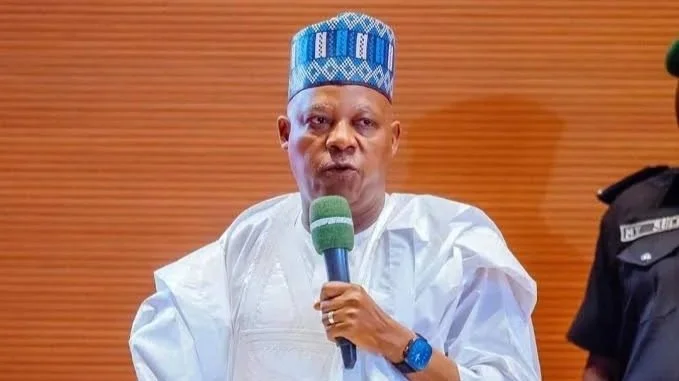
Secretary to the Government of the Federation, Senator George Akume, who inaugurated the committee, said President Bola Ahmed Tinubu had directed his office to coordinate Federal Government support for the initiative.
Akume said the LIFC would leverage Lagos’ strategic position and Nigeria’s economic potential to create a financial centre capable of competing internationally.
He said the composition of the steering committee reflected the level of coordination required to address the policy, legal, regulatory, institutional and infrastructure challenges involved in establishing a globally competitive financial centre.
The committee includes institutions responsible for finance, justice, foreign affairs, immigration, trade and investment, communications and taxation, as well as the Central Bank of Nigeria and the Securities and Exchange Commission.
The Federal Government’s involvement is expected to strengthen coordination and create an environment that offers domestic and international investors greater regulatory clarity, legal certainty and institutional confidence.
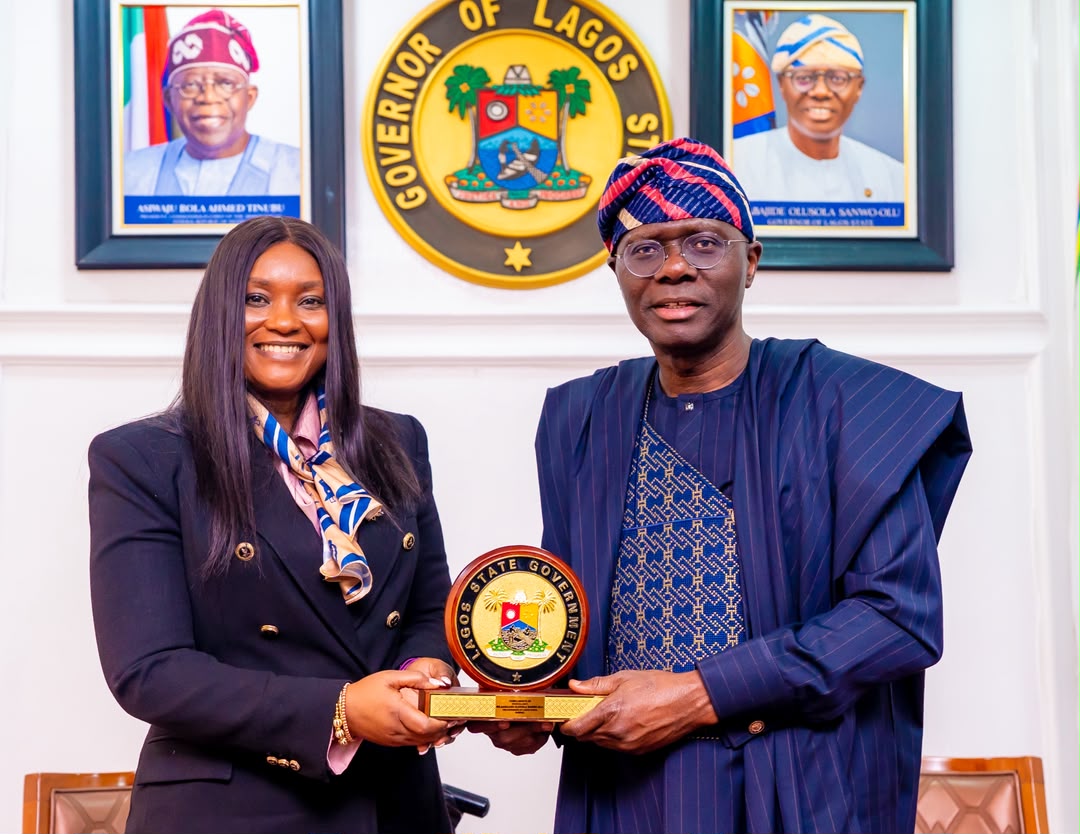
Lagos State Governor and Chairman of the LIFC Council, Babajide Sanwo-Olu, described the Centre as “strategic national infrastructure”, stressing that it should not be viewed solely as a Lagos project but as part of Nigeria’s long-term economic strategy.
Sanwo-Olu said international financial centres were deliberately established to mobilise long-term capital, deepen financial markets, strengthen trusted jurisdictions and connect domestic economies with global investment.
He said Lagos’ ambition was to establish Africa’s premier international financial centre and create a trusted gateway through which global capital could access investment opportunities in Nigeria and across Africa.
The governor stressed that the LIFC would be built on institutional trust, regulatory quality, legal certainty and international connectivity.
He added that the Centre would not operate as a tax haven or provide room for regulatory arbitrage or illicit financial activity, saying its competitiveness would instead depend on transparency, predictability and strong institutions.
Lagos, Nigeria’s principal commercial and financial hub, already has a large concentration of banking, capital markets, insurance, fintech, professional services and investment activities, providing the market depth and ecosystem needed to support an international financial centre.
The state government will continue to oversee key aspects of the initiative, including planning, infrastructure development and the Lagos-specific legislative and institutional framework required to support the Centre.
Sanwo-Olu, however, said the impact of the LIFC must extend beyond Lagos, describing it as an enduring national institution that could strengthen Nigeria’s capacity to compete for global capital under successive administrations.
He said the initiative was particularly important as the Federal Government pursues its ambition of building a $1 trillion economy by 2030.
Achieving that target, he noted, would require deeper pools of capital, stronger financial intermediation, greater investor confidence and institutions capable of connecting Nigerian opportunities with global finance.
EnterpriseNGR, which represents Nigeria’s financial and professional services sector, has been involved in the LIFC initiative from its early stages, helping to ensure that businesses and investors expected to use and sustain the Centre have a role in its design and implementation.
EnterpriseNGR has also drawn input from across Nigeria’s financial and professional services sectors, including banking, insurance, capital markets, asset management and professional services, and incorporated those perspectives into the Centre’s strategic and institutional design.
Speaking at the inauguration, EnterpriseNGR Chairman and Co-Chairman of the LIFC Council, Aigboje Aig-Imoukhuede, said the partnership between the Federal Government, Lagos State and the private sector demonstrated what could be achieved when institutions worked towards a common economic objective.
Aig-Imoukhuede said Nigeria had the potential to attract significant global capital if it could provide investors with a safe, predictable and credible environment.
“Capital is perhaps the most discerning visitor that I know,” he said, adding that investors would gravitate towards jurisdictions where they felt secure and saw opportunities for growth.
He said substantial preparatory work had already been completed, including a strategic blueprint, legal and regulatory gap assessments, a business plan, an institutional operating model and implementation economics.
Specialist workstreams are also focused on legal and regulatory reforms, institutional capacity and the international positioning of the Centre. KPMG is supporting the Project Office, while TheCityUK is providing international technical assistance with funding from the UK Government.
EnterpriseNGR said the initiative was ultimately aimed at ensuring that the benefits of international capital extended beyond Lagos into Nigeria’s wider economy.
It said capital entering Nigeria through Lagos would be expected to support opportunities across sectors, including infrastructure, technology, agriculture, manufacturing and other productive activities.
A successful LIFC is expected to support higher-value employment, deepen capital markets, strengthen professional services, expand the tax base and increase the participation of Nigerian businesses in regional and international markets.
Aig-Imoukhuede said the project was now entering its final development phase, with stakeholders targeting a soft launch in the first quarter of 2027.
Attorney-General of the Federation and Minister of Justice, Lateef Fagbemi, pledged Federal Government support for creating the legal certainty needed to strengthen investor confidence.
He said the government would identify Federal and sub-national laws that may require amendment, enhancement or repeal to support the Centre.
Executive Chairman of the Nigeria Revenue Service, Zacch Adedeji, urged stakeholders to move quickly from planning to implementation, stressing that the LIFC should be designed around Nigeria’s constitutional, legal and economic realities rather than simply replicating models from other jurisdictions.
Minister of Industry, Trade and Investment, Jumoke Oduwole, described the initiative as a potential catalyst for Nigeria’s ambition of building a $1 trillion economy.
The Ministry of Foreign Affairs also pledged to support the Centre through Nigeria’s diplomatic network, international advocacy, investment diplomacy and strategic partnerships.
The National Steering Committee is expected to provide the institutional coordination required to move the LIFC from strategy to implementation by connecting Federal policymakers, the Lagos State Government and private-sector stakeholders.
The initiative comes as African and other emerging-market jurisdictions increasingly compete for global capital, businesses, talent, financial transactions and expertise.
Financial centres in Dubai, Abu Dhabi, Hong Kong, Mauritius, Casablanca and Kigali have demonstrated the role of deliberate policy, credible regulation and sustained institutional commitment in attracting international capital and financial activity.
With Federal Government backing, Lagos State providing jurisdictional leadership and EnterpriseNGR maintaining private-sector participation, stakeholders are positioning the LIFC as a potential gateway between global capital and opportunities in Nigeria and across Africa.
The Lagos International Financial Centre is a collaborative initiative of the Federal Government, Lagos State Government and the private sector, represented by EnterpriseNGR, aimed at establishing an internationally competitive financial centre in Lagos and positioning Nigeria as a trusted destination for global capital.


