









By Ayomide Otitoju
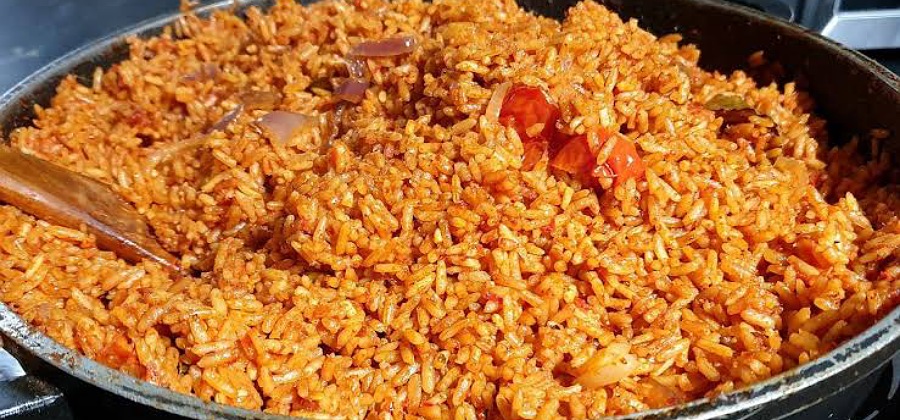
The rising food inflation in Nigeria has driven up the average cost of cooking a pot of jollof rice by 5.1%, from ₦20,274 in June to ₦21,300 in September, according to the Q3 2024 SBM Jollof Index report titled “Crisis on the Menu.”
The report highlights that while the prices of key ingredients like tomatoes and peppers slightly eased in August and September, other staples, such as rice, experienced sharp increases. The cost of a 50kg bag of long-grain rice surged from ₦85,000 in July to ₦100,000 by September, despite government efforts to distribute subsidized rice at ₦40,000 per bag.
The price hike reflects broader inflationary pressures, compounded by high energy costs, transportation challenges, and natural disasters. Cooking gas prices rose steadily from ₦14,200 in July to ₦16,500 in September, while petrol prices jumped from ₦830.46 to ₦1,030 within the same period, escalating transportation and storage costs.
Regional Disparities in Price Trends
Price trends varied significantly across Nigerian markets:
Markets with Price Increases:
Nyanya Market in Abuja recorded the steepest hike, with prices surging 29.5% from ₦21,850 in June to ₦28,300 in September. Similarly, Lagos’ Balogun Market saw a 15.8% increase, from ₦17,700 to ₦20,500, while Wuse II Market in Abuja noted a 22.2% rise, reaching ₦28,300.
Markets with Price Declines:
Onitsha Market experienced a 13.2% decrease, with prices dropping from ₦22,350 in June to ₦19,400 in September, reflecting a temporary improvement in local supply. Kano Market also saw a 3.5% decline from June to August, with prices stabilizing before a slight uptick in September.
Key Drivers of Inflation
Usman Abdullahi, a commodities trader in Abuja, attributed the persistent high prices to flooding and insecurity. The Alan Dam collapse in Borno and heavy rainfall affected 29 states, damaging thousands of farmlands and disrupting the agricultural supply chain.
“A lot of food may not be recovered because of the floods. Many farmlands in Bauchi, Gombe, Jigawa, and Niger were seriously affected, reducing the availability of crops for market sale,” he explained.
In addition, the cost of fertilizers has doubled to ₦40,000 per 50kg bag, further driving up agricultural input costs.
Outlook
The report underscores that while some markets are experiencing price stabilization, the overall cost of essential ingredients remains high, leaving many Nigerian households struggling to afford basic meals like jollof rice. Policymakers and stakeholders are urged to address the underlying drivers of food inflation, including supply chain disruptions, energy costs, and agricultural productivity.
The sustained rise in food prices highlights the growing challenge of food affordability in Nigeria, with millions of families feeling the pinch of inflation.


