

By Ayomide Otitoju
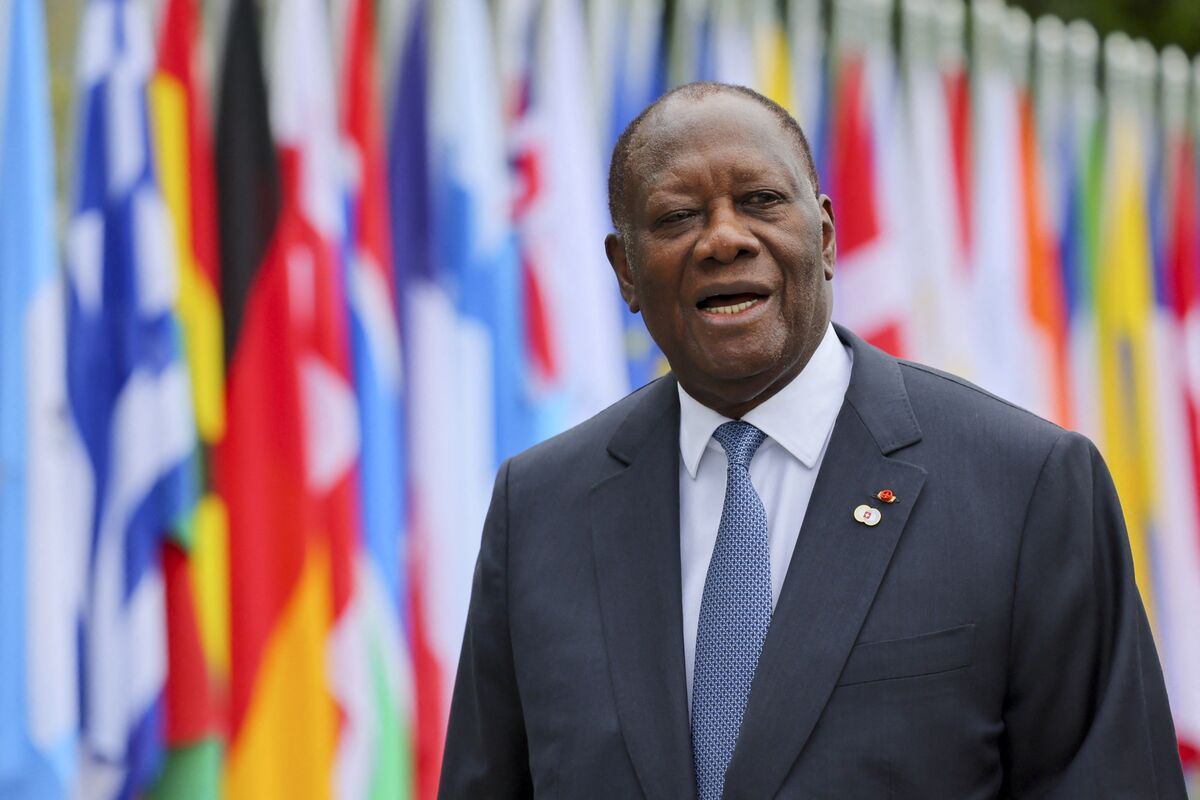
Ivory Coast President Alassane Ouattara has secured a fourth term in office, winning 89.77 percent of the vote in Saturday’s presidential election, the country’s electoral commission announced Monday. His two main rivals were barred from running.
Nearly nine million voters were eligible to cast ballots in the West African cocoa producer, which has largely avoided the coups and jihadist attacks affecting the region but witnessed heightened tensions and deadly violence ahead of the vote.
Early tallies on Sunday had already indicated a decisive victory for Ouattara, with turnout approaching 100 percent in his northern strongholds. He also led in traditionally pro-opposition areas in the south and parts of the economic hub Abidjan, where many polling stations remained nearly empty.
Entrepreneur Jean-Louis Billon came second with 3.09 percent, according to Ibrahime Kuibiert Coulibaly, president of the electoral commission, which recorded an overall turnout of 50.10 percent—similar to 2020, when Ouattara won 94 percent in an election boycotted by major opponents.
This year, former president Laurent Gbagbo and ex-Credit Suisse CEO Tidjane Thiam were both barred from running—Gbagbo due to a criminal conviction and Thiam for acquiring French nationality. “Their absence, their calls not to participate, and the deteriorating climate in recent days foretold significant demobilization of the electorate,” said William Assanvo, a researcher at the Institute for Security Studies.
In Gbagbo’s former stronghold of Gagnoa, Ouattara secured 92 percent of the vote but with just 20 percent turnout. The opposition has already rejected Ouattara’s victory as illegitimate and called for new elections.
Political analyst Geoffroy Kouao noted the results highlighted a stark division: “Ouattara’s supporters turned out in force, as shown by the near-unanimous results in some regions, while supporters of Gbagbo and Thiam’s parties largely abstained.”
Billon also expressed concern over low turnout in parts of the country but congratulated Ouattara. Other candidates, including former first lady Simone Ehivet Gbagbo, were unable to challenge for a second round due to limited party support and financial resources.
Pre-election tensions had triggered deadly unrest, with at least eight people killed and nearly two dozen injured in clashes at polling stations. The government responded with a nighttime curfew in some areas and deployed 44,000 security personnel.
Ouattara, who first came to power following the disputed 2010-2011 election that claimed more than 3,000 lives, has maintained a strong hold on Ivorian politics. On Monday, Abidjan returned to near-normal activity after a largely deserted weekend.
Pro-Ouattara newspaper Patriote hailed the vote as “a calm election,” while opposition daily Notre Voie described it as “an election reflecting a divided country.”


