



By Ayomide Otitoju
Former President Olusegun Obasanjo has criticised the model of democracy practised in many African countries, saying it lacks African context and content and has fostered a winner-takes-all political culture.
Obasanjo said the Western liberal democracy inherited by many African nations was not designed around the continent’s realities, likening its adoption to wearing a dress that was not made to fit.
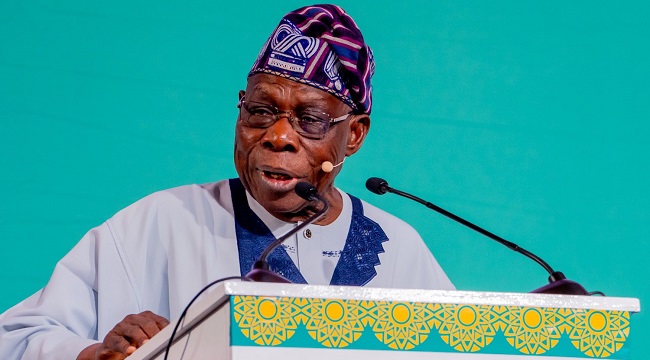
The former president spoke on Tuesday at the 2026 Goodluck Jonathan Foundation Democracy Dialogue in Bauchi, the Bauchi State capital.
He argued that the system had created a political culture where election winners often disregard those who lose, particularly because the concept of opposition is interpreted differently in many African societies.
“The democracy we practice has no African context, no African content,” Obasanjo said.
He explained that while Western democracy could accommodate the concept of a “loyal opposition”, the word for opposition in many African languages often carries the meaning of “enemy”.
According to him, this interpretation contributes to political hostility, where winners seek to suppress their opponents instead of working with them.
He also criticised the first-past-the-post electoral system, arguing that a narrow electoral victory can give the winner control over everything, regardless of the strength of the losing side.
“If you beat me by one vote then you take it all and whatever I have does not matter,” he said.
Obasanjo also warned against poor management of Nigeria’s diversity, saying the country’s different ethnic, cultural and social identities must be recognised and protected.
“Nigeria is what it is because of our diversity,” he said, adding that removing diversity from the country would result in entities that could no longer be described as Nigeria.
The former president also expressed concern over the growing influence of money and other forms of inducement in Nigerian politics, saying they had increased “by leaps and bounds”.
While acknowledging that poverty and illiteracy pose challenges to democratic development, Obasanjo criticised the limited representation of women in Nigerian politics.
He noted that Nigeria had not elected a female governor in more than 24 years of the Fourth Republic, despite concerns about the quality and character of some elected officials.
Obasanjo said Nigeria needed to develop a political system that reflects its history, culture and values rather than simply adopting foreign political institutions.
He stressed that democracy should be viewed as a continuous process rather than a destination.
According to him, countries from which African nations adopted Western liberal democracy are themselves reviewing aspects of the system, making it necessary for African countries to also reassess their approach.
“Call it what you like, just make sure it has history, culture and values that are African,” he said, adding that the system could be described as “African democracy” if it reflected African context and content.
The dialogue was chaired by Obasanjo and attended by former President Goodluck Ebele Jonathan and former Vice President Namadi Sambo.
Bauchi State Governor Bala Mohammed hosted the event, which also attracted constitutional experts and civil society representatives from across Africa.


