By Ayomide Otitoju
Lagos State Governor, Babajide Sanwo-Olu, has said Lagos is strategically positioned as Africa’s leading geoeconomic hub, driven by strengths in trade, infrastructure, finance, technology, and human capital.
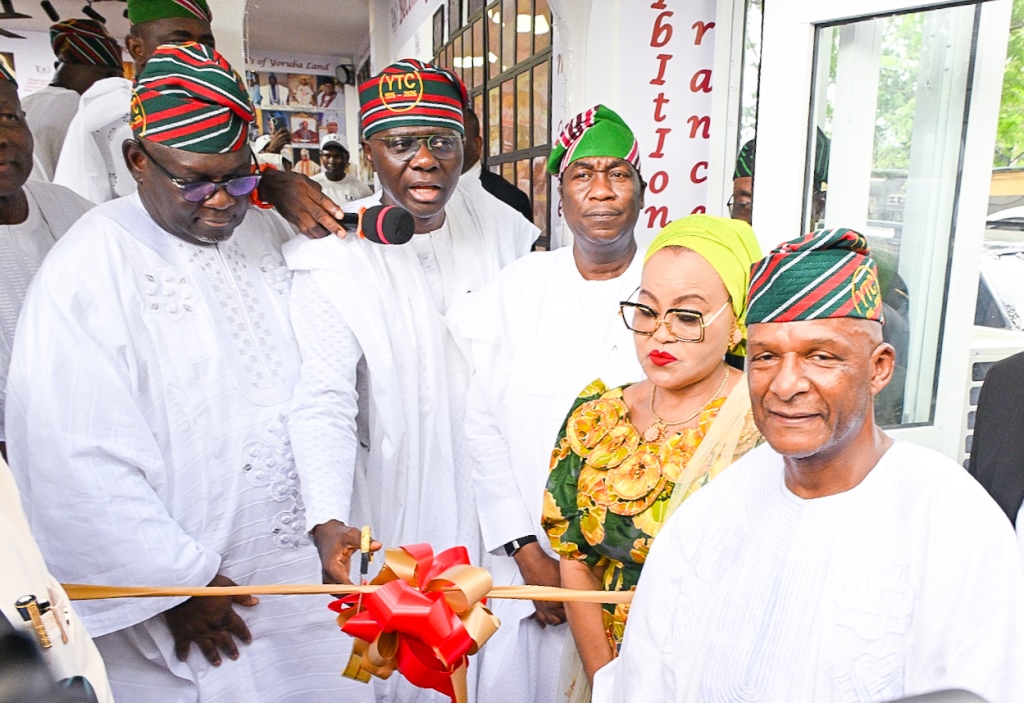
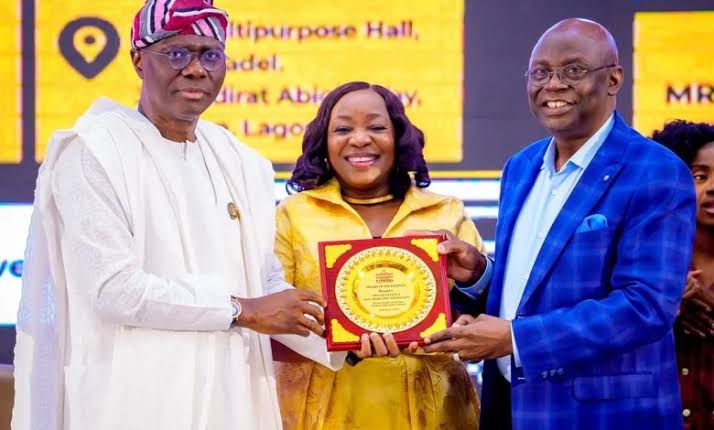
Speaking on Saturday at the Geo-Economic Optimization Summit Lagos 2026 organised by the Citadel School of Government in Oregun, Sanwo-Olu said geoeconomics now defines global power dynamics, where influence is shaped by economic assets such as ports, data infrastructure, and supply chains.
The governor noted that Lagos contributes about one-third of Nigeria’s Gross Domestic Product (GDP) and ranks as Africa’s second-largest metropolitan economy after Cairo, with a purchasing power parity output estimated at $259.75 billion.
He added that Lagos would rank as Africa’s eighth-largest economy if it were a country, stressing that over 90 per cent of its economic output is driven by finance, technology, trade, logistics, creative industries, and the blue economy.
Sanwo-Olu described Lagos as Nigeria’s commercial and financial nerve centre, saying the state’s performance has nationwide implications.
He called for stronger regional economic integration within the South-West and across Nigeria, urging leaders to “think regionally, act strategically, and cooperate generously.”
Highlighting ongoing infrastructure projects, the governor cited investments in rail transport, including the operational Blue and Red lines, federal support for the Green Line, and upgrades to the Lagos-Badagry Expressway. He also referenced electricity market reforms under the state’s new power law and federal projects such as the Coastal Highway and Sokoto-Badagry Superhighway.
Sanwo-Olu reiterated his call for a special constitutional status for Lagos, citing its historical role as a former federal capital territory, its economic significance, and population burden.
He also reaffirmed Lagos’ openness to investors and global partnerships.
Founder of the Citadel School of Government, Pastor Tunde Bakare, described Lagos as a model for economic transformation, noting that the state demonstrates what is possible through strategic planning, continuity, and sustained investment.
He said Lagos provides a blueprint for developing multiple regional economic hubs across Nigeria, capable of integrating into global markets.
Similarly, Executive Director of the University of Lagos Business School, Prof. Sunday Adebisi, said Lagos possesses the commercial and geographic advantages to lead Africa’s economic growth, calling for deliberate investment in knowledge systems, infrastructure, and governance.
The summit organisers said the event marks the beginning of broader conversations on leveraging Nigeria’s regional strengths to build a more competitive national economy.
Copyright TRUSTAFRICA NEWS.
All rights reserved. This material, and other digital content on this website, may not be reproduced, published, broadcast, rewritten or redistributed in whole or in part without prior express written permission from TRUSTAFRICA NEWS.
Contact: hello@trustafricanews.com.ng