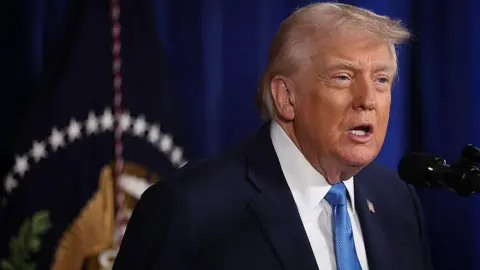
The Trump administration announced Wednesday that it will dictate decisions to Venezuela’s interim leaders and oversee the country’s oil sales “indefinitely” following the removal of President Nicolás Maduro.
White House Press Secretary Karoline Leavitt said the United States currently has “maximum leverage over the interim authorities in Venezuela” and will continue to coordinate closely with them, with decisions effectively directed by Washington.
The announcement comes after US special forces captured Maduro and his wife, Cilia Flores, in a weekend raid, transporting them to New York to face drug charges. Trump has framed the operation as part of his so-called “Donroe Doctrine” asserting US dominance over the region.
Venezuela’s interim government, however, denied foreign control over Caracas. “There is a stain on our relations such as had never occurred in our history,” Interim President Delcy Rodriguez said, describing the US-led operation to depose Maduro.
The raid reportedly killed at least 100 people and injured a similar number, according to Venezuela’s Interior Minister Diosdado Cabello, with 32 Cuban military personnel among the dead. Despite the injuries, Maduro and his wife appeared in New York court earlier this week, walking unaided.
The Trump administration has indicated that it intends to work primarily with Rodriguez while sidelining opposition figures, including Nobel laureate Maria Corina Machado. Secretary of State Marco Rubio told lawmakers on Wednesday that Washington’s strategy is carefully planned, despite ongoing criticism of post-Maduro policies.
Central to the US approach is control of Venezuela’s oil. Trump said that Venezuela will supply 30–50 million barrels of crude to the United States, which will then sell it and require the country to purchase American-made goods with the proceeds, including agricultural products, machinery, medical devices, and energy equipment.
Energy Secretary Chris Wright said Washington intends to market Venezuela’s crude “indefinitely,” beginning with stored oil and eventually managing ongoing production. Trump also plans to meet US oil executives on Friday to encourage investment in Venezuela’s deteriorating facilities, though no companies have yet committed.
In a show of further influence, Washington seized two oil tankers, including a Russian-linked vessel en route from Venezuela, which it claimed was “stateless” after flying a false flag. Moscow condemned the seizure.
Trump has also invited Colombian President Gustavo Petro to the White House following their first phone call since Trump took office, signaling broader regional engagement amid the unfolding Venezuelan crisis.