


The death toll from the twin earthquakes that struck northern Venezuela has risen to 589, with more than 50,000 people still missing as international rescue teams intensify efforts to locate survivors beneath collapsed buildings.
United Nations Under-Secretary-General for Humanitarian Affairs, Tom Fletcher, disclosed the latest figures on Friday, warning that the number of fatalities is expected to increase significantly as rescue operations continue.
“We’ve got over 50,000 people missing, over 500 people dead, so a massive job to go through the rubble,” Fletcher told AFP.
Interim President Delcy Rodriguez also acknowledged that the casualty figure would likely rise as emergency workers gained access to more affected areas.
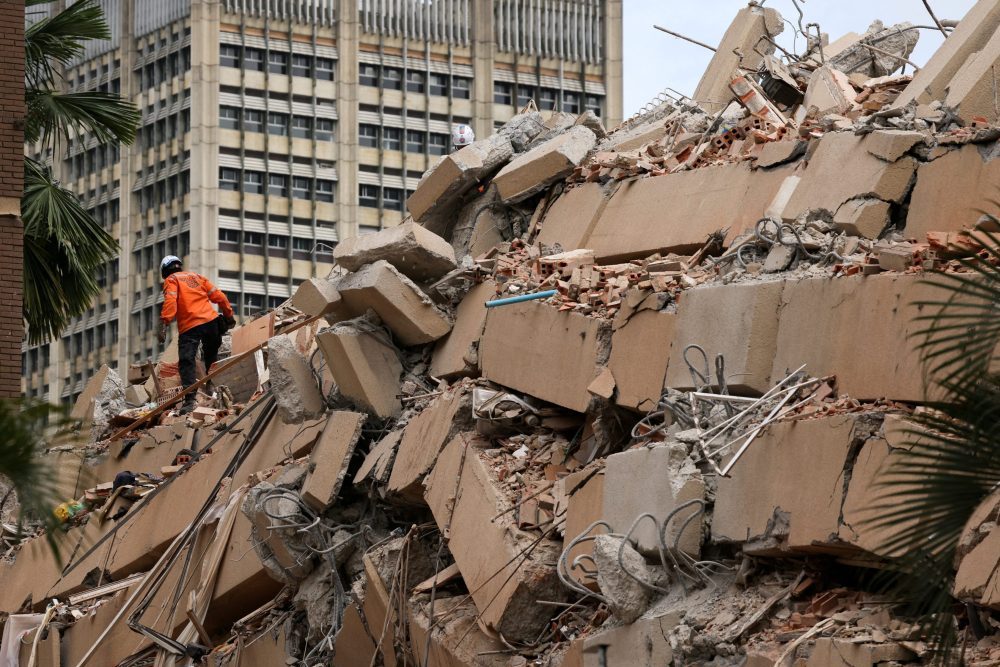
Rescue teams, supported by sniffer dogs and heavy equipment, have been deployed to the worst-hit areas in La Guaira, north of the capital, Caracas, where hundreds of buildings collapsed following the powerful tremors. In many locations, rescuers have been forced to rely on manual labour due to limited access to specialised equipment.
At one collapsed building, emergency workers paused repeatedly to call for silence in an effort to hear cries from survivors trapped beneath the debris.
Families also continued desperate attempts to rescue relatives.
“It is a lot of rock, and with bare hands it is impossible,” said Amparo del Giudice, who was searching for her son.
In another part of La Guaira, residents reported hearing three people trapped beneath a collapsed building but lacked the equipment needed to rescue them.
“They’re still alive. There’s nothing more we can do. We don’t have any tools,” resident Antonio Bermudez said.
Medical personnel also described the humanitarian impact of the disaster. A doctor at Domingo Luciani Hospital said children rescued from collapsed buildings were arriving unaccompanied in ambulances, with some identified only by tags attached to their arms.
National Assembly President Jorge Rodriguez said more than 200 people had been confirmed trapped alive.
The UN Office for the Coordination of Humanitarian Affairs (OCHA) said rescue teams from at least 17 countries had been mobilised, with personnel from Spain, El Salvador, Switzerland, Colombia and Mexico already participating in search operations.
The United States has deployed two naval vessels, transport aircraft, helicopters and $150 million in emergency assistance, while temporarily suspending economic sanctions that could hinder relief efforts. A senior US military official also arrived in Caracas to coordinate American assistance.
China, India, Brazil, Iran and several other countries have offered humanitarian support, while Pope Leo XIV donated an initial €100,000 to assist victims.
UN Secretary-General Antonio Guterres described himself as “deeply saddened” by the tragedy and pledged continued international support.
The UN warned that the disaster has compounded an already fragile humanitarian situation in Venezuela, where years of economic decline have weakened healthcare and public services.
“Even before the earthquakes, millions of people across Venezuela were facing food insecurity, collapsing health services, protection risks and limited access to basic services,” the UN and partner agencies said in a joint statement.
The international body warned that the crisis could deteriorate further without sustained global assistance.
The twin earthquakes, measuring magnitudes 7.2 and 7.5, struck within less than a minute of each other on Wednesday night, making them the strongest to hit Venezuela in 126 years.
The tremors caused widespread destruction across northern Venezuela, damaged La Guaira International Airport, and were felt in neighbouring Colombia and northern Brazil.
Authorities confirmed that foreign nationals, including citizens of Brazil, China, Italy and Portugal, were among those killed.
Emergency officials said search-and-rescue operations remain ongoing as hopes fade of finding more survivors beneath the rubble.


