




By Ayomide Otitoju
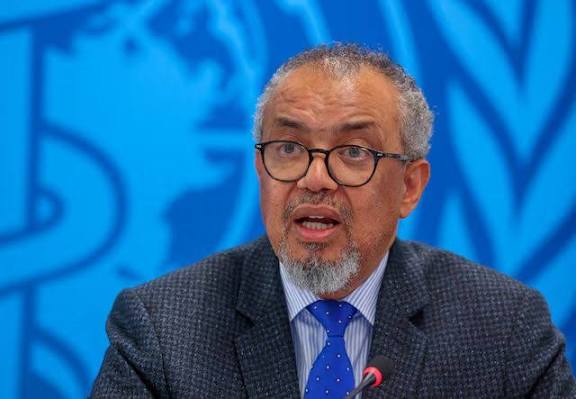
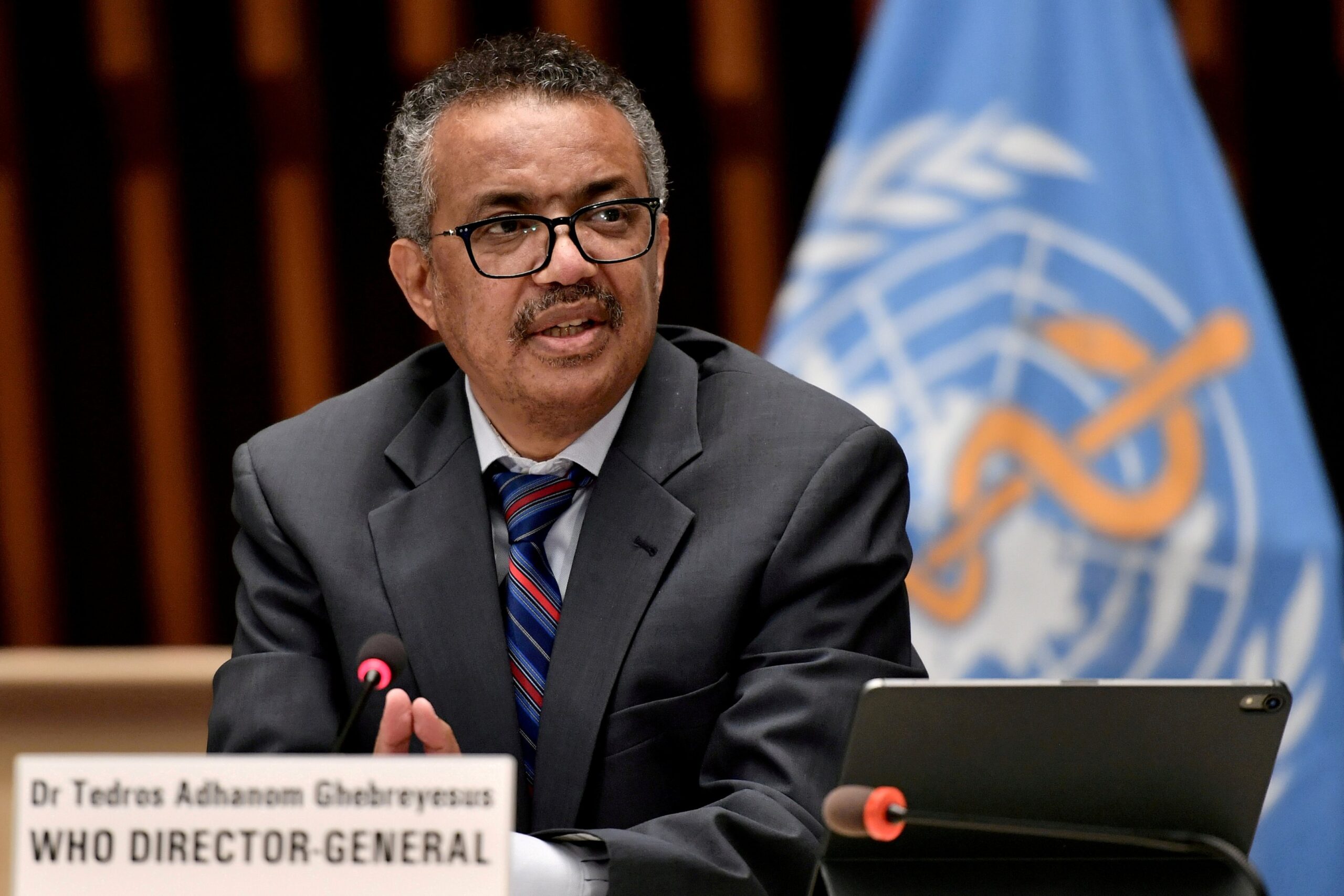
The Director-General of the World Health Organization (WHO), Tedros Adhanom Ghebreyesus, on Monday commended Uganda’s response to the Ebola outbreak linked to neighbouring Democratic Republic of the Congo, saying the country had made significant progress in containing the spread of the virus.
The WHO has declared the outbreak a global health emergency after 515 confirmed cases, including 91 deaths, were recorded in the DRC since the outbreak was announced on May 15 in the country’s northeastern region.
Uganda has so far reported 19 cases and two deaths, with all but five of the infections involving Congolese nationals who crossed into the country.
Speaking during a visit to Mulago National Referral Hospital in Kampala, Tedros praised Uganda’s handling of the outbreak, attributing its success to experience gained from managing previous public health emergencies.
“The success rate in managing Ebola in Uganda has been good,” he said, noting that the country’s Ebola case fatality rate remained below one per cent. He added that the WHO had supported the training of 148 health workers to strengthen the response effort.
Tedros also applauded the Ugandan government’s decision to cancel the annual Martyrs Day celebrations held on June 3, an event that typically attracts large crowds from across the region.
He said the cancellation helped prevent a wider spread of the disease, warning that mass gatherings could have significantly increased infection numbers.
During his visit, the WHO chief met with Ugandan President Yoweri Museveni to discuss cross-border cooperation in tackling the outbreak.
Tedros stressed that travel restrictions were not the solution, arguing that they could harm economies without effectively stopping the spread of the disease.
“There is no need for restrictions since they affect the economy. Restrictions don’t really help. Addressing the epicentre is the solution,” he said.
One of Uganda’s confirmed Ebola cases involved a Congolese national who travelled through the United Arab Emirates before entering Uganda. Shortly afterward, the UAE announced a ban on travellers arriving from the DRC, Uganda and South Sudan.
Media reports also indicated that Mauritius had introduced similar restrictions on travellers from the three countries.
The current outbreak is the 17th Ebola outbreak recorded in the DRC, a country that has experienced repeated epidemics over the past decades. Health authorities noted that there is currently no specific vaccine or treatment for the Bundibugyo strain responsible for the latest outbreak.
Tedros said the WHO was working closely with the Africa Centres for Disease Control and Prevention and other partners to support affected countries.
“With continued collaboration, I am confident this outbreak can be brought under control,” he said.
Ebola, which spreads through close contact with infected individuals and bodily fluids, has claimed more than 15,000 lives across Africa over the last 50 years.
To strengthen the response, the WHO and Africa CDC recently launched a $518 million emergency plan aimed at combating the outbreak over the next six months.
The epicentre of the current outbreak remains in the DRC’s Ituri Province, a region challenged by poor infrastructure and ongoing insecurity linked to armed groups.


