









By Ayomide Otitoju
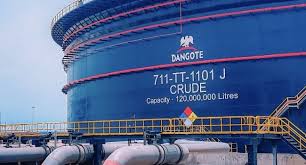
The influence of the Dangote Petroleum Refinery & Petrochemicals is extending beyond Africa and the Middle East, with the United States importing over two million barrels of jet fuel from the world’s largest single-train refinery in March.
According to ship-tracking service Kpler, six vessels carrying approximately 1.7 million barrels of jet fuel from Dangote Refinery have arrived at US ports this month. Another vessel, the Hafnia Andromeda, is scheduled to arrive at the Everglades terminal on March 29 with about 348,000 barrels of jet fuel.
With a refining capacity of 650,000 barrels per day (bpd), the Dangote Refinery is positioning itself as a key player in global fuel trading. The shipment to the United States follows the recent export of approximately 130 million litres of jet fuel to Saudi Arabia. Industry analysts suggest that the influx of supply from Nigeria could reduce jet fuel prices in the US ahead of the peak summer travel season.
Steven Barsamian, Chief Operating Officer of TankTiger, noted that US jet fuel imports from Dangote Refinery are expected to drive down aviation fuel prices, with March imports averaging around 226,000 bpd, the highest level since February 2023.
The Dangote Refinery commenced production in January 2024 and has rapidly gained international recognition. Experts attribute the recent surge in US imports partly to a temporary shutdown at the Phillips 66 Bayway refinery in New Jersey, which created a supply gap. However, the choice of Dangote’s jet fuel underscores its competitiveness and adherence to international quality standards.
Dr. Muda Yusuf, CEO of the Centre for the Promotion of Private Enterprises (CPPE), described the development as a major milestone for Nigeria, highlighting the refinery’s global reputation.
“Having our refined products exported to the United States signifies quality and trust. These are highly regulated markets with stringent standards, so this is a remarkable achievement for Nigeria,” Yusuf stated.
Public Policy Expert, Dr. Abimbola Oyarinu, emphasized the economic benefits of a functional local refinery, arguing that Nigeria’s prolonged dependence on crude oil exports has worsened inflation and unemployment.
“This is a reality that should have been addressed a decade ago. If Nigeria had invested in functional refineries earlier, we wouldn’t have faced such economic hardship,” Oyarinu said.
He further warned that difficulties in the business environment could deter potential investors, stressing the need for government support to sustain and expand local refining capacity.
As Dangote Refinery continues to break global barriers, analysts believe its growing influence will contribute significantly to Nigeria’s economic diversification and energy security.


