






By Ayomide Otitoju
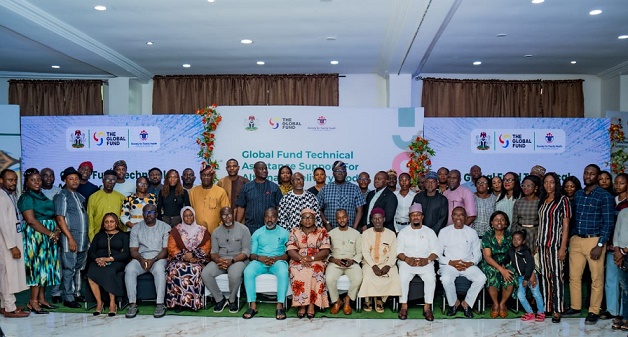
The Global Fund, Society for Family Health (SFH), and national health programmes on Tuesday unveiled a new Technical Assistance Support initiative aimed at integrating HIV and malaria services into private-sector delivery channels as Nigeria prepares for declining donor funding. The launch, held at the Dover Hotel in Ikeja, Lagos, marks a major step toward building a sustainable, country-owned health response.
SFH Managing Director, Dr. Omokhudu Idogho, said the initiative comes at a pivotal time as Nigeria confronts reduced external support for HIV, TB, and malaria programmes. Although the country receives less than 1% of its national health financing from Overseas Development Assistance, he noted that international donors still fund about 78% of Nigeria’s HIV response.
Describing the situation as a “national security emergency,” Idogho warned that millions remain dependent on donor resources. He said the new model, rooted in the Total Market Approach, would leverage public, private, and community contributions to strengthen long-term sustainability.
The project seeks to define how private-sector providers—particularly pharmacies and Patent and Proprietary Medicine Vendors (PPMVs)—can deliver HIV testing, prevention tools, treatment services, and malaria diagnostics. Idogho added that SFH’s 43 years of community and multi-sectoral experience would support government ownership and help embed new efficiencies as the model expands to more states.
In a virtual address, Sidharth Rupani, Senior Advisor for Supply Chain Strategy and Policy at the Global Fund, expressed strong confidence in the project’s potential. He said the investment will test financial sustainability models for HIV self-testing, oral PrEP, and malaria rapid diagnostic kits in private channels. Rupani added that pharmacies and PPMVs already serve as key access points for millions of Nigerians and must be fully integrated into national health delivery.
He noted that although the pilot will begin in four states, its outcomes will guide broader adoption in future Global Fund cycles. Rupani said SFH was selected from over 20 bidders due to its technical strength, private-sector experience, and extensive partnerships.
Representing the Director-General of the National Agency for the Control of AIDS (NACA), Head of Public-Private Partnership and Resource Mobilisation, Desmond Aso, said Nigeria can no longer rely on donor-driven systems. He urged governments at all levels to commit stronger domestic financing and ensure private-sector contributors are captured within national data systems for improved planning.
National Coordinator of the National AIDS, Sexually Transmitted Infections and Hepatitis Control Programme (NASCP), Dr. Hafsat Iyanda, commended SFH for championing what she described as a “people-owned” approach. She said the model will enhance private-sector engagement and strengthen collaboration across HIV, malaria, and TB interventions.
Speaking on behalf of the National Malaria Elimination Programme (NMEP), Senior Programme Manager Dr. Ahmad Njidda emphasized the crucial role of pharmacies and PPMVs in malaria care. He said the project offers an opportunity to expand high-quality diagnostics in private outlets and reinforce adherence to the “test-before-treat” protocol, which remains essential for accurate malaria management.
The Pharmacy Council of Nigeria (PCN), represented by Pharm. Ene Daniel-Ebune, expressed readiness to provide regulatory support. She said well-regulated pharmacies and PPMVs are capable of expanding safe access to health services and emphasized the need for strengthened regulation to protect public health.
President of the Nigerian Association of Patent and Proprietary Medicine Dealers (NAPPMED), Sylvanus Onuoha, described the launch as a milestone for primary healthcare delivery. He said PPMVs, often the first contact for many Nigerians, stand ready to support HIV and malaria services if adequately trained and equipped.
Executive Secretary of the Healthcare Federation of Nigeria (HFN), Olufemi Akingbade, highlighted the urgency of integrating private-sector contributions into national planning, given the heavy burden of out-of-pocket spending. He pledged the support of HFN’s 400 member organisations to drive the model’s success.
State Secretary of the Lagos State Medicine Dealers Association (LSMDA), Hope Ezenwoke, welcomed the initiative and affirmed the readiness of Lagos-based PPMVs to collaborate with SFH and government agencies to improve diagnostic and treatment access, especially in underserved areas.
The three-day workshop brought together government agencies, state officials, private-sector bodies, pharmacists, PPMVs, and development partners to co-design operational pathways, sustainability and financing models, and regulatory structures for the Alternative Delivery Model.
The initiative is expected to play a central role in Nigeria’s shift from donor dependence to a resilient, country-owned HIV and malaria response—placing private-sector providers at the frontline of future service delivery.