




By Ayomide Otitoju
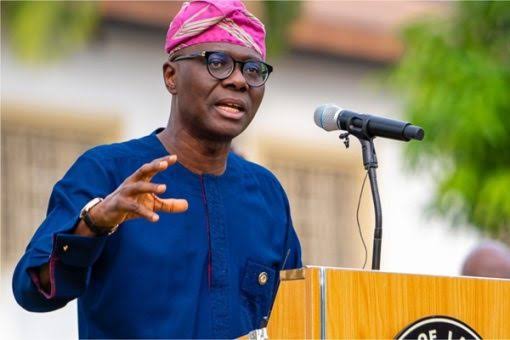
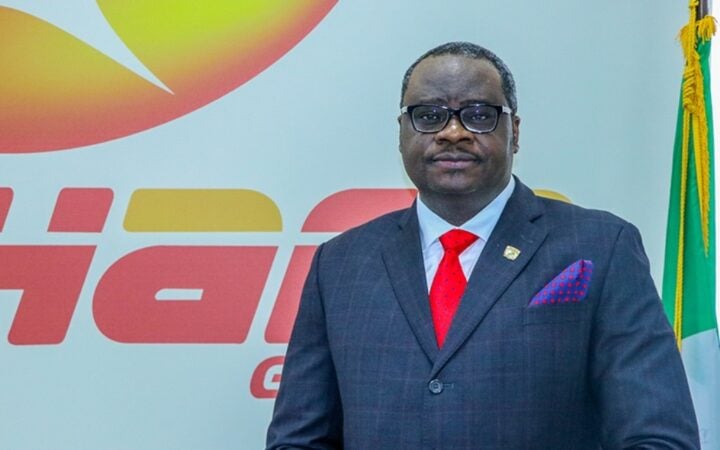
Group Managing Director of Sahara Power Group, Kola Adesina, has said Nigeria’s power sector remains central to the country’s economic and industrial development, with strong prospects for renewed investments driven by reforms, technology, and deeper collaboration among stakeholders.
Adesina, who spoke on the “State of the Power Sector and Opportunities Ahead,” said ongoing reforms and coordinated efforts across government institutions, regulators, financiers, and operators are laying the foundation for sustainable growth in the sector.
He said unprecedented collaboration involving the Federal Government, the Ministry of Power, regulatory agencies, power sector entities, the Central Bank of Nigeria, commercial banks, and multilateral development partners is expected to continue into 2026, driving efficiency, sustainability, and improved electricity supply nationwide.
Commending the Federal Government for addressing liquidity challenges through the settlement of legacy debts, Adesina said the intervention would help stabilise the sector and unlock new investments. He noted that progress has also been recorded in metering and service delivery, adding that improved cooperation between regulators and operators would enhance value chain optimisation and supply reliability for end-users.
According to him, the sector is set to witness distribution network reforms focused on large-scale infrastructure rehabilitation, deployment of Advanced Metering Infrastructure, and the introduction of robust Customer Relationship Management systems to reduce Aggregate Technical, Commercial, and Collection losses.
Adesina said Sahara Power Group remains committed to working with all stakeholders to ensure reliable electricity becomes the backbone of national development. He noted that Sahara Power currently accounts for about 20 per cent of Nigeria’s total power generation through its subsidiaries, which include Egbin Power Plc, First Independent Power Limited, and Ikeja Electric.
He disclosed that the group is on track to increase dispatched generation capacity to between 6,500MW and 7,000MW, while also planning to launch a data centre to support operational expansion and innovation. He added that Sahara Power would invest significantly in gas and renewable energy sources over the next three to five years to deliver sustainable, affordable, and reliable power.
Adesina said the planned data centre would utilise real-time data analytics, predictive maintenance, and cybersecurity solutions in collaboration with the Federal Government and system operators to improve efficiency and transparency across the sector.
On the company’s power sector loans, Adesina said discussions with the consortium of banks involved are progressing positively. He said the loans, which mature in 2034, are being serviced in line with agreed terms, enabling the company to attract further investments and execute expansion plans.
He disclosed that Sahara Power has serviced the naira equivalent of $438 million, representing 73 per cent of its original $600 million loan, despite liquidity constraints and outstanding debts owed to the company and its gas suppliers, which stood at ₦1.514 trillion as of March 31, 2025.
Adesina expressed optimism that the Federal Government’s ongoing legacy debt payments would facilitate the full settlement of outstanding obligations to banks, gas suppliers, and service providers, allowing the group to accelerate growth.
He also praised President Bola Ahmed Tinubu’s infrastructure-driven economic agenda, saying recent policy reforms, exchange rate stability, and easing inflation have improved predictability and boosted investor confidence in the power sector.
Industry experts have noted that the government’s Legacy Debt Resolution plan for generation companies and gas suppliers is expected to stabilise the electricity value chain and restore investor confidence. Data from the Nigerian Electricity Regulatory Commission show that more than 2.3 million new meters have been deployed under the National Mass Metering Programme since 2020.