


By Ayomide Otitou
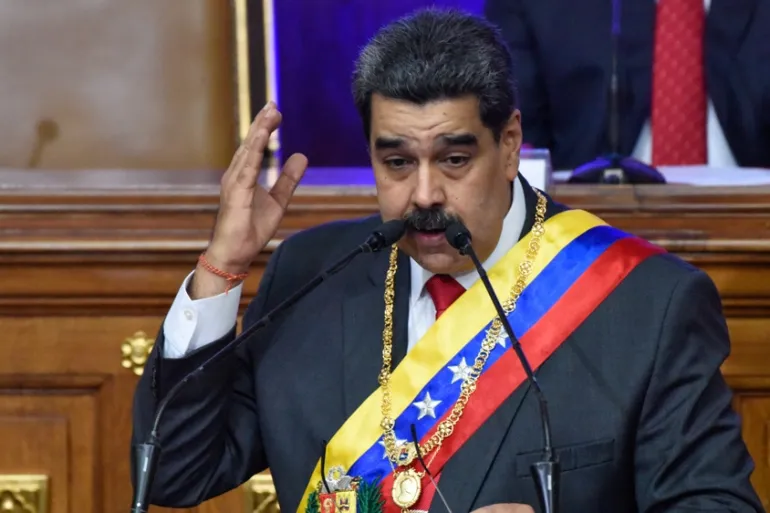
US forces killed a total of 55 Venezuelan and Cuban military personnel during a weekend operation to capture former President Nicolás Maduro, according to official figures released Tuesday by Caracas and Havana.
Venezuela’s military confirmed that 23 of its service members died in Saturday’s raids, which resulted in Maduro’s ouster. An official toll of civilian casualties has not yet been released. Cuba, which had earlier reported 32 deaths among its armed forces and interior ministry personnel stationed in Caracas, provided further details, saying the victims ranged in age from 26 to 67 and included two colonels and a lieutenant colonel. Many of the Cuban casualties were reportedly part of Maduro’s security detail, largely eliminated in the attacks, according to Defence Minister Vladimir Padrino López.
The assault began with bombing raids on military targets and culminated with US special forces seizing Maduro and his wife, Cilia Flores, from a Caracas compound. The couple was later flown to New York, where they appeared in court Monday and pleaded not guilty to drug trafficking and other charges. Mexican President Claudia Sheinbaum called on the United States to ensure Maduro receives a “fair trial.”
Hours after the court appearance, former deputy Delcy Rodríguez was sworn in as interim president. US President Donald Trump said he is willing to work with her if she complies with Washington’s demands for access to Venezuela’s vast oil reserves. Rodríguez faces a delicate balancing act, attempting to satisfy US expectations while maintaining the loyalty of Maduro loyalists who control security forces and paramilitary units patrolling Caracas.
A sign of continuing repression emerged as 14 journalists and media workers, mostly from foreign outlets, were briefly detained while covering Rodríguez’s parliamentary inauguration, according to the journalists’ union. Two other foreign journalists were also detained near the Colombian border before being released.
Opposition leader María Corina Machado, excluded from Washington’s post-Maduro transition plans, criticized Rodríguez in a Fox News interview. “Delcy Rodríguez is one of the main architects of torture, persecution, corruption, narcotrafficking,” Machado said, adding that Rodríguez is closely allied with Russia, China, and Iran, and “cannot be trusted by international investors.”
Trump has expressed support for Rodríguez but warned she would face a “very big price, probably bigger than Maduro” if she fails to meet US objectives. The interim leader has made no cabinet changes; Interior Minister Diosdado Cabello and Defence Minister Padrino López, both seen as the real power brokers, remain in their posts.
Some military analysts predict Rodríguez may open Venezuela to US oil and mining companies and potentially resume diplomatic ties severed by Maduro in 2019. She is also expected to address human rights concerns, including releasing political prisoners.
Trump described Maduro as a “violent guy” responsible for killing millions and running torture chambers in Caracas. Venezuela’s constitution mandates elections within 30 days of formally declaring Maduro absent.
Machado pledged that in “free and fair elections,” her side would win by more than 90 percent of the vote. She vowed to transform Venezuela into the Americas’ energy hub, dismantle criminal networks, and encourage the return of millions of Venezuelans who fled the country. She also offered to give her Nobel Prize to Trump, though she noted she had not spoken to him since October 10.


