




By Ayomide Otitoju
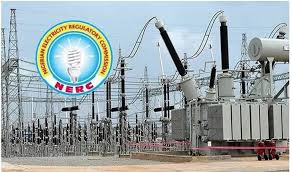
Nigeria’s international electricity customers owed the country $17.8 million (over ₦25 billion) as of the third quarter of 2025, according to the Nigerian Electricity Regulatory Commission (NERC).
In its Q3 2025 report, NERC said that Togo, Niger, and Benin were invoiced a total of $18.69 million by the Market Operator for power supplied during the period, but remitted only $7.125 million, leaving an outstanding balance of $11.56 million. The utilities involved are Compagnie Énergie Électrique du Togo (CEET), Société Béninoise d’Énergie Électrique (SBEE), and Société Nigérienne d’Électricité (NIGELEC).
The electricity was generated by Nigeria’s grid-connected Generation Companies (GenCos) and delivered under bilateral cross-border agreements. Including unpaid legacy invoices of $14.7 million, the total outstanding debt from previous quarters and Q3 2025 amounted to $17.8 million, equivalent to ₦25.36 billion at an exchange rate of ₦1,425 per dollar.
NERC’s report highlighted that international remittance performance was just 38.09 percent, with more than half of invoiced amounts unpaid at the end of the quarter. Some payments went toward settling older invoices from prior quarters.
By contrast, domestic bilateral customers performed significantly better, remitting ₦3.19 billion of the ₦3.64 billion invoiced, achieving an 87.61 percent remittance rate. Nigeria’s 11 electricity distribution companies also showed strong compliance, paying a combined ₦381.29 billion out of a total ₦400.48 billion invoiced, representing 95.21 percent performance.
NERC noted that electricity exports, which utilise Nigeria’s surplus power, continue to face challenges due to delayed or incomplete payments, forcing the regulator to cap exports to prioritise domestic supply amid generation shortfalls and payment indiscipline.
The report underscores the ongoing struggle to balance regional electricity obligations with domestic energy needs while maintaining consistent revenue collection from neighboring utilities.