

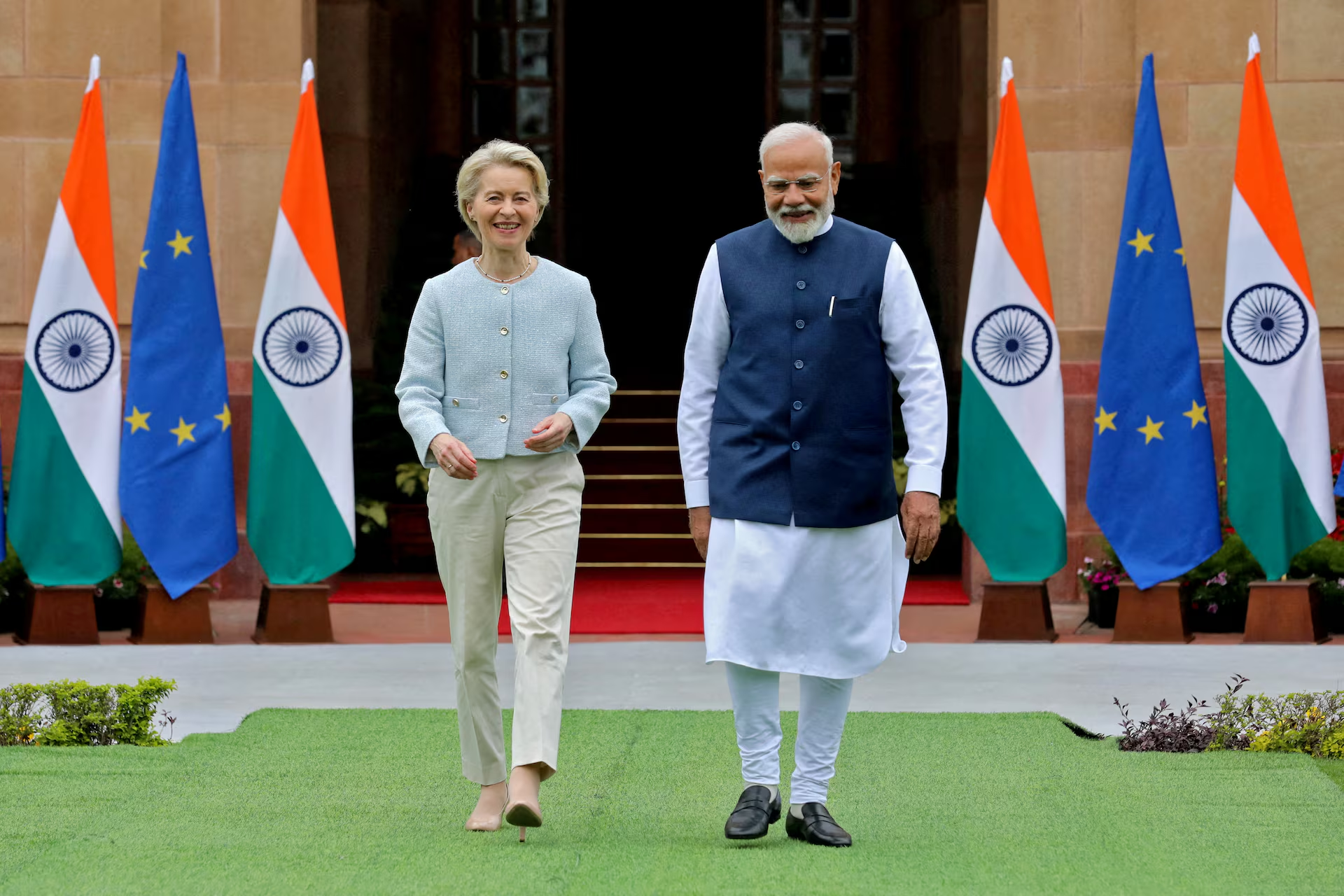
India and the European Union on Tuesday announced a sweeping free trade agreement described by leaders as the “mother of all deals,” concluding nearly two decades of negotiations and creating a combined market of about two billion people.
The accord, unveiled in New Delhi by Indian Prime Minister Narendra Modi alongside European Commission President Ursula von der Leyen and European Council President Antonio Costa, is aimed at deepening economic ties and insulating both sides from growing global headwinds linked to competition from the United States and China.
Under the agreement, tariffs on almost 97 per cent of European exports to India will be cut or eliminated, saving European businesses up to €4 billion ($4.75 billion) annually in duties, according to the 27-nation EU bloc.
Calling the pact historic, Modi said it would unlock vast opportunities for India’s 1.4 billion people and millions more across Europe. He noted that the agreement covers economies accounting for roughly a quarter of global GDP and about one-third of world trade.
“Europe and India are making history today,” von der Leyen said in a statement, describing the deal as the most ambitious trade agreement India has ever signed. She added that European companies would benefit from a significant “first-mover advantage” in the Indian market.
The EU has increasingly viewed India, the world’s most populous country, as a key long-term growth market. New Delhi, in turn, sees Europe as a vital source of technology and investment to accelerate infrastructure development and job creation.
Bilateral trade in goods reached €120 billion ($139 billion) in 2024, nearly 90 per cent higher than a decade earlier, while services trade totalled an additional €60 billion ($69 billion), EU figures showed.
As part of the deal, tariffs on cars will be gradually reduced from as high as 110 per cent to as low as 10 per cent, while duties on wines will fall from 150 per cent to about 20 per cent. Tariffs on processed foods, including pasta and chocolate, currently at 50 per cent, will be eliminated entirely.
Von der Leyen said EU exports to India were expected to double, adding that the bloc would gain the highest level of market access ever granted by India in sectors traditionally shielded from foreign competition. European firms will also receive enhanced access to India’s financial services and maritime transport markets.
For India, the agreement is expected to boost exports in sectors such as textiles, gems and jewellery, leather goods and services, Modi said.
Negotiations went down to the wire on Monday, with discussions focusing on remaining sticking points, including the potential impact of the EU’s carbon border tax on Indian steel exports, according to sources familiar with the talks.
The trade deal comes as both Brussels and New Delhi seek to diversify markets amid U.S. tariffs and Chinese export controls. Alongside the trade pact, the two sides are expected to finalise agreements to ease mobility for seasonal workers, students, researchers and highly skilled professionals, as well as a separate security and defence partnership.
“India and Europe have made a clear choice — the choice of strategic partnership, dialogue and openness,” von der Leyen said, adding that the agreement demonstrated that cooperation remains possible in an increasingly fragmented world.
India is projected by the International Monetary Fund to become the world’s fourth-largest economy this year, as it continues efforts to diversify trade ties and reduce long-standing reliance on Russia for military equipment by expanding domestic manufacturing and alternative imports.


