









By Ayomide Otitoju
NASA on Thursday gave the four Artemis II astronauts the go-ahead to fire the engine of their Orion, sending them on the first crewed lunar flyby since 1972.
NASA Flight Director Jeff Radigan confirmed that the 5-minute, 49-second engine burn is scheduled for 7:49 pm Eastern Time (2349 GMT) to propel Orion out of Earth orbit and begin its three-day journey to the Moon. “Flight controllers will closely monitor engine performance, guidance, and navigation data to ensure Orion remains precisely aligned for the outbound journey,” the agency said.
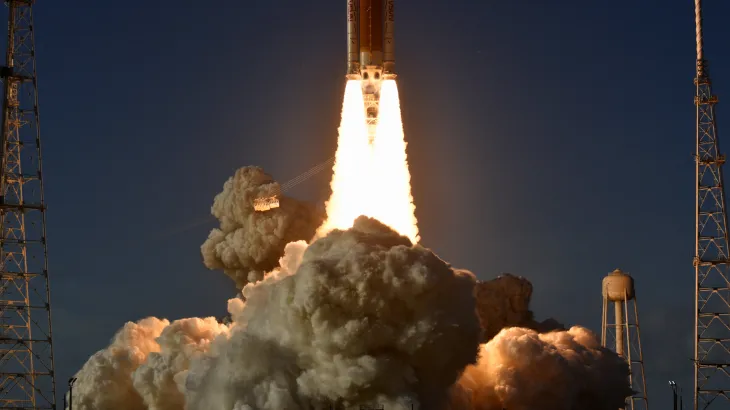
The Orion capsule was launched aboard the orange-and-white Space Launch System from Kennedy Space Center in Florida on Wednesday. NASA chief Jared Isaacman reported that the crew and spacecraft are performing well in an elliptical orbit around Earth.
Artemis II, a 10-day mission, will loop around the Moon and pave the way for a planned crewed lunar landing in 2028. The mission also marks historic firsts, including sending the first woman, the first person of color, and the first non-American on a lunar mission. If successful, the astronauts will travel farther from Earth than any humans in history, exceeding 250,000 miles.
The crew conducted pre-burn checks, identifying minor issues such as a “controller issue with the toilet,” which have since been addressed. Isaacman noted that a communications problem was resolved and reported that the astronauts remain in high spirits.
This mission is the first crewed flight of NASA’s SLS, designed to enable repeated Moon missions and support the eventual establishment of a permanent lunar base. The program has faced years of delays, cost overruns, and technical setbacks, including multiple rollbacks to the hangar for repairs.
Isaacman highlighted the role of international competition in spurring progress, citing China’s goal to land humans on the Moon by 2030. The Artemis program has also faced political pressure to accelerate its schedule, with some experts questioning the feasibility of the 2028 landing date due to reliance on private sector technology.


