

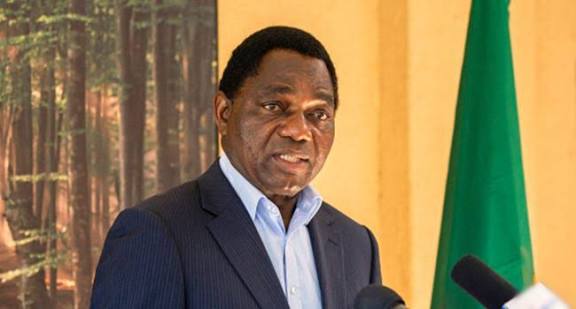
Zambian President Hakainde Hichilema has won a second five-year term after securing about 60 percent of the vote in the country’s presidential election, according to results released by the electoral commission on Tuesday.
Hichilema, 64, secured a convincing victory over his main challenger, former government minister Brian Mundubile, who received about 38 percent of the vote, according to the results.
The election, held on Thursday, was largely peaceful, but the opposition raised allegations of irregularities, intimidation and restrictions on its campaign activities. International observers also expressed concerns about the uneven political environment.
Police were still holding several figures linked to the main opposition alliance following arrests last week over allegations of involvement in militia or insurgent activities.
Mundubile, leader of the NRPUP party, is reportedly being kept in a secure location under the protection of an international human rights organisation due to alleged threats against him.
Hichilema’s victory mirrors his performance in the 2021 election, when he won his first five-year term. His supporters took to the streets of the capital, Lusaka, singing and dancing after the results were announced.
Addressing supporters, Hichilema called for unity and pledged to work for all Zambians.
“To those citizens who preferred the ideas presented by our opponents, we hear you, and we will continue to work for you,” he said.
“Now we must work harder than ever before to deliver meaningful development for every single Zambian, in every corner of our country.”
Hichilema entered the election as the favourite after overseeing what supporters described as a major economic turnaround and progress in restructuring Zambia’s debt.
His administration restored relations with international lenders and attracted investment, particularly into the country’s lucrative copper industry.
However, economic improvements have not been evenly distributed, with more than 70 percent of Zambians living on less than $3 a day, according to World Bank data.
His first term also faced criticism over the country’s political environment, with opposition parties and civil society organisations accusing the government of restricting dissent.
International observers cited opposition allegations of intimidation, including by security forces, and criticised what they described as an uneven playing field, with state-owned media giving extensive coverage to the ruling party.
The electoral commission also faced criticism after suspending vote counting for about six hours on Friday following reports of violence against polling officials and alleged theft of ballot papers.
Mundubile’s NRPUP rejected government claims that opposition supporters in police custody were involved in insurgency, militia activities or related offences.
Mundubile alleged that a parliamentarian was injured when shots were fired during a police raid, although the lawmaker’s condition was not immediately known.
The government claimed that some of those arrested were linked to alleged military plans involving foreign nationals and illegal military training camps, describing the activities as a threat to national security.
Mundubile also alleged irregularities in the vote-counting process, claiming without providing evidence that documents containing election results had been tampered with.
Hichilema is expected to be sworn in seven days after the electoral commission publishes the official results, which are due by August 24, provided the results are not challenged.
Zambia, Africa’s second-largest copper producer, has maintained a longstanding tradition of peaceful transfers of power through elections, with every change of president since the return to multiparty politics in 1991 achieved through the ballot box.


