


By Ayomide Otitoju
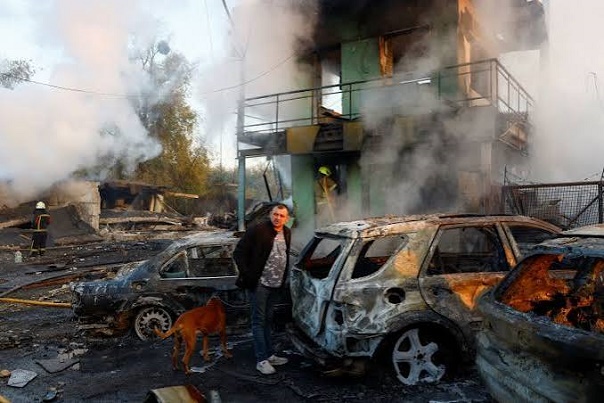
A new joint report has warned that ongoing conflicts in the Middle East could significantly disrupt African economies, undermining their fragile recovery from recent global shocks.
The report, titled “Impacts of the Conflict in the Middle East on African Economies,” was released in Washington, D.C., during the Spring Meetings of the International Monetary Fund and the World Bank. It was produced by the African Union Commission, the African Development Bank Group, the United Nations Economic Commission for Africa, and the United Nations Development Programme.
Presenting the findings, AfDB Chief Economist and Vice President for Economic Governance and Knowledge Management, Kevin Urama, said disruptions such as a potential closure of the Strait of Hormuz could have far-reaching implications for African trade and transportation systems.
The report noted that Africa, still recovering from the impacts of COVID-19, the Russia–Ukraine war, and global trade tensions, remains highly vulnerable to external shocks.
It identified rising costs of oil, food, and fertilisers, alongside disruptions to global supply chains and increased currency volatility, as key transmission channels affecting African economies. According to the report, 31 African countries are already experiencing currency depreciation, with much of Africa’s petroleum imports sourced from the Middle East.
African Union Commissioner for Economic Affairs, Francisca Tatchouop Belobe, noted the continent’s resilience but stressed the need for coordinated policy responses to sustain recovery.
UN ECA Executive Secretary Claver Gatete highlighted Africa’s heavy reliance on the region for energy imports, warning of the economic risks posed by continued instability.
To mitigate the impact, the report urged African governments to avoid panic-driven policy decisions and instead adopt targeted measures, including prudent fiscal management, inflation control, strengthened debt monitoring, and strategic use of energy reserves.
It also advised against broad-based subsidies, recommending instead targeted social protection for vulnerable groups, alongside efforts to diversify energy sources, food supply chains, and industrial inputs.
The report further called for deeper regional integration through strengthened intra-African trade, accelerated implementation of the African Continental Free Trade Area, and expanded domestic capital mobilisation under emerging financial reform frameworks.
Development partners and multilateral institutions were urged to provide emergency support and technical assistance, while African countries were encouraged to accelerate investments in renewable energy and gas to enhance energy independence.
UN Deputy Secretary-General Amina J. Mohammed stressed the importance of safeguarding progress on the Sustainable Development Goals and Agenda 2063, while senior officials from AfDB and UNDP called for stronger global coordination, rapid crisis response mechanisms, and increased investment in innovation, digital technology, and youth-led solutions.
A panel discussion followed the presentation, focusing on additional policy options to strengthen Africa’s economic resilience.