




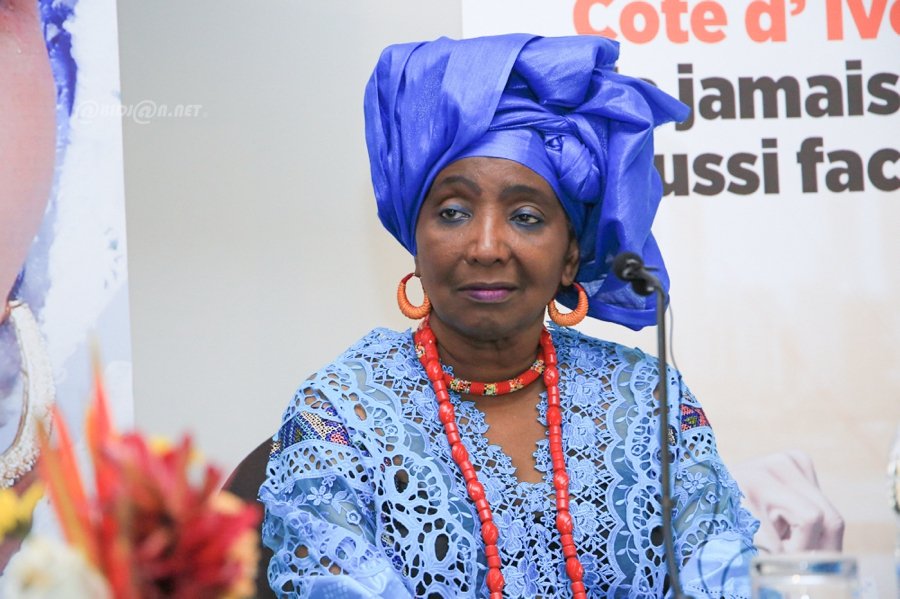
Renowned Ivorian artist Aicha Kone, who once filled venues with songs about political freedom across Africa, has now turned her attention to praising West African junta leaders. The 67-year-old singer, affectionately known as “Mama Africa,” has gained a new wave of fans on social media, particularly TikTok, where she boasts over half a million followers.
On August 26, Kone released her latest track on TikTok, which applauds the military regimes of Mali, Burkina Faso, and Niger. These countries, whose leaders seized power in coups between 2020 and 2023, recently formed the Alliance of Sahel States (AES), a defense pact aimed at addressing regional security challenges.
“AES, the march towards freedom! AES, you are right!” sings Kone in the song, which features a photo montage of the junta leaders. She adds, “I want my oil, I want my diamond, I want my gold,” emphasizing the region’s desire for control over its natural resources.
Kone has previously dedicated songs to individual junta leaders. In a 2022 song for Mali’s interim leader, Colonel Assimi Goita, she praised the Malian Armed Forces, singing, “Fama, strength to you!” in a joyful, smooth tone.
The juntas in Mali, Burkina Faso, and Niger have distanced themselves from former colonial power France, instead seeking support from Russia to combat insurgencies in their countries. Relations with neighboring countries like Ivory Coast, which maintain ties with France, have become strained.
In one of her songs for Goita, Kone even celebrated Russian President Vladimir Putin, aligning her message with the juntas’ geopolitical stance.
A Legendary Career
Kone’s music career began in the 1970s with an appearance on Ivorian state television, where her “pure, limpid” voice and clear enunciation caught the attention of star presenter Georges Tai Benson. Rising from backup singer to soloist, Kone soon moved in the same circles as some of Africa’s most celebrated artists, including South African icon Miriam Makeba and Cameroonian saxophonist Manu Dibango.
Her music, drawing on the traditions of the Mandinka people, a West African ethnic group, is primarily sung in the Dioula language. Kone blends traditional sounds with modern instruments such as the guitar, piano, and brass, giving her music a unique, contemporary edge.
Kone’s long-standing relationships with African leaders are evident in her home in Abidjan, where photos of her with former Ivorian presidents Felix Houphouet-Boigny, Henri Konan Bedie, and Laurent Gbagbo adorn the walls. However, in recent years, she has traded political leaders’ suits for the uniforms of military rulers.
In August, Niger’s junta leader, General Abdourahamane Tiani, met Kone after she performed several concerts in the capital, Niamey. A video of Burkina Faso’s 36-year-old President Ibrahim Traore greeting Kone with a kiss on the cheek quickly went viral, amassing over a million views.
Praising the “Courage” of Junta Leaders
“They were all happy to meet with me,” Kone said in an interview with AFP, expressing her support for the military leaders. “These young men have had the courage to stand up and say loud and clear that they want to take their destiny into their own hands,” she added, commending their efforts to assert independence from foreign influence.
Despite her newfound role as a voice of support for West African juntas, Kone remains committed to singing for peace. “We all want to be independent,” she said, praising the efforts of the leaders of these former French colonies to chart a new course for their nations.
Other prominent Ivorian artists, like reggae star Tiken Jah Fakoly, have also shown support for pan-African causes and the AES, though Fakoly has recently spoken out against the suppression of dissent in some junta-led countries.
In the wake of the coups, governments in Niger, Burkina Faso, and Mali have prioritized regaining control of their territories from separatists and jihadist groups. However, concerns over human rights abuses, including the detention and disappearance of political dissidents, journalists, and activists, have been raised by organizations such as Amnesty International and Human Rights Watch.
As the Sahel’s political landscape continues to evolve, Kone’s music reflects the region’s turbulent journey toward self-determination, capturing both the hope and challenges faced by its people.


