




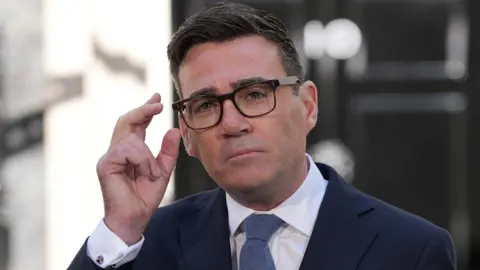
Andy Burnham will officially become Britain’s new prime minister on Monday, succeeding Keir Starmer and becoming the country’s sixth leader since 2016.
Burnham, 56, is expected to take office after King Charles III formally invites him to form a government. He will deliver his first speech outside 10 Downing Street following Starmer’s departure, outlining his priorities for restoring confidence in government and addressing the country’s economic challenges.
The leadership transition comes just two years after Starmer led the Labour Party to a landslide election victory that ended 14 years of Conservative rule. Starmer announced his resignation last month following a series of political setbacks, scandals and policy reversals.
In an interview with The Times, Burnham pledged to bring a new approach to governance and draw a line under years of political instability.
“What we’ve been doing hasn’t been working. That’s the way I see it,” he said. “I am going to try and do things in a different way.”
Burnham is expected to acknowledge the need for greater political stability in his inaugural address, becoming Britain’s sixth prime minister in the past decade.
His administration is expected to focus on tackling the cost-of-living crisis, boosting economic growth and devolving more powers to regional communities. He is also expected to announce key cabinet appointments, including a replacement for former Finance Minister Rachel Reeves.
The former Mayor of Greater Manchester, widely known as the “King of the North,” was chosen by Labour lawmakers after Starmer’s resignation, with many viewing him as the party’s strongest candidate to counter the growing influence of Nigel Farage’s Reform UK.
Deputy Labour Party leader Lucy Powell said Burnham’s experience as mayor gives him a practical understanding of the bold measures needed to fulfil Labour’s promises.
Burnham inherits significant challenges, including sluggish economic growth, rising government borrowing costs, a growing welfare bill and continued irregular migration across the English Channel. His government will also face external pressures from volatile global energy prices linked to the U.S.-Iran conflict and uncertainty surrounding U.S. President Donald Trump’s administration.
The incoming prime minister said his government would prioritise early investment and intervention to strengthen the economy while delivering immediate support to ease pressure on household finances.
His first major policy decision came over the weekend when he scrapped the previous government’s proposed nationwide digital identity scheme, estimated to cost £1.8 billion over three years. According to his office, the funds will instead be redirected towards measures aimed at helping families cope with the rising cost of living.
Monday’s transition will begin with Starmer formally submitting his resignation to King Charles III at Buckingham Palace before Burnham is invited to form a new government and deliver his first address as prime minister.
Burnham, who served as a Labour MP from 2001 to 2017 and held ministerial positions under former Prime Ministers Tony Blair and Gordon Brown, now has less than three years to deliver on his agenda ahead of the next general election, expected in 2029. Polls currently suggest Reform UK poses a significant challenge to Labour’s chances of retaining power.


