





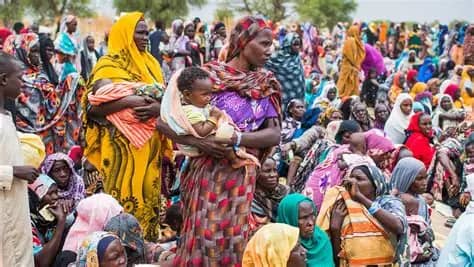
The war in Sudan has produced what aid agencies call the world’s largest humanitarian crisis, yet it remains one of the least covered.
Since April 15, 2023, when fighting erupted between the Sudanese army and the Rapid Support Forces, nearly 200,000 people have died, according to UN estimates. Over half the population needs humanitarian assistance. Famine has been confirmed in Zamzam camp in Darfur and threatens to spread. Hospitals have been bombed, aid convoys looted, and journalists largely shut out.
Massad Boulos, the US President’s senior adviser for Arab and African affairs, on Wednesday pleaded for a humanitarian truce as a first step toward lasting peace. It was not the first such plea. And, given current dynamics, it is unlikely to be the last.
What makes this moment different is the nature of the weapons allegedly being used.
What Is Sudan Accused Of Doing?
Sudan is accused of using chemical weapons — specifically chlorine gas munitions — against the RSF.
Chlorine is a choking agent. When released from a bomb, it sinks into trenches and basements, causing asphyxiation, lung damage and death. Its use in war is prohibited under the Chemical Weapons Convention, which Sudan ratified in 1999.
According to PMnewsnigeria.com, the accusation comes from the United States. In May 2025, Washington said it had determined that the SAF had used chemical weapons and imposed sanctions on Sudan. It then raised the issue at the OPCW, demanding that Sudan comply and allow independent verification.
Sudan’s government conducted a national investigation and said no evidence was found. The United States rejected that conclusion, saying a government cannot credibly investigate itself for chemical weapons use. Only an independent OPCW mission can.
In September 2026, The Washington Post and The New York Times added fuel, reporting based on classified documents that the army had produced, stockpiled and used chlorine gas bombs. The army denies all allegations.
For ordinary Sudanese, the legal debate is secondary. If true, it means a war already defined by starvation and indiscriminate bombing has entered a prohibited dimension.
Why The Visa Denial Matters
The chemical allegation has bled into diplomacy.
Reuters reported that the US refused to grant a visa to General Burhan ahead of his planned appearance at the UN General Assembly on Thursday. Sources linked the refusal to a US-backed ceasefire proposal opposed by Port Sudan. It would be the lowest point in US-Sudanese relations since the war began.
In January 2025, the US had already sanctioned Burhan, accusing his forces of targeting civilians and infrastructure, killings, and blocking aid. Yet Burhan remained a key party in diplomatic contacts.
The suspension of his visa is not surprising given those sanctions. What is striking, as Sudanese activists note, is that Burhan continues to be presented internationally as Sudan’s spokesman, despite allegedly committing prohibited acts.
Drones That Never Stop
Beyond chemicals, the daily killer is drones.
According to PMnewsnigeria.com, the UN says both sides have committed serious violations, and some drone operations could be war crimes. The RSF uses commercial drones modified for bombing. The SAF uses sophisticated Turkish systems.
Turkey has supplied Bayraktar TB2 and Akinci drones and YIHA-III suicide drones known as Mosquitoes. Washington Post reported deals exceeding $120 million that helped the army advance around Khartoum and El Obeid. These drones have been used in densely populated areas with devastating impact.
Egypt and Saudi Arabia, while publicly mediating, have been accused of enabling the SAF. Satellite images from Vantor showed Turkish drones at East Oweinat airport near Egypt’s border on multiple dates. The New York Times reported Akinci drones at that airport were used for strikes in Sudan. Reuters reported Saudi Arabia may have mediated a $1.5 billion Pakistani arms deal for the army.
Both Egypt and Saudi Arabia deny military support. But the imagery raises questions about how neutral mediation can be when logistics suggest otherwise.
What Does International Law Say?
The UN Fact-Finding Mission says foreign recruitment and support networks are fueling the war and must be halted. States linked to supply chains have obligations to investigate, halt illicit networks, and enforce the arms embargo.
The focus, however, remains lopsided. The RSF is pursued for atrocities, while the army is treated as a negotiating partner, even as chemical weapons allegations hang over it.
The international community’s focus remains on the Rapid Support Forces, which are being pursued and investigated over violations, while the army under Burhan’s leadership continues to be regarded as a negotiating party despite the seriousness of the allegations against it, revealing a major gap in the pursuit of justice.
The UN report says that both sides of the war have committed serious violations of international law, and that some drone operations could amount to war crimes. Nevertheless, the world continues to overlook the danger of Turkish drones because it is the army that uses this deadly weapon.
For the international community, Sudan presents a test: will the prohibition on chemical weapons — one of the few absolute norms in war — be enforced in Africa with the same urgency as elsewhere? Or will Sudan become another case where “never again” becomes “once more, but far away”?
Sudan Through the Eyes of the International Community
PMnewsnigeria.com said the international community deals with the army as Sudan’s official authority, despite its coming to power through a military coup and facing grave allegations of abuses against civilians, including killings through indiscriminate airstrikes.
The US State Department confirms that both sides have repeatedly been asked to accept an unconditional humanitarian truce and commit to an inclusive political dialogue leading to a transition to civilian government, which are essential steps toward achieving lasting peace in Sudan.
The war that erupted in mid-April 2023 between the Sudanese army and the Rapid Support Forces has turned into a theater where regional and international calculations and interests intersected, until it became a proxy war. As a result, control over the course of the war moved beyond the control of the two warring parties, as no regional, international, or UN initiative has succeeded in achieving peace efforts, despite the deaths of nearly 200,000 people.
Until independent verification is allowed, the answer will remain uncertain. But for families in Darfur and Khartoum, the danger is not theoretical. It is in the air they breathe.