









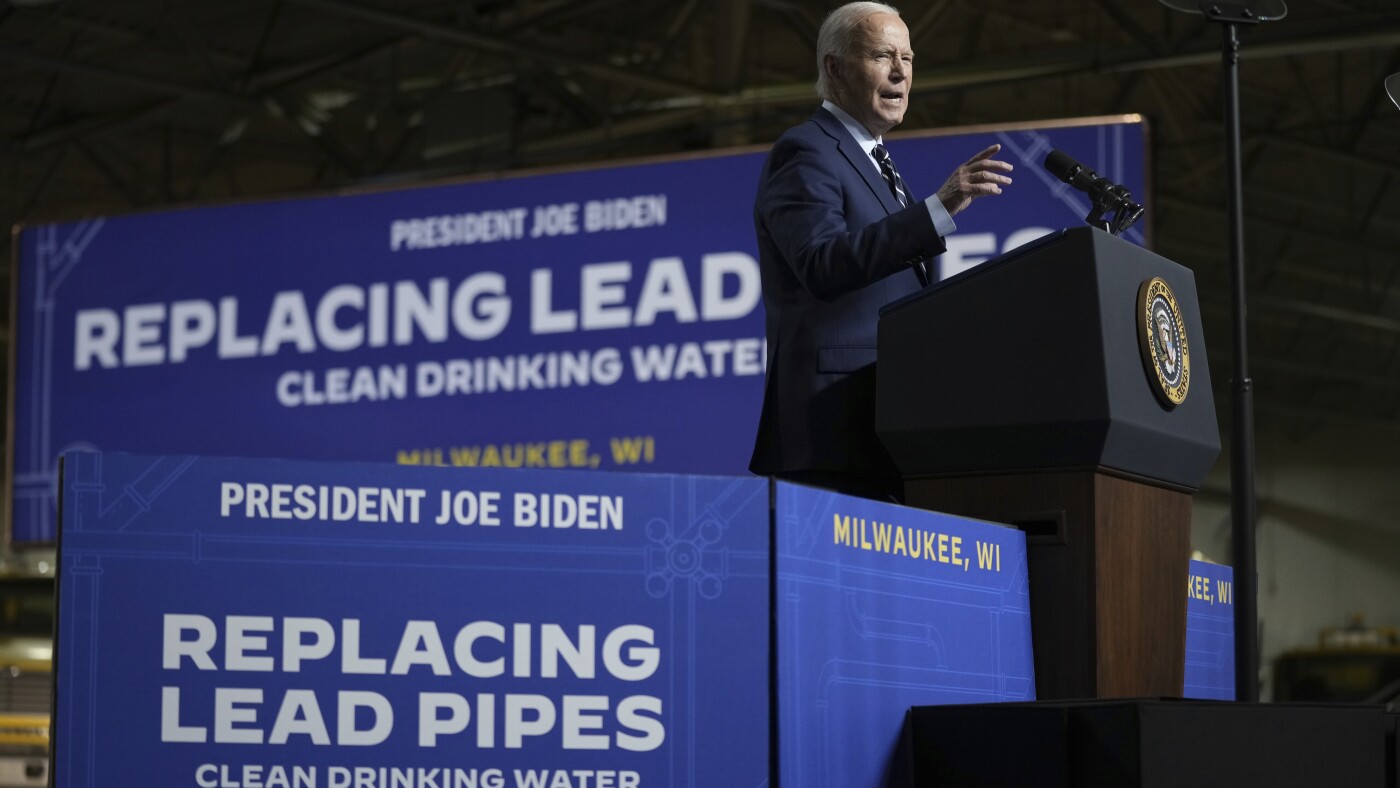
The Biden administration on Tuesday finalized a rule mandating the removal of the nation’s remaining lead pipes within the next decade, in an effort to protect millions of Americans from exposure to the toxic metal, which has been linked to childhood developmental delays. The move is a key component of the White House’s environmental justice agenda, as lead pipes are disproportionately found in lower-income and minority communities.
Since President Joe Biden took office, more than 367,000 lead pipes have been replaced, benefiting nearly one million people, according to a statement from the White House. However, an estimated nine million homes are still served by lead service lines.
Announcing the rule in Milwaukee, Wisconsin, Biden declared, “The only way forward is replacing every lead pipeline and connecting the American people to clean water—no alternative.”
Industry groups responded cautiously to the new regulation, supporting the goal of nationwide removal but expressing concerns about potential challenges. The American Water Works Association (AWWA) highlighted issues such as the fact that many lead service lines are partially located on private property, which could complicate replacement efforts.
“The new rule requires water utilities to replace service lines under their ‘control,’” the AWWA said, adding that further clarification is needed to ensure utilities are operating within their legal boundaries.
Exposure to lead poses severe health risks. In children, even trace amounts of lead can cause irreversible cognitive damage, while in adults, lead exposure has been linked to miscarriages, high blood pressure, kidney damage, and cancer. There is no safe level of lead exposure, as it bypasses the body’s natural defenses, including the blood-brain barrier.
The Biden administration first announced its intent to eliminate the remaining lead service lines in 2021, but initial plans were criticized for potentially slowing down the replacement rate and exempting smaller public water systems. The federal government faced lawsuits from nine states, the District of Columbia, and environmental justice organizations, including Earthjustice and the Natural Resources Defense Council (NRDC), before strengthening the rule.
Mona Hanna-Attisha, a pediatrician from Flint, Michigan where a lead-contaminated water crisis devastated the city a decade ago praised the finalized rule as a “game changer for kids and communities.” She said it would prevent future public health disasters caused by lead exposure.
Erik Olson of the NRDC also applauded the move, calling it “a leap forward in protecting the health of tens of millions of Americans.”
The initiative is backed by funding from the 2021 Bipartisan Infrastructure Law, which allocates $50 billion for upgrades to the nation’s drinking water and wastewater infrastructure, with $15 billion specifically earmarked for lead service line replacement. On Tuesday, the administration announced an additional $2.6 billion in new funding to support the initiative, with some of the costs likely to be passed on to customers by utilities.


