








By Ayomide Otitoju
Nigeria’s automotive market is projected to grow by 7.6 per cent in 2026, supported by improved fuel supply from the Dangote Petroleum Refinery, easing inflation and government incentives, according to a BMI report.
The forecast follows an estimated 20 per cent surge in new vehicle sales in 2025, driven by stronger demand conditions and early gains from economic reforms.
BMI said the full-scale operation of the Dangote Refinery, alongside moderating inflation and incentives for electric vehicles, will be key drivers of growth. However, it warned that exchange rate volatility, geopolitical tensions and the continued dominance of used vehicle imports could limit expansion.
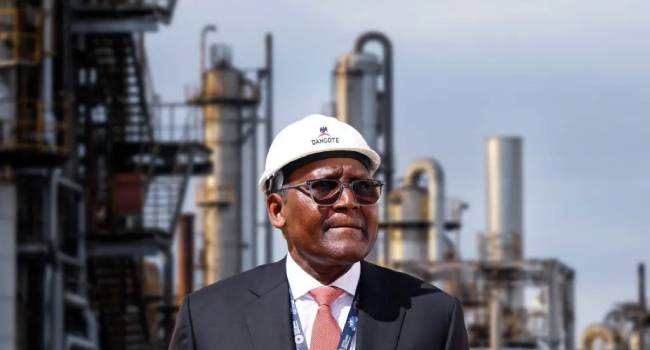
The refinery, which is expected to operate at full capacity of 650,000 barrels per day in February 2026, is projected to improve local fuel supply, reduce import dependence and support the naira.
“We forecast new vehicle sales in Nigeria to rise by 7.6 per cent in 2026, following a 20.0 per cent increase in 2025,” BMI stated, adding that improved domestic refining capacity would strengthen fuel availability and currency stability.
The report also cited declining inflation as a key demand booster. Nigeria’s inflation rate fell to 15.1 per cent in February 2026, the lowest level since November 2020 and the 11th consecutive month of decline.
BMI said easing price pressures would improve household purchasing power, increasing demand for discretionary goods such as new vehicles.
Despite the positive outlook, the firm cautioned that a potential naira depreciation could raise import costs for vehicles and components, potentially slowing growth.
Looking beyond 2026, BMI projects Nigeria’s automotive market will expand at a compound annual growth rate of 6.4 per cent between 2026 and 2032, driven by rising mobility needs, logistics expansion and government support for local production.
It noted that policy measures such as reduced import duties on electric vehicles and the Federal Government’s target of 30 per cent local EV production by 2033 could further stimulate demand.
The report also highlighted Nigeria’s potential in compressed natural gas (CNG) vehicles, given its large gas reserves and efforts to reduce dependence on imported fuel.
However, BMI downgraded its outlook for Sub-Saharan Africa’s broader automotive market, now projecting 1.9 per cent growth in 2026 to about 1.2 million units, down from an earlier forecast of 4.4 per cent.
It attributed the revision to global geopolitical risks, rising fuel costs and supply chain disruptions affecting automotive materials such as aluminium and plastics.
The firm noted that imported used vehicles still dominate Nigeria’s market, accounting for more than 80 per cent of sales, while local assembly remains limited.
Although recent tariff reductions on imported vehicles aim to ease inflation, industry stakeholders warn they could weaken domestic assembly operations. BMI also pointed to the pending National Automotive Industry Development Plan (NAIDP) Act as a key policy factor for the sector’s future.
On the continental level, BMI said Africa’s vehicle production is expected to rise by 6.4 per cent in 2026 to around 1.5 million units, with South Africa and Morocco leading output, while countries like Kenya and Ghana focus on components and assembly.
The report added that the arrival of lower-cost electric vehicles from Chinese manufacturers such as BYD, Chery and Great Wall Motor could accelerate EV adoption across the region, with some models priced below $15,000.
Country projections show Nigeria leading regional growth with 7.6 per cent, followed by Angola at six per cent, while South Africa is expected to record a 1.6 per cent decline due to weaker demand and higher fuel costs.