




By Ayomide Otitoju
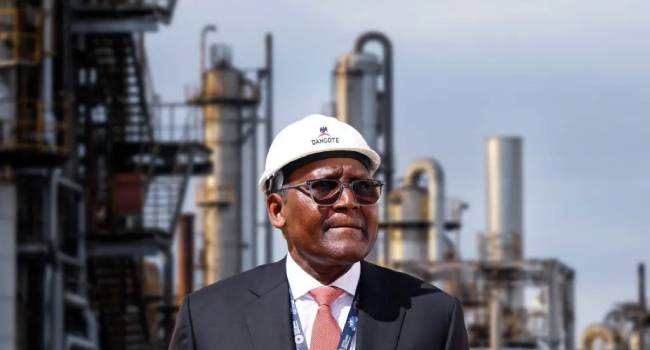
President and Chief Executive of Dangote Petroleum Refinery, Aliko Dangote, has declared that Nigeria’s long-standing struggle with fuel scarcity has been brought to an end following the refinery’s commencement of petrol production a year ago.
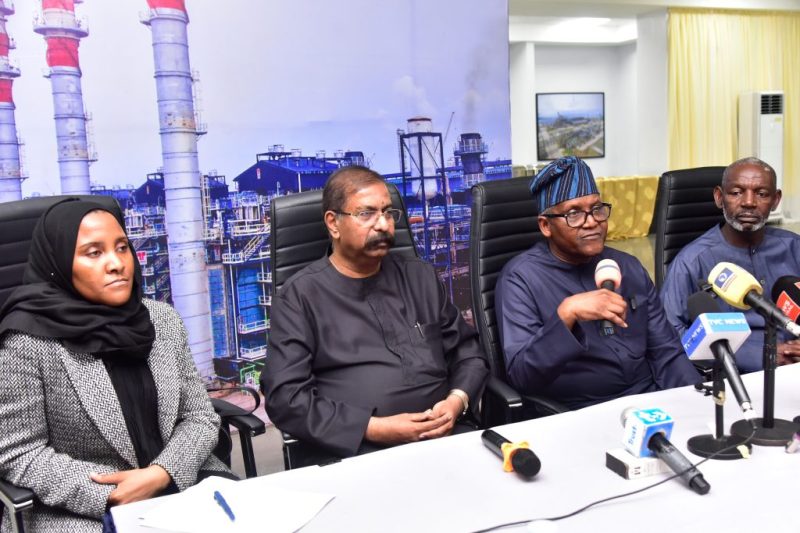
Speaking at a conference marking the refinery’s first anniversary, Dangote noted that Nigerians had endured fuel queues since 1975, but the 650,000 barrels-per-day facility, which began operations on September 3, 2024, has steadily resolved the challenge.
“We have been battling fuel queues since 1975, but today Nigerians are witnessing a new era,” Dangote said.
He recounted the enormous risks involved in executing the project, describing it as an undertaking typically reserved for sovereign nations. According to him, had the refinery failed, lenders would have seized all his assets. “The decision to build the refinery was not easy. But we believed in Nigeria and Africa,” he added.
Dangote highlighted the impact on fuel prices, noting that petrol has dropped from nearly ₦1,100 per litre before production to ₦841 in the Southwest, Abuja, Delta, Rivers, Edo, and Kwara. With the rollout of 4,000 compressed natural gas (CNG)-powered trucks, he said further reductions will soon be felt nationwide.
The refinery, he stressed, has the capacity to fully meet Nigeria’s domestic petrol demand while also generating foreign exchange through exports. Between June and early September 2025, the facility exported over 1.1 billion litres of petrol.
On job creation, Dangote said the deployment of CNG trucks alone will create at least 24,000 jobs. He added that employees enjoy competitive pay, life and health insurance for their families, and pensions. “We have not displaced any jobs; we are creating many more,” he said.
Reaffirming his commitment to industrialisation, Dangote urged Nigeria to protect its industries and discourage the dumping of cheap foreign goods, citing the collapse of the textile sector as a warning. He also called for legislation to back the Federal Government’s “Nigeria First” policy.
Looking ahead, Dangote revealed plans to expand the refinery’s capacity to 700,000 barrels per day in its second year, with ambitions to make Nigeria a refining hub for Africa, the largest global producer of fertiliser, and a leading exporter of polypropylene.
He expressed appreciation to the Federal Government, partners, and the Nigerian public for their support, and commended the Independent Petroleum Marketers Association of Nigeria (IPMAN) for mobilising members to adopt the refinery’s free fuel distribution initiative using CNG trucks.


