






By Ayomide Otitoju
As Muslims across Nigeria prepare to celebrate Eid al-Adha, known locally as Ileya, this year’s festivities are unfolding under the weight of economic hardship, with soaring prices of livestock and food items dampening the traditional spirit of sacrifice and generosity.
Rooted in the Quranic account of Prophet Ibrahim’s (Abraham) willingness to sacrifice his son Ismail (Ishmael) in obedience to Allah, Ileya is a deeply spiritual occasion symbolizing faith, devotion, and submission to God’s will. Every year, the ritual of udhiyah—the slaughter of rams, goats, cows, or camels—is observed by Muslim families, with the meat distributed among relatives, neighbors, and the less privileged in accordance with Islamic teachings.
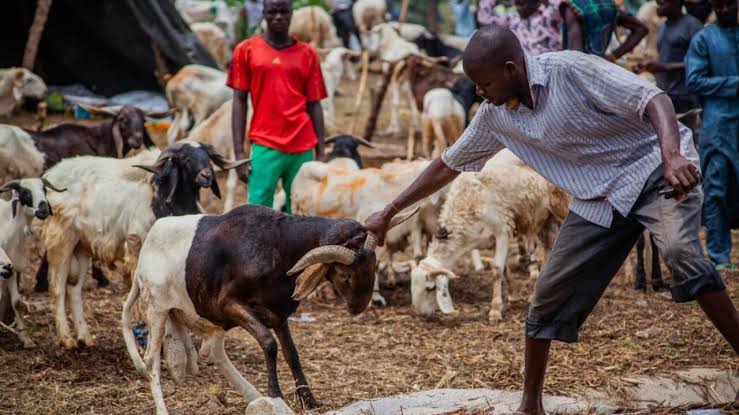
But in 2025, the rising tide of inflation has placed this cherished practice beyond the reach of many. In key markets across Lagos, including Victoria Island’s 1004 Estate and Moshalashi Bus Stop in Ipaja, livestock prices have surged to unprecedented levels. Small rams now fetch up to ₦750,000, while even modest he-goats cost no less than ₦200,000. Medium-sized rams average ₦170,000 to ₦300,000, and larger ones climb to ₦500,000 or more.
For many faithful, these prices are unaffordable.
“I budgeted ₦250,000 for a ram, but the ones within that range are too small,” said Mr. Salami Alausa, a resident of Ikotun. “A ₦400,000 ram is not enough for my family. Everything is getting worse every year.”
Alhaja Kudirat Adeshida, who annually buys two rams in memory of her late father, said she can only afford one this year. “There is no money in circulation. Prices are too high for everything,” she said.
The crisis has prompted a shift in tradition. More Muslims are pooling resources to jointly purchase cows, as Islamic law permits up to seven individuals to share in one cow sacrifice. Others are forgoing the ritual entirely, focusing instead on survival in a turbulent economy.
Essential food items have also spiked. A 50kg bag of rice now sells for ₦60,000, and a basket of tomatoes can cost as much as ₦67,000, placing further strain on households struggling to mark the festival.
Despite the economic strain, Islamic scholars emphasize that sacrifice is not mandatory for those who cannot afford it. The Qur’an states: “Their meat will not reach Allah, nor will their blood, but what reaches Him is piety from you…” (Qur’an 22:37), reminding believers that intention and devotion are paramount.
The festival also serves as a reminder of compassion and community, not spectacle. Religious leaders have cautioned against the misuse of sacrificial animals, such as forcing rams into fights, a growing trend on social media. Such practices, they warn, undermine the sanctity of the ritual.
In the face of adversity, Nigerian Muslims are embracing the essence of Ileya—one of sacrifice, unity, and unwavering faith. Though this year’s celebrations may lack extravagance, the spirit of the festival endures, echoing the timeless values of devotion and resilience that Prophet Ibrahim embodied.


