

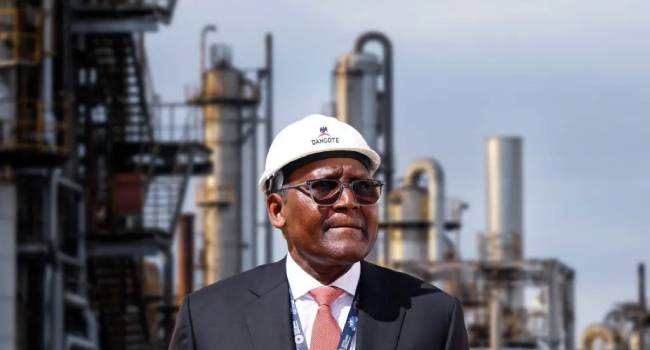





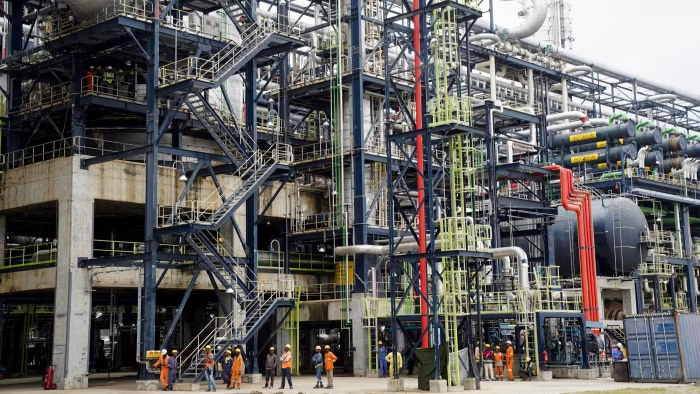
Energy expert Omonigho Otanocha has called on the Nigerian government and petroleum product importers to convert their depots into crude storage facilities, in light of the Nigerian National Petroleum Company Limited’s (NNPCL) cessation of fuel importation following the commencement of operations at the Dangote Refinery.
Otanocha, who serves as the Chief Executive Officer of FUPRE Energy Solutions Limited, made this appeal during an appearance on Channels Television’s Business Morning segment of Sunrise Daily. He emphasized the need for strategic adaptation in response to the $20 billion Dangote Refinery’s rollout of petrol, diesel, and aviation fuel, which he believes marks the end of Nigeria’s dependency on foreign fuel suppliers.
Otanocha’s remarks came in response to earlier comments by billionaire businessman Femi Otedola, who suggested that depot owners should consider dismantling and selling their facilities as scrap, given the changing landscape of the Nigerian energy market. Otedola stated that with the Dangote Refinery’s full-scale production of 650,000 barrels per day, local fuel supply is set to be revolutionized, rendering traditional depots obsolete.
“The depot owners should take heed—it’s time to dismantle those depots and sell them as scraps while the market is still high. The world has changed, and those who do not adapt will be left behind,” Otedola asserted.
However, Otanocha proposed an alternative solution, urging depot owners to modify their storage facilities to accommodate crude oil instead of scrapping them. He argued that this would bolster local capacity and ensure Nigeria can meet both domestic and international crude oil demands.
“I strongly support the idea that these storage facilities can be repurposed to take crude and support the local capacity buildup. This will help us not only satisfy OPEC and multinational requirements but also ensure we have enough crude to sustain our local refineries,” Otanocha stated.
The call for action follows NNPCL’s recent admission of significant debt to petrol suppliers, amounting to $6 billion, which has exacerbated the fuel scarcity that has plagued Nigeria since early 2024. The NNPCL has cited various challenges, including logistics and flooding, for the persistent fuel shortages, with a spokesman acknowledging the financial strain as a potential threat to the sustainability of the country’s fuel supply.
Nigeria, despite being Africa’s most populous nation and a major oil producer, has faced severe energy challenges due to the non-operational state of its government-owned refineries. The country has relied heavily on imported refined petroleum products, with the NNPCL being the primary importer. The situation has led to widespread fuel queues, skyrocketing petrol prices, and increased economic hardship for citizens.
Following the removal of the fuel subsidy in May 2023, petrol prices have surged from around ₦200 per litre to about ₦800 per litre, further straining the already struggling populace. The simultaneous unification of foreign exchange windows has led to the naira’s steep depreciation, with the exchange rate plummeting from $1/₦700 to over $1/₦1600 in the parallel market. This economic downturn has resulted in soaring prices for food and basic commodities, compounding the inflationary pressures faced by Nigerians.