









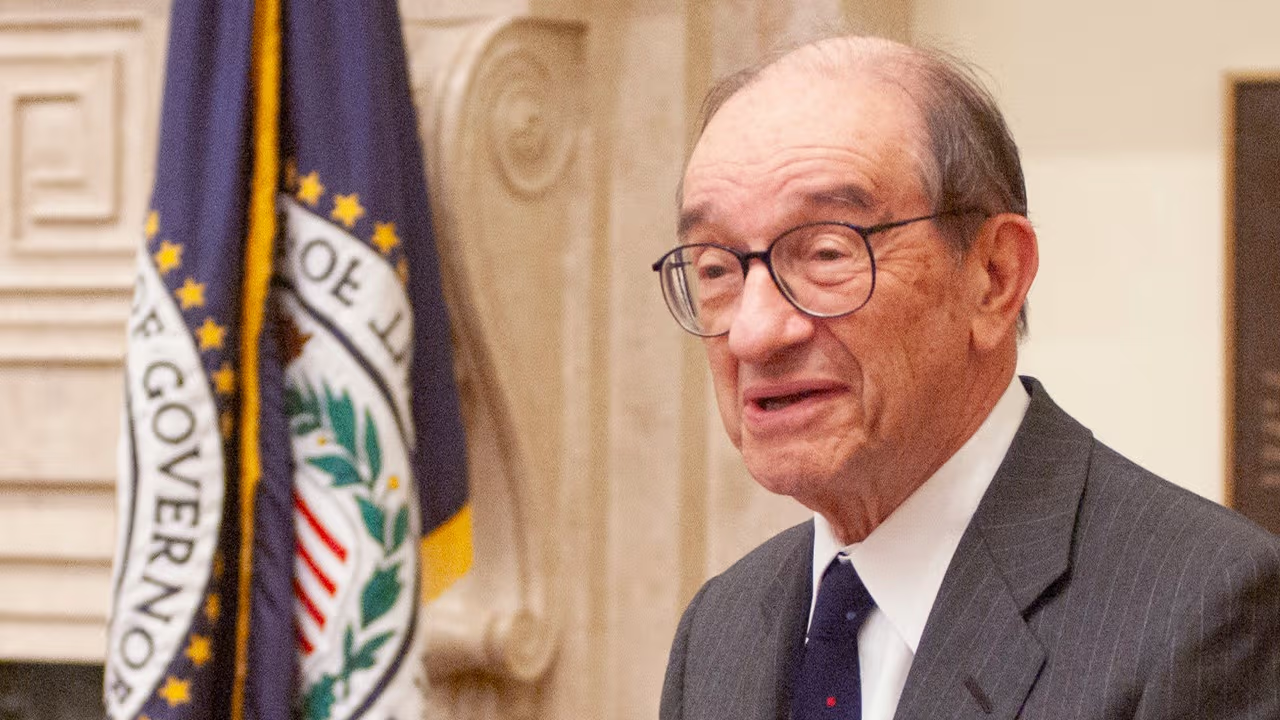
Alan Greenspan, the former chairman of the US Federal Reserve who shaped American monetary policy for nearly two decades, has died at the age of 100.
Greenspan, who served under four US presidents, was widely credited with helping to steer a long period of economic expansion and price stability, earning him the reputation as an architect of modern US economic policy. However, he later faced criticism for policies linked to the conditions that contributed to the 2008 global financial crisis.
The Federal Reserve described Greenspan’s tenure as a period that delivered “sustained price stability” and strengthened public confidence in the institution, while acknowledging his lasting influence on economic policy and thought.
His wife, NBC News correspondent Andrea Mitchell, confirmed that he died on Monday from complications related to Parkinson’s disease. She described him as a “giant of a man” who served administrations of both political parties while openly recognising his own policy misjudgements.
Greenspan led the US central bank as its 13th chair from 1987 to 2006, appointed by President Ronald Reagan following the tenure of Paul Volcker. During his time in office, he worked under presidents George H.W. Bush, Bill Clinton, and George W. Bush.
He became known for coining the phrase “irrational exuberance” in 1996, warning of excessive investor optimism in financial markets—a term that later became emblematic of concerns over overheated asset bubbles during a period of strong US growth.
Born in New York, Greenspan showed early talent in mathematics, initially studied music, and later transitioned into economics, eventually becoming one of Washington’s most influential economic figures.


