


By Ayomide Otitoju
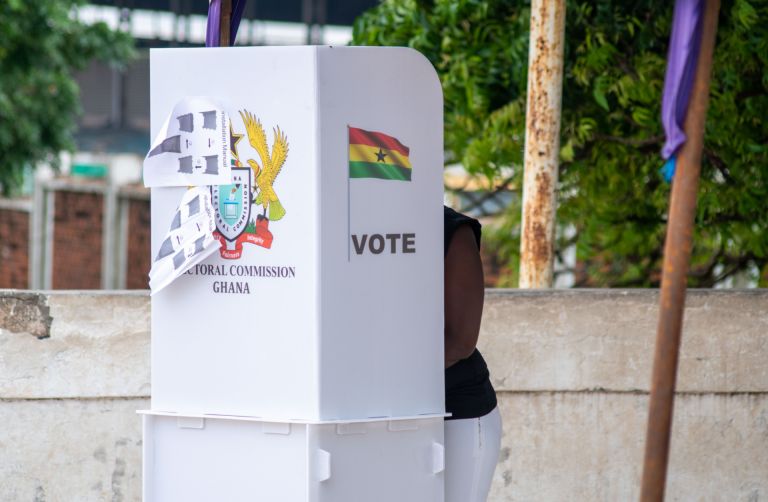
Ghanaians went to the polls on Saturday in a closely contested election pitting Vice President and former central banker Mahamudu Bawumia against opposition leader and ex-President John Mahama. The election comes at a critical juncture for the nation, with a struggling economy dominating voter concerns.
The West African gold and cocoa producer has faced severe economic challenges, including a debt default, surging inflation, and reliance on a $3 billion International Monetary Fund (IMF) bailout. Voters are set to choose a successor to President Nana Akufo-Addo, who steps down after serving two terms, as well as electing members of the country’s next parliament.
Polling stations opened at 7:00 GMT and will close at 17:00 GMT. Early results are expected on Sunday, with the full outcome anticipated by Tuesday.
Economic Woes Take Center Stage
For many Ghanaians, the cost of living remains a pressing issue. Retired policeman James Nsiah, speaking at a polling booth in Accra, expressed his frustration: “We want to vote for change; the economic situation is very hard. The cost of living is high.”
Despite recent economic stabilization—with inflation falling from over 50% to around 23%—the lingering effects of economic hardship, job scarcity, and a weakened cedi currency remain top concerns for voters.
Security Measures and Political Context
In an effort to safeguard the election’s integrity, Ghana’s government temporarily closed all land borders from Friday night through Sunday, according to an interior ministry statement.
Since the return to multiparty democracy in 1992, Ghana has maintained a reputation for political stability, with power alternating between the ruling New Patriotic Party (NPP) and the opposition National Democratic Congress (NDC).
The NPP’s slogan, “Break the 8,” reflects their bid for an unprecedented third consecutive term in office. However, Bawumia has struggled to distance himself from criticism of President Akufo-Addo’s handling of the economy.
“I know what I want to do from day one in the presidency. Give me the chance to transform this nation,” Bawumia declared at a closing rally in Accra, touting digitalization initiatives and ongoing free education and healthcare programs as part of his vision.
Mahama Seeks Redemption
Mahama, who served as president from 2012 to 2017, has promised to “reset” the country with policies aimed at job creation, extended industrial hours, and a renegotiation of IMF bailout terms. While Mahama’s campaign resonates with voters frustrated by the NPP, he faces lingering skepticism over economic mismanagement and severe power outages during his previous tenure.
Regional and Security Concerns
Both frontrunners hail from Ghana’s north, historically an NDC stronghold, but now a fragmented battleground. Beyond economic concerns, voters are wary of escalating security threats in the northern regions due to spillover from jihadist conflicts in neighboring Burkina Faso and Niger.
Illegal gold mining, which has expanded under Akufo-Addo’s administration, also emerged as a key issue. The practice has polluted rivers and harmed cocoa farmlands, affecting one of Ghana’s key export industries.
What’s Next?
As Ghanaians await the results, the stakes remain high. The election outcome will determine whether the NPP retains power for a third term or if Mahama’s call for a reset will lead to a shift in governance during a critical period for the nation’s economic recovery and security challenges.


