





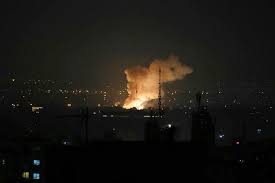
Iran launched a series of missile strikes across the Middle East on Tuesday, following renewed explosions in its capital, Tehran, amid rising tensions after US President Donald Trump threatened Iran’s key oil facilities, power plants, and desalination infrastructure.
Israeli Prime Minister Benjamin Netanyahu said more than half of his military objectives had been achieved, though both leaders refrained from specifying a timeline for the operation, which has triggered a month-long regional conflict and sent global markets into turmoil.
As air raid sirens sounded in Jerusalem, the Israeli military reported responding to fresh Iranian missile attacks. Local Iranian media confirmed new explosions in Tehran, causing power outages in parts of the city. Meanwhile, four additional Israeli soldiers were killed in southern Lebanon amid clashes with Iranian-backed Hezbollah.
Earlier, Israel warned residents in western Tehran that it would target military infrastructure. Iran responded by launching missiles at Gulf states it accuses of facilitating US strikes. In Dubai, four people were injured by debris from intercepted projectiles, and an Iranian attack sparked a fire on a Kuwaiti oil tanker. Saudi authorities intercepted eight ballistic missiles, hours after Iran’s top diplomat called on Riyadh to expel US forces.
Trump had warned that failure to reach a war-ending deal—including reopening the Strait of Hormuz—would prompt the US to destroy Iranian oil and power infrastructure. However, reports suggest he may accept a partial closure of the strait while pursuing peace talks. In response, an Iranian parliamentary committee voted to impose tolls on vessels passing through the strait and ban US and Israeli ships.
The conflict has strained global energy markets. G7 finance ministers and central bankers met in Paris to discuss economic consequences, with analysts warning that any US ground operation or further Iranian retaliation could push oil prices to levels not seen since 2008.
Israel continues to strike Lebanon, targeting Hezbollah positions in retaliation for Iran-linked attacks. A UN mission reported the deaths of three Indonesian peacekeepers in Beirut, with investigations underway to determine responsibility. France called for an urgent UN Security Council meeting, scheduled for Tuesday.
Despite the conflict, life continues in Tehran under tight security. Residents report attempting to maintain routines amid the ongoing war. Meanwhile, diplomatic efforts are underway, with Pakistan hosting meetings and acting as an intermediary between Washington and Tehran, though Iran denies any direct negotiations with the US.
Yemen’s Houthi rebels, backed by Iran, have also fired missiles and drones at Israel, adding to the threat to Red Sea shipping routes and heightening regional instability.


