









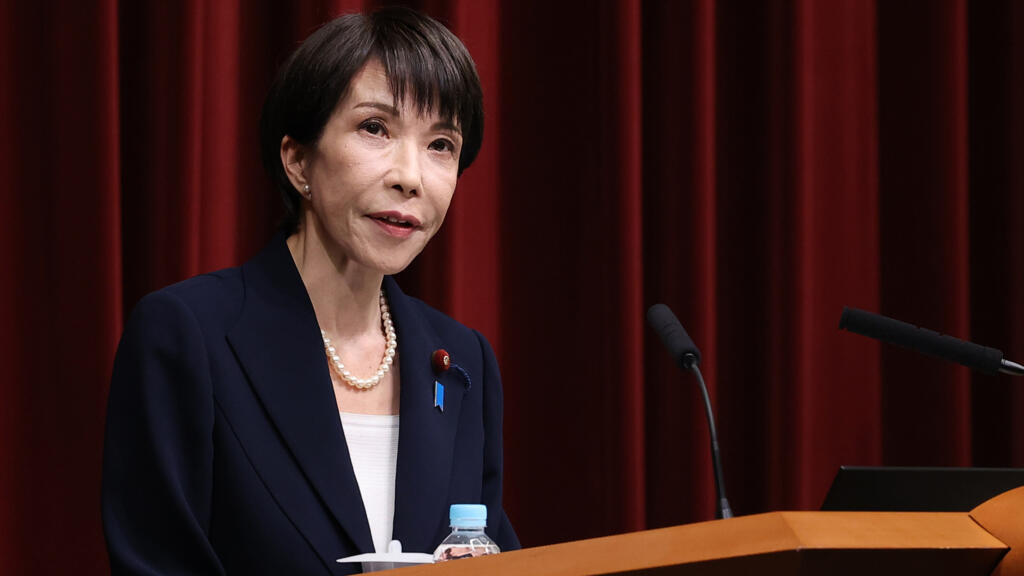
Japanese Prime Minister Sanae Takaichi on Friday dissolved parliament ahead of a snap general election scheduled for February 8, seeking to capitalise on strong approval ratings for her cabinet despite low public support for her ruling party.
The move follows Takaichi’s announcement earlier in the week that she would seek a fresh mandate to tackle rising living costs and boost defence spending. The formal dissolution of the lower house was read out by the speaker of parliament as lawmakers shouted the traditional rallying cry of “banzai”.
Takaichi, Japan’s first woman prime minister, leads a ruling coalition comprising the Liberal Democratic Party (LDP) and the Japan Innovation Party (JIP), which holds only a narrow majority in the powerful lower chamber. She is banking on personal popularity to strengthen her mandate, even as the LDP grapples with weak approval ratings and lingering scandals.
“It’s not clear if high public support for the Takaichi cabinet will actually translate into support for the LDP,” said Hidehiro Yamamoto, a political science professor at the University of Tsukuba. “What the public are most concerned about is how inflation will be addressed.”
Government data released Friday showed inflation slowed in December, with core consumer prices rising 2.4 per cent year-on-year, down from three per cent in November, largely due to subsidies for electricity and gas. While easing, inflation remains above the central bank’s two per cent target.
Rising prices have fuelled public dissatisfaction in recent years and contributed to the fall of Takaichi’s predecessor, Shigeru Ishiba, whom she replaced in October. Once plagued by deflation, Japan has faced higher living costs and a weak yen that has driven up import prices. Rice prices, a symbol of the squeeze on households, rose more than 34 per cent in December from a year earlier, after having doubled in mid-2025 before easing.
In a bid to stabilise the economy, Takaichi’s cabinet has approved a record ¥122.3 trillion ($770 billion) budget for the fiscal year beginning April 2026. Critics, however, argue that dissolving parliament risks delaying its passage. Jun Azumi of the main opposition Constitutional Democratic Party (CDP) said the move would “sacrifice livelihoods”.
If re-elected, Takaichi has pledged to cut the sales tax on food for two years to ease the burden on households, a proposal also supported by opposition parties. Analysts warn, however, that aggressive fiscal spending could worsen Japan’s already massive public debt, projected to exceed 230 per cent of GDP in 2025–26.
Concerns over fiscal discipline have unsettled bond markets, pushing up yields on Japanese government bonds. The Bank of Japan on Friday left its key interest rate unchanged at 0.75 per cent, forecasting that inflation would fall below two per cent in the first half of 2026 as government measures take effect.
The LDP has dominated Japanese politics for decades, though leadership turnover has been frequent. The CDP has formed a new alliance with Komeito, hoping to attract swing voters, but analysts say the opposition still faces an uphill battle.
Polls suggest Takaichi enjoys strong backing among younger voters, with about 90 per cent support among those under 30, according to a late-December survey by the Sankei Shimbun and Fuji Television.


