








By Ayomide Otitoju
As the world marks the 2025 16 Days of Activism Against Gender-Based Violence under the theme “Unite to End Digital Violence Against Women and Girls,” Journalists for Christ International Outreach (JFC) has called for urgent, collective action to address the growing surge of online misogyny and technology-facilitated gender-based violence (TF-GBV) in Nigeria.
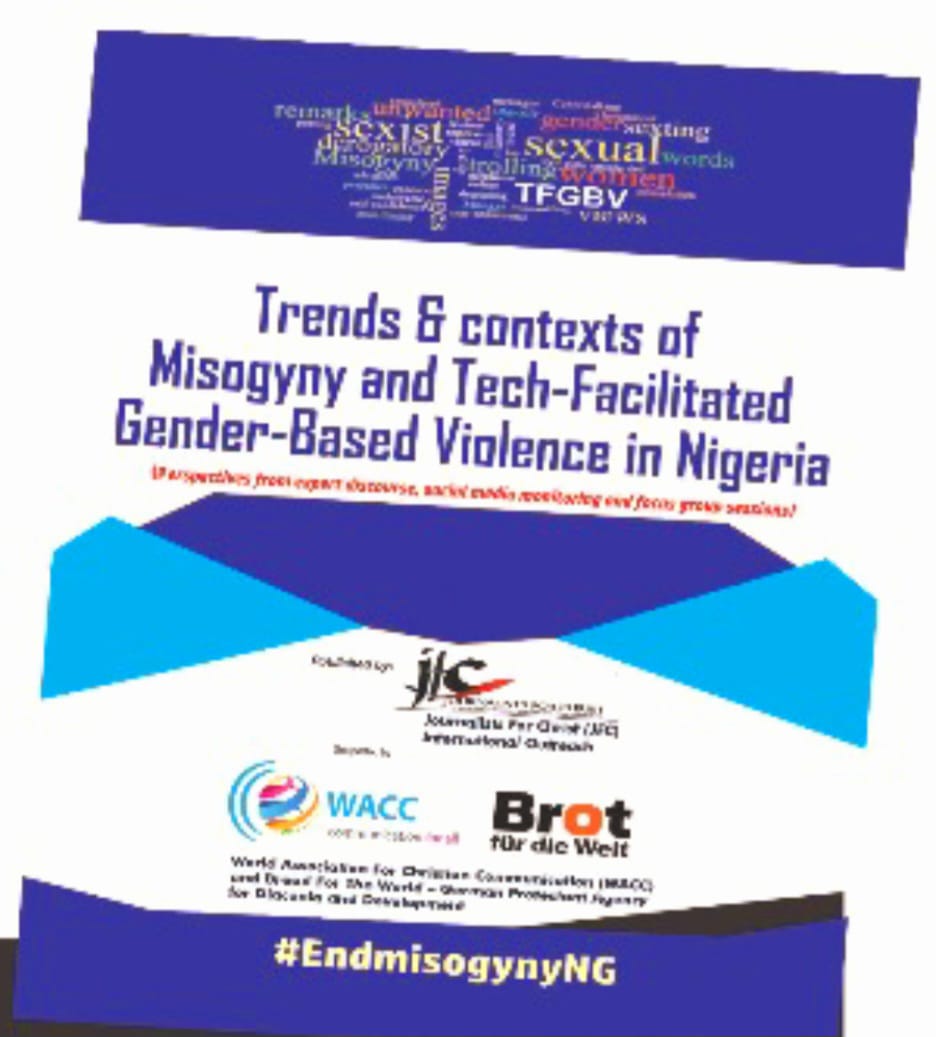
The organisation’s appeal follows the release of its recent publication, #EndMisogynyNG: Media Monitoring Report on Misogyny and Online Violence Against Women, produced with support from WACC Global and Brot für die Welt. The report documents troubling patterns of gendered abuse in Nigeria’s digital spaces, showing that women—particularly female journalists—face escalating online threats that undermine their safety, dignity and participation in public discourse.
According to the report, abusive, sexualised and demeaning language directed at women has become widespread across social media platforms. These attacks, JFC notes, are not isolated incidents but are rooted in deep-seated patriarchal norms that shape the treatment of women both online and offline.
Female journalists remain especially vulnerable, regularly encountering targeted harassment that questions their competence, morality and appearance simply for speaking out or holding public-facing roles.
The report identifies a worrying increase in TF-GBV, including cyberstalking, doxxing, non-consensual image distribution, sexualised hate speech and coordinated harassment campaigns. JFC says weak enforcement of platform safety rules, poor transparency by tech companies and gaps in Nigeria’s legal frameworks have enabled these abuses to flourish with minimal accountability.
This year’s campaign aligns with an important milestone for Lagos State—the development of a Draft Policy on Technology-Facilitated Sexual and Gender-Based Violence, which recently underwent stakeholder review and is set for launch on December 10. JFC notes that the initiative reflects key recommendations from its #EndMisogynyNG report, which calls for strengthened laws, enforcement structures and policy tools to tackle online GBV.
JFC is urging coordinated efforts across government, tech platforms, civil society and the media to curb the rising threat of digital abuse. The organisation calls for:
Government Agencies,Stronger legislation addressing online abuse.Swift implementation of the Lagos TF-GBV policy.Investment in digital safety training, forensics and survivor support services.
Social Media Platforms Consistent and transparent enforcement of community standards.Improved abuse-reporting and content takedown systems.Prioritisation of online safety for women, especially journalists and young women.Civil Society and Faith-Based Groups,Increased awareness on digital safety.Support systems for survivors.Active challenge of harmful gender norms that fuel online violence
Journalists, Media Professionals, Amplification of survivor voicesResponsible reporting on online GBV.,Countering misogynistic narratives.
JFC stresses that digital violence is a real and harmful form of violence with psychological and economic impacts, and in some cases, physical risks. The organisation insists that online safety is a fundamental right and that women and girls must be able to participate safely and confidently in digital spaces.
As the 2025 16 Days of Activism continues, JFC urges all stakeholders to unite in ensuring that the digital world does not become another arena of harm for women and girls.


