






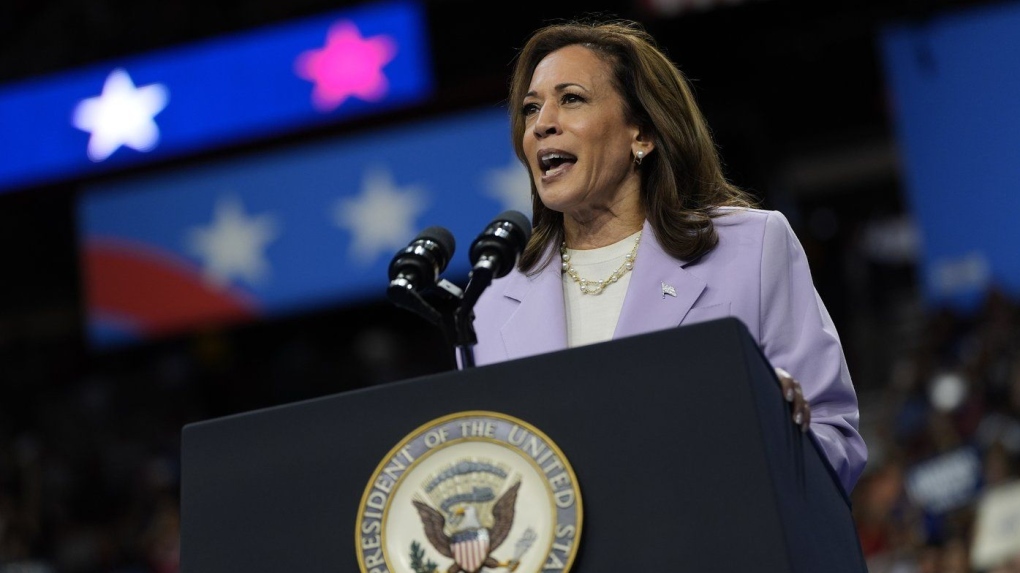
Vice President Kamala Harris is poised to address companies engaging in unfair price hikes as she outlines her economic agenda this Friday, marking her first major policy declaration since becoming the Democratic Party’s presidential nominee.
Harris, who took over the top spot from President Joe Biden last month, has enjoyed rising support, bolstered by recent government reports indicating a slowdown in inflation. A new University of Michigan poll reveals that more Americans now trust Harris over her Republican rival, Donald Trump, to manage the economy—a first in this election cycle.
With the Democratic National Convention around the corner, Harris, 59, faces growing pressure to clearly define her platform. While she has hinted at various policies, she has yet to present a comprehensive governing plan, instead framing her campaign as a “fight for the future.”
Her initial economic proposal to exempt tips from taxation left some Democrats puzzled, with critics labeling it a mere “vote ploy” reminiscent of a similar idea previously floated by Trump. However, she gained firmer ground on Thursday by promoting a likely voter-friendly proposal to reduce medication costs for seniors and making her first public appearance alongside Biden since replacing him amid concerns about his mental acuity.
In her anticipated speech in Raleigh, North Carolina, Harris is expected to urge Congress to pass the first federal ban on “price-gouging,” targeting food companies that unfairly increase prices.
Harris will also contrast her economic vision with Trump’s, arguing that his proposed tariffs of up to 20 percent on imports would escalate costs for essential items like food.
Advisors have urged Harris to remain vague on specific policy details as long as enthusiasm for her candidacy remains strong, while others suggest she distance herself from Biden, whose economic approval ratings have faltered.
Nonetheless, Harris has adopted much of Biden’s economic platform, pledging to eliminate “junk fees,” reduce prescription drug prices, and lower housing costs—while maintaining his commitment not to raise taxes on those earning under $400,000.
On Friday, she will introduce a comprehensive four-year plan aimed at reducing housing costs for working families and ending America’s housing shortage. The plan includes constructing three million new housing units, offering increased tax incentives for builders of starter homes and rental housing, and confronting corporate landlords over rising rents.
Trump, frustrated since Biden stepped aside for Harris on July 21, has been urged by Republicans to focus on policy rather than personal attacks. However, the former president has struggled to stay on message, frequently criticizing Harris’s crowd sizes, her mixed-race heritage, and her intelligence.
In a North Carolina speech intended to highlight his economic agenda, Trump instead veered into personal insults, even questioning whether the economy is the “most important subject” in the election.


