





By Ayomide Otitoju
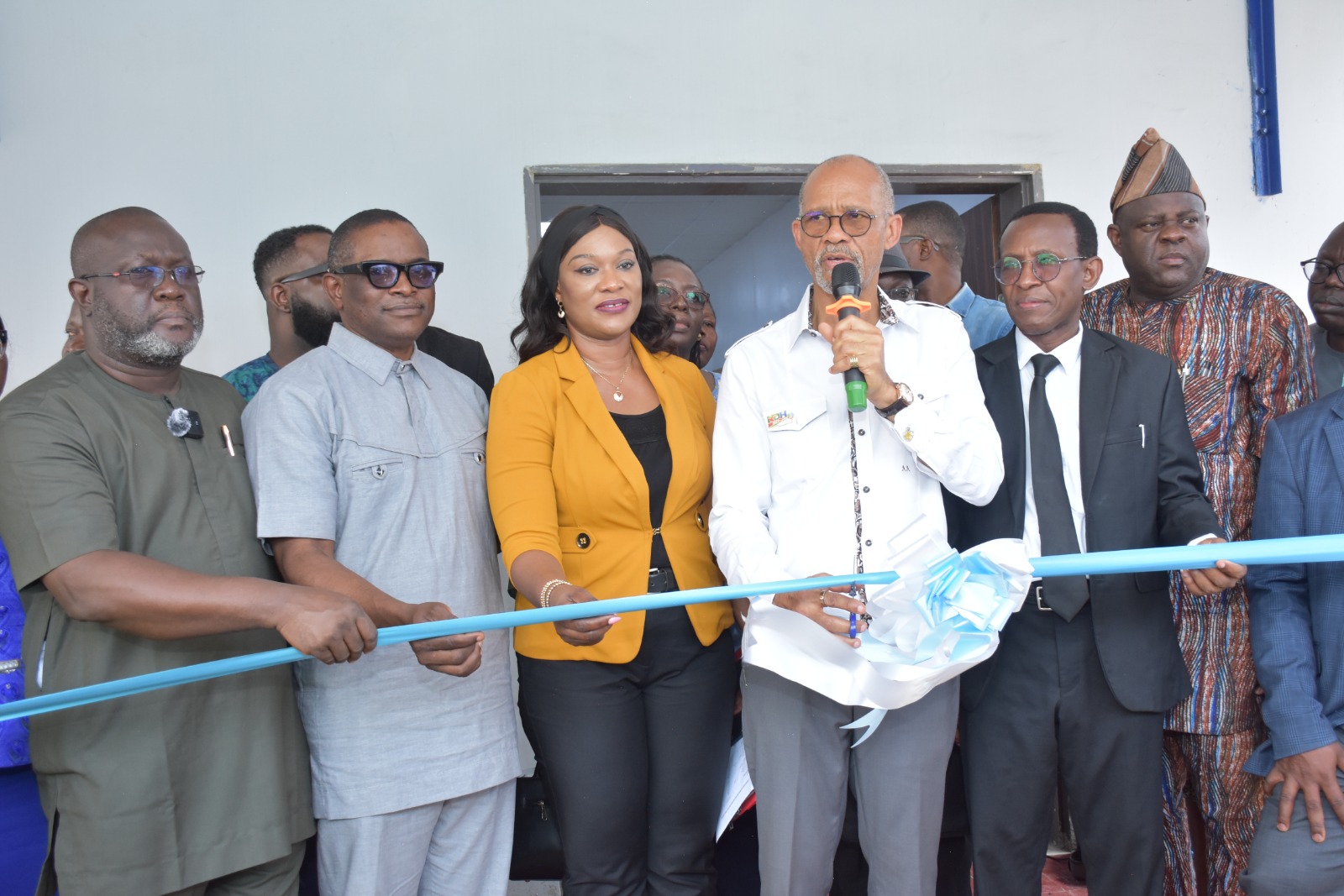
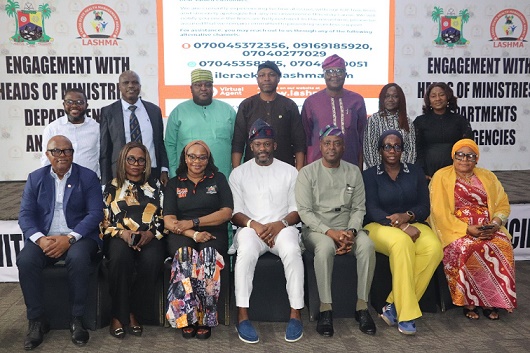
The Lagos State Health Management Agency (LASHMA) on Thursday held a high-level strategy session with Heads of Agencies to accelerate the implementation of Governor Babajide Sanwo-Olu’s Executive Order mandating Social Health Insurance for all residents. The meeting, held at Providence Hotel, Ikeja, marked a major push in the state’s effort to eliminate out-of-pocket medical spending.
Delivering the keynote address, the Special Adviser to the Parastatal Monitoring Office, Hon. Ibrahim Obanikoro, described the gathering as a crucial step toward full compliance with the Executive Order signed on July 16, 2024. The directive compels all Lagos residents to enroll in the ILERA EKO Health Insurance Scheme. He said Heads of Agencies were “custodians of the Executive Order” and urged them to drive the implementation process to ensure its success.
Obanikoro noted that Governor Sanwo-Olu’s strong investment in healthcare—reflected in the THEMES+ Agenda—had improved hospitals, manpower, and social protection systems. He said the mandatory insurance model would protect residents from catastrophic medical costs, warning that many still depend on self-medication and asset sales to fund treatment. With Lagos being the first state to adopt such a model, he stressed that the state was under national and international scrutiny and called for immediate action from all MDAs.
Permanent Secretary of LASHMA, Dr. Emmanuella Zamba, said the Executive Order signaled a decisive shift toward Universal Health Coverage (UHC) at a time when global pressure for affordable healthcare is intensifying. She acknowledged the readiness of government agencies to institutionalise health insurance and noted that the mandate had been reinforced by a Presidential directive issued in September 2025.
Zamba said LASHMA had expanded enrolment platforms, upgraded ILERA EKO benefit packages, and developed compliance tools for MDAs. However, she emphasized that agency-level commitment remained critical. She warned that enforcement would begin soon and that any MDA whose workforce was not fully enrolled would be considered non-compliant.
She urged agencies to integrate ILERA EKO verification into all public-facing processes, including permits and certifications, describing mandatory insurance as a poverty-reduction and productivity-boosting tool capable of protecting families from financial hardship.
Also speaking, the Permanent Secretary of the Parastatal Monitoring Office, Dr. Olugbemiga Aina, praised the quality of discussions during the four-hour session. He said the meeting revealed gaps that must be jointly addressed by agencies, service providers, and LASHMA to ensure smooth implementation.
Aina set a one-month target for achieving full enrolment of Oracle and non-Oracle government staff, describing January as a critical window for accelerated rollout. Citing previous achievements such as pension enrolment, he said the target was realistic and directed LASHMA to produce a practical timetable.
He also called for retraining focal officers in MDAs to strengthen compliance, improve verification processes, and enhance understanding of entitlements under the Patient’s Bill of Rights. He stressed that out-of-pocket medical spending was no longer sustainable and urged agencies to immediately enroll drivers and frontline staff, who often lack awareness of their healthcare benefits.
Aina further announced that from January 2026, MDA compliance with the health insurance mandate would form part of the monthly reporting framework monitored by the Parastatal Monitoring Office, alongside revenue and pension performance indicators.
In his presentation, LASHMA’s Coordinator of Regulations, Mr. Tosin Awosika, explained that the Executive Order was designed to align the Lagos State Health Scheme Law with the National Health Insurance Authority Act, which mandates Social Health Insurance nationwide. Lagos domesticated the policy through the July 2024 Executive Order.
Awosika outlined key provisions, including compulsory proof of health insurance before residents can access services in any MDA and mandatory registration for anyone seeking care in public or private hospitals. Only life-threatening emergencies may be treated prior to proof of insurance, he added.
He detailed the steps approved by the governor for MDAs, starting with full enrolment of all categories of staff and updating internal SOPs to include ILERA EKO as a required document for processing permits, licenses, and approvals. He encouraged agencies to invite LASHMA for on-site enrolment drives.
The meeting ended with a renewed commitment from Heads of Agencies to drive compliance as enforcement approaches. Participants agreed that mandatory health insurance represents a transformative policy that will strengthen the health system, protect households, and reduce poverty.
With structures now in place, Lagos is poised to become the first state in Nigeria to fully operationalise statewide mandatory social health insurance, setting a benchmark other states are expected to follow.