






By Ayomide Otitoju
MTN Nigeria, in partnership with the Nigeria-South Africa Chamber of Commerce (NSACC), has highlighted its role in supporting indigenous businesses and strengthening local supply chains in Nigeria.
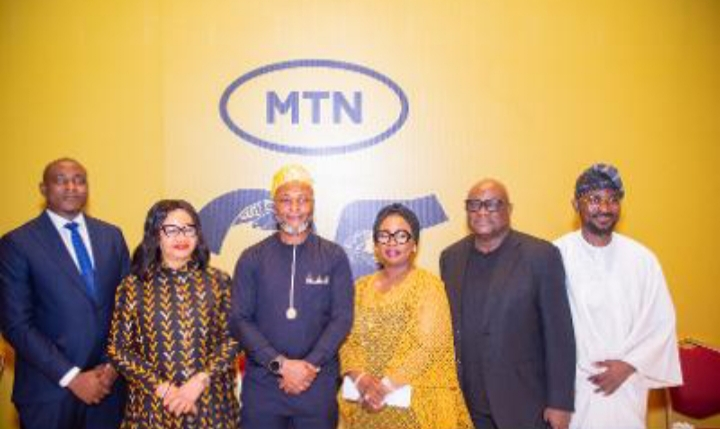
The telecoms company made this known at a business breakfast session organised by MTN Nigeria and NSACC at Eko Hotel & Suites, Victoria Island, Lagos.
The event brought together business leaders and corporate decision-makers to discuss 25 years of shared economic growth and the role of local partnerships in strengthening Nigeria’s business ecosystem.
A panel session examined MTN Nigeria’s contribution to local enterprise development through commercial partnerships, procurement and capacity building.
Chief Executive Officer of BlackHouse Media, Ayeni Adekunle, said partnerships between Nigerian and South African companies could help indigenous businesses expand beyond the continent.
Adekunle said local content initiatives should focus not only on domestic participation but also on equipping African businesses to compete in international markets.
“My vision is for local Nigerian and African companies to do so well, to be so empowered, and to be so visionary that they can operate all over the world,” he said.
He added that bilateral chambers of commerce could provide platforms for African businesses seeking opportunities in the global corporate market.
Group Managing Director of creative agency SO&U, Udeme Ufot, said working with MTN Nigeria had helped local service providers improve their systems, workforce and service delivery.
Reflecting on SO&U’s more than two decades of engagement with MTN, Ufot said the multinational’s operational requirements and standards had pushed local businesses to become more competitive.
“MTN compels you to raise your business to world-class standards, a game that ensures you can play anywhere in the world, leaving you with capabilities that endure long after,” he said.
Chief Executive Officer of Seams and Stitches, Yemi Chukwurah, highlighted the role of structured corporate procurement in supporting local manufacturing and supply chains.
Chukwurah said MTN’s engagement with Nigerian workers and indigenous vendors showed how foreign investment could become integrated into the local economy.
“MTN might have originated as a South African company, but it is more Nigerian right now because of collaboration, local content, and the Nigerian minds who have built it into an authentic local business,” she said.
Similarly, Group Chief Operating Officer of Computer Warehouse Group (CWG), Afolabi Sobande, said partnerships between telecommunications companies and indigenous technology firms could strengthen Africa’s technological capacity.
Sobande cited CWG’s experience providing managed services to major telecom operators as evidence of the capabilities of Nigerian technology professionals when given access to major commercial opportunities.
“Nigeria and South Africa can take Africa to the world, and that is what MTN has demonstrated,” he said.
The panellists said corporate partnerships could have an impact beyond individual supply contracts by helping local businesses develop lasting capabilities, create jobs, strengthen supply chains and position African talent for international opportunities.
They also stressed the need to sustain local content and capacity-building initiatives as Nigerian and other African businesses seek to expand across the continent and into global markets.