




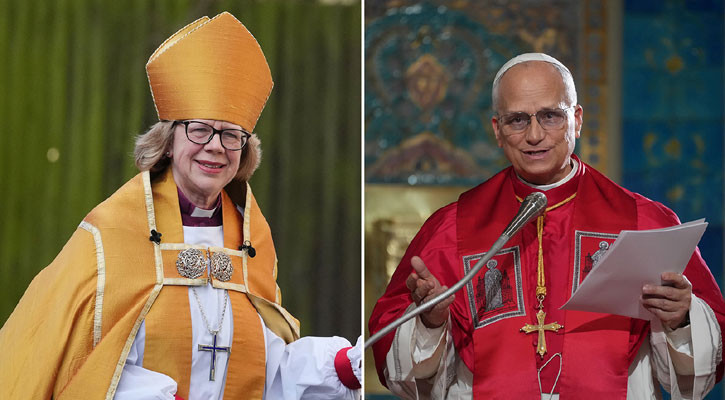
Sarah Mullally, the first woman to lead the global Anglican Communion, is set to visit Vatican City this weekend for talks with Pope Leo XIV.
Mullally will meet the leader of the world’s 1.4 billion Catholics during a four-day visit beginning Saturday, marking her first official trip abroad since her enthronement last month as head of the Church of England.
The meeting comes six decades after the landmark 1966 encounter between Michael Ramsey and Pope Paul VI, the first such high-level engagement since the Church of England’s split from Rome in the 16th century under Henry VIII.
Although relations between the two churches have improved significantly, differences remain, particularly over the ordination of women—an issue that makes Mullally’s visit especially significant. The 63-year-old former nurse is the first woman to head the 85-million-strong Anglican Communion, following the Church of England’s decision in 2014 to allow female bishops.
In contrast, the Catholic Church continues to reject the ordination of women as priests and maintains clerical celibacy, with limited exceptions for married Anglican clergy converting to Catholicism.
Advocates for women’s inclusion in church leadership have welcomed the visit, viewing it as a potential moment for reflection within the Catholic hierarchy. Mullally is also expected to meet members of the Catholic community during her stay.
The visit follows a recent historic moment in which King Charles III became the first Supreme Governor of the Church of England to pray alongside a pope.
In a message marking Mullally’s enthronement, Pope Leo XIV expressed hope for a “reconciled, fraternal and united Christian community,” signalling a willingness to strengthen ties between the two traditions.
Bishop Anthony Ball described the meeting as an important opportunity to deepen both personal and institutional relationships between the two leaders.
Both Mullally and Pope Leo XIV face shared challenges, including global issues such as migration, poverty, conflict, and environmental concerns, as well as the need to engage younger generations. Their churches have also grappled with internal crises, including clerical abuse scandals and divisions between conservative and progressive factions on issues such as same-sex marriage and church doctrine.
Mullally’s appointment has drawn criticism from some conservative Anglican leaders, particularly in Africa, due to her gender and her supportive stance on same-sex marriage. However, Bishop Ball noted that the archbishop is unlikely to press contentious issues during her Vatican visit, focusing instead on dialogue and cooperation.
Observers say both leaders have so far adopted a measured and consultative approach to leadership, raising expectations for a constructive engagement aimed at fostering unity amid ongoing differences.


