



By Ayomide Otitoju
The Nigerian National Petroleum Company Limited (NNPC) has announced a commitment of 272,500 barrels per day of crude oil through a series of crude-for-loan agreements totaling $8.86 billion. This commitment translates to approximately 8.17 million barrels of crude being allocated monthly for various loan arrangements.
According to an analysis by the Nigeria Extractive Industries Transparency Initiative and NNPC’s financial statements, the national oil firm has already fully repaid $2.61 billion of the total credit facility, accounting for 29.4% of the loans, while $6.25 billion, or 70.6%, remains outstanding. Out of the total $8.86 billion credit facility, only about $6.97 billion has been disbursed across seven crude-for-loan deals.
Key projects under these arrangements include Project Panther, Project Bison, Project Eagle Export Funding (original and subsequent debts), Project Yield, and Project Gazelle. Project Panther, a joint venture between NNPC and Chevron Nigeria Limited, secured a $1.4 billion loan facility, pledging 23,500 barrels per day to service the debt. Repayment is set to commence after a moratorium, with financing terms including a Secured Overnight Financing Rate (SOFR) plus a 5.5% margin.
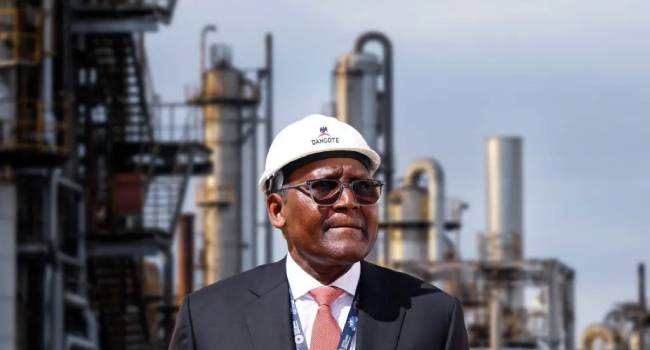
Another notable initiative, Project Bison, is linked to NNPC’s attempt to acquire a 20% equity stake in the Dangote refinery; however, the company ultimately secured only a 7.25% stake. This project secured a $1.04 billion loan from Afrexim Bank, with 35,000 barrels per day pledged as collateral, which was fully repaid in June 2024.
Project Eagle Export Funding comprises three loans aimed at addressing various financial obligations. The original loan, secured in 2020 for $935 million, was serviced with 30,000 barrels per day and was fully repaid by September 2023. A subsequent loan of $635 million was also fully repaid within the same timeframe. The third tranche, known as Project Eagle Export Funding Subsequent 2 Debt, was secured in 2023 for $900 million, with 21,000 barrels per day pledged. Repayment for this loan is scheduled to begin in June 2024.
Project Yield, which supports the Port Harcourt Refining Company, involves a $950 million loan with 67,000 barrels per day pledged for repayment, starting in December 2024. Despite this arrangement, fuel production at the Port Harcourt refinery has yet to commence, with multiple postponements reported as of August. Promises from the Federal Ministry of Petroleum Resources and NNPC have not materialized.
Most recently, Project Gazelle aimed to stabilize Nigeria’s foreign exchange market. In December 2023, NNPC entered into a $3 billion forward sale agreement, pledging 90,000 barrels per day from Production Sharing Contract assets to cover future tax and royalty obligations. By the end of 2023, $2.25 billion had been drawn from this facility, with repayments set to begin mid-2024.
These crude-for-loan agreements come at a time when Nigeria is facing significant challenges in boosting its oil production. The Nigeria Extractive Industries Transparency Initiative’s 2022-2023 report indicated a sharp decline in crude oil output, reaching the lowest levels in a decade. In 2022, Nigeria produced 490.94 million barrels, a steep drop from the 798.54 million barrels produced in 2014. Although production slightly improved to 537.57 million barrels in 2023, this figure represents only 67.16% of the country’s peak production capacity.
Production deferment remains a major challenge, with Nigeria deferring 110.66 million barrels of crude oil in 2023, down from 153.44 million barrels in 2022, primarily due to unscheduled maintenance, repair issues, and oil theft. Despite government initiatives to curb these issues, operational inefficiencies persist, with oil theft and sabotage resulting in a loss of 5.25 million barrels in 2023.
In response to the ongoing challenges, the House of Representatives Special Joint Committee has directed NNPC to halt any further crude-for-loan agreements, following reports that the company plans to borrow an additional $2 billion amid efforts to settle a $6 billion backlog owed to international oil traders.
The NNPC is also in talks for another oil-backed loan aimed at boosting its finances and facilitating investments in its operations. Group Chief Executive Officer Mele Kyari indicated that the company seeks the new loan against 30,000 to 35,000 barrels per day of crude production, although he did not disclose the exact amount being sought.
Nigeria’s government finances heavily rely on oil exports managed by NNPC, which provide a significant portion of the country’s foreign exchange reserves. However, pipeline theft, years of underinvestment, and the cost of fuel subsidies have severely impacted oil production in recent years. President Bola Tinubu has been working to implement reforms, including eliminating fuel subsidies and allowing the naira to trade closer to market levels, all while trying to avoid exacerbating the cost-of-living crisis.
On August 17, 2023, NNPC announced a $3.3 billion emergency crude oil repayment loan from the African Export-Import Bank, intended to support the Federal Government in stabilizing Nigeria’s exchange rate. This facility aims to address some of the government’s dollar obligations and assist the Central Bank of Nigeria in stabilizing the foreign exchange market.
The NNPC clarified that this financing agreement, known as Project Gazelle, is designed to prepay future royalties and taxes to the Federal Government, utilizing a conservative crude price benchmark of $65 per barrel to mitigate default risks. The repayment plan is strategically tied to future oil sales, with conservative pricing in contracts to reduce the impact of oil price volatility.
Additionally, as part of ongoing crude-for-oil arrangements, President Bola Tinubu approved the sale of crude to local refineries in naira, effective October 1. NNPC will supply approximately 385,000 barrels per day of crude oil to the Dangote refinery, with payments made in naira.