





By Ayomide Otitoju
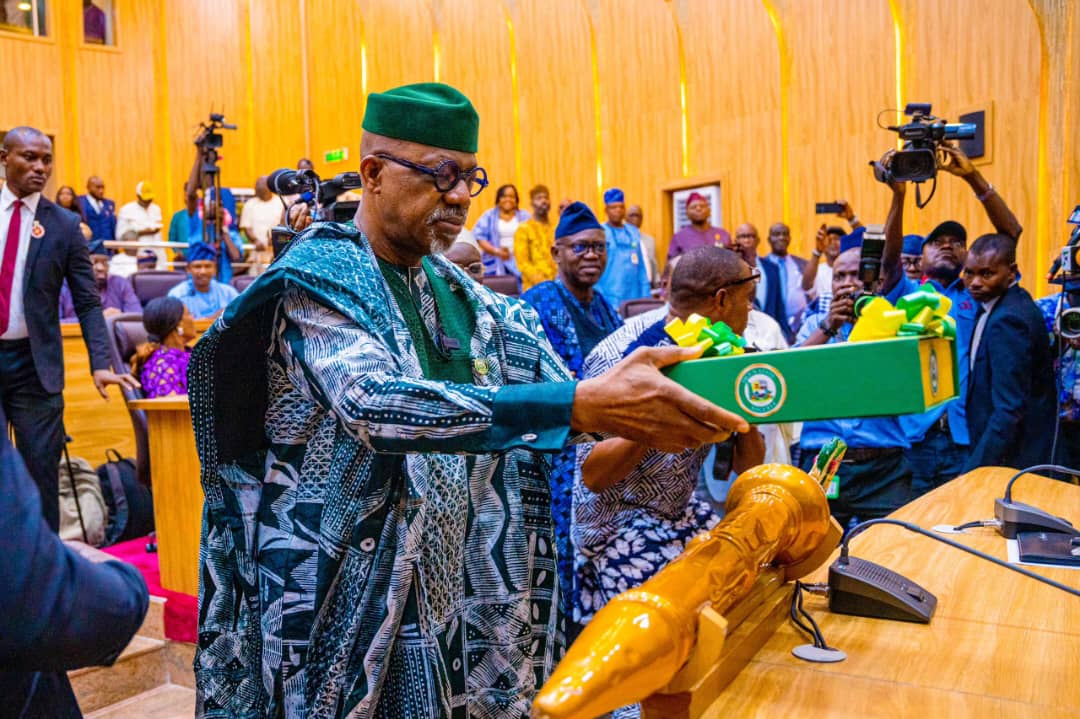
The Ogun State Government has presented a ₦1.668 trillion Appropriation Bill for the 2026 fiscal year to the State House of Assembly, marking a 63 percent increase from the 2025 budget. Titled the Budget of Sustainable Legacy, the proposal earmarks ₦624.76 billion for recurrent expenditure and ₦1.044 trillion for capital projects.
Presenting the bill, the government said the spending plan prioritises the completion of key projects under the ISEYA development pillars, with a focus on long-term economic growth. Expected revenue comprises ₦509.88 billion in internally generated revenue (IGR), ₦554.81 billion in statutory federal allocations, and ₦518.90 billion in capital receipts.
Infrastructure receives the largest sectoral allocation at ₦526.15 billion, followed by education, health, housing, and other sectors deemed critical to improving residents’ welfare. According to the government, the budget reinforces its commitment to job creation, revenue expansion, food security, industrial development, and improved service delivery.
A review of the 2025 Budget of Hope and Prosperity showed a 60 percent performance in pro-rata expenditure and 53 percent in pro-rata revenue as of September 30. The state’s economy is now estimated at ₦17 trillion, while IGR has grown from ₦52 billion in 2020 to nearly ₦192 billion in 2024, with a projection of ₦250 billion in 2025.
The government also highlighted key infrastructure projects, including the fully certified Gateway International Airport, ongoing construction of the Kajola and Ijebu-Ode Inland Dry Ports, and over 1,500km of roads built or rehabilitated across the state.
Appreciating the Speaker and lawmakers for their cooperation and passage of critical laws, the government appealed for accelerated consideration of the budget ahead of major events in 2026, including the Gateway Afrobeat Drum Festival and Ogun State’s 50th anniversary celebrations.
It also expressed gratitude to traditional rulers, youth groups, labour unions, religious organisations, security agencies, and civil servants for their support in sustaining peace and stability across the state.


