









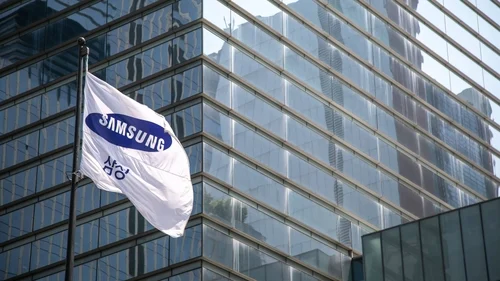
Samsung Electronics on Tuesday projected a 56% year-on-year decline in its second-quarter operating profit, attributing the sharp drop to U.S. restrictions on the export of advanced AI chips to China.
In a regulatory filing, the South Korean tech giant said it expects operating profit for the April–June period to fall to 4.6 trillion won ($3.3 billion), representing a 31% decline from the previous quarter. The figure also fell short of market expectations by 23.4%, according to Yonhap News Agency, citing data from a local financial firm.
Sales for the quarter were estimated at 74 trillion won — a marginal 0.1% drop from a year earlier and 6.5% lower than Q1 2025.
While the company did not disclose net income or divisional earnings, it acknowledged that the semiconductor division underperformed due to inventory valuation adjustments and the impact of U.S. chip export controls aimed at China.
“These results fell short of market expectations,” the company said in a separate statement, adding that performance was mainly dragged down by its foundry business, while the memory division remained relatively stable.
The U.S. government has ramped up efforts to curb China’s access to high-end chips over concerns that they could bolster its military and tech sectors.
Despite the setback, Samsung projected improvements in the second half of the year, citing a gradual recovery in demand and better utilisation rates across its operations.
Tom Hsu, analyst at TrendForce, told AFP that although foundry operations struggled, the outlook for memory chips remains strong, driven by rising demand from AI-powered data centres. Chae Min-sook of Korea Investment and Securities added that performance in Samsung’s high-bandwidth memory (HBM) chip segment likely fell short of expectations, while losses in NAND flash products widened due to falling prices.
Currency pressures also weighed on performance, with analysts warning that the sharp depreciation of the South Korean won against the U.S. dollar since June could negatively impact future earnings.
Meanwhile, Samsung faces mounting geopolitical pressure, with former U.S. President Donald Trump on Monday urging South Korean firms to shift production to the United States. Seoul said it is in close communication with Washington to address trade concerns, particularly amid existing tariffs on Korean steel and automobile exports.


